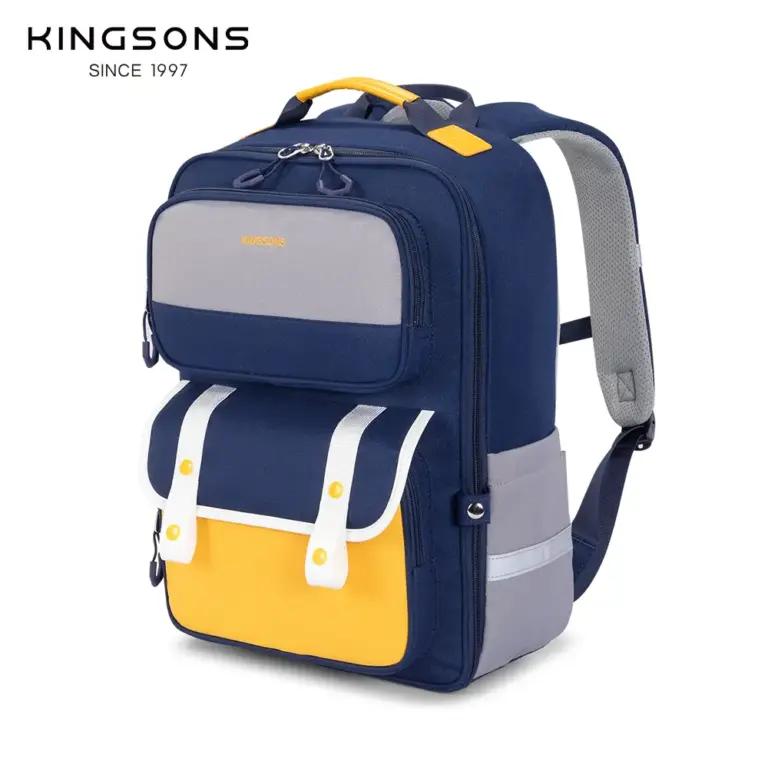

California Proposition 65 is not a product standard you certify to once. It is a warning-and-liability regime that follows a bag into the smallest seller in your distribution chain, enforced as often by private attorneys as by the state. For an importer, the risk is not a customs hold; it is a 60-day notice and a settlement.
This guide explains what Prop 65 requires for bags, which listed chemicals turn up in zippers, coatings, faux leather and printed graphics, and exactly what to verify with your manufacturer before a container leaves China.
Key Takeaways
- Prop 65 (the 1986 Safe Drinking Water and Toxic Enforcement Act) requires a “clear and reasonable” warning when a product exposes Californians to any of roughly 900 listed above safe-harbor levels; it does not ban the chemicals outright.
- Bags attract enforcement on lead (plated hardware, coatings, some faux leather), phthalates DEHP/DBP/BBP/DINP (PVC and vinyl trims, printed graphics) and cadmium (metal parts) — the parts buyers rarely think to test.
- Prop 65 sets no universal numeric limit per product. Working targets come from safe-harbor dose levels and from case-by-case settlement decrees, which is why importers screen against settlement numbers as practical thresholds.
- Liability runs to manufacturers, distributors and retailers — the importer and the brand, not only the Chinese factory — so supplier declarations and third-party test reports are your defense file.
- Compliance is engineered at material selection: name the hardware plating, avoid phthalated PVC trims, require a restricted-substances spec in the tech pack, and confirm the finished product by lab testing before shipping.
What Proposition 65 actually is
Proposition 65 — formally the Safe Drinking Water and Toxic Enforcement Act of 1986 — is a California ballot measure administered by the state’s Office of Environmental Health Hazard Assessment (OEHHA) within Cal/EPA. Two duties sit at its core: do not discharge listed chemicals into drinking-water sources, and warn people before exposing them to those chemicals.
OEHHA maintains the Prop 65 list — currently around 900 substances identified as carcinogens or as causing cancer, birth defects or other reproductive harm. Listing a chemical does not make it illegal in a product. It triggers the warning duty once exposure exceeds a “safe harbor” level, and it exposes a non-warned seller to enforcement.
Two features make Prop 65 unusually potent for consumer goods like bags. The safe-harbor levels are often far below what a product might otherwise contain, and — decisively — private parties can enforce the law. Any individual or organization acting “in the public interest” can serve a notice and sue, which has created a cottage industry of plaintiff attorneys who test popular retail categories and send settlement demands.
Why bags keep getting noticed
Handbags, backpacks, wallets and belts are recurring Prop 65 enforcement targets because the parts that most often carry listed chemicals are exactly the parts a bag buyer specifies for looks and durability, not for chemistry:
- Lead — in plated or die-cast metal hardware, zipper pulls, buckles and logo plates; in some paint, screen-printed and rubberized coatings; occasionally in faux-leather (PU/PVC) components and certain pigments.
- Phthalates (DEHP, DBP, BBP, DINP, DnHP) — plasticizers that soften PVC and vinyl: trim, piping, printed “rubber” logos, window panels, some faux-leather backings.
- Cadmium — in some metal platings and colored pigments on hardware and trim.
A 2023 snapshot of 60-day notices shows the pattern: bag and accessory products drew dozens of phthalate notices and further lead and hexavalent-chromium notices in a single month. The category is not obscure — it is on the plaintiff bar’s regular rotation.
Lead and phthalates: the working numbers
Here is the point importers most often get wrong: Prop 65 does not publish one legal lead limit for “backpacks.” The statute works through safe-harbor exposure levels (No Significant Risk Levels for carcinogens, Maximum Allowable Dose Levels for reproductive toxicants) expressed in micrograms-per-day of exposure, not parts-per-million in the object. A product can contain a listed chemical and still need no warning if exposure stays under the harbor.
Because translating dose levels per product is hard, the practical numbers the trade uses come from consent decrees — the settlement terms in past bag and accessory cases. These are case-specific, not universal law, but they function as de-facto screening targets. Representative examples seen in bag/backpack settlements:
| Component | Chemical | Settlement-derived working target |
|---|---|---|
| Backpack, general accessible parts | Lead (total) | ≤ 100 mg/kg (100 ppm), plus surface-wipe lead ≤ 1 µg (NIOSH 9100) |
| Accessible PVC / vinyl parts | Phthalates DEHP / DBP / BBP | each ≤ 0.1% (1,000 ppm) |
| Leather & synthetic leather parts | Lead | ≤ 300 mg/kg |
| Paint / surface coating on parts | Lead | ≤ 90 mg/kg |
Treat these as internal specification targets and screening triggers, not as a certificate to demand verbatim. Your own obligation is to keep exposure under the safe harbor or to warn — and a defensible program tests the actual finished configuration, not a generic category label.
The warning itself: when labeling is the answer
Where exposure cannot be engineered below the harbor, Prop 65 compliance is achieved by a “clear and reasonable” warning. For consumer products sold online and in stores, that generally means a visible warning at the point of purchase and on the product, using the prescribed signal word and text and naming at least one chemical for which the warning is given.
Anatomy of a compliant consumer-product warning
- Signal word (“⚠ WARNING”) in bold, larger than surrounding text.
- Statement naming the exposure (“This product can expose you to [chemical]…”).
- Named chemical(s) known to cause cancer / birth defects or reproductive harm.
- Reference to the state’s warning portal (P65Warnings.ca.gov).
- Diamond-shaped hazard symbol on the on-product short-form label; on-pack and online placement that a buyer sees before purchase.
A warning is a compliance path, not a free pass — some retailers refuse warned goods in certain categories, and a warning admits the chemical is present. For a bag brand competing on quality, the better default is to remove the reason to warn by specifying compliant materials, and reserve the warning for components where exposure genuinely cannot be reduced.
60-day notices and the private-enforcement mechanic
Most Prop 65 actions start not with a lawsuit but with a 60-day notice served on the alleged violator (and copied to California city and district attorneys and the Attorney General). The notice window is the settlement window: parties negotiate a consent decree covering civil penalties (up to $2,500 per day per violation), plaintiff attorneys’ fees, and — critically for a supply chain — injunctive relief requiring the defendant to test, reformulate, warn or drop the offending product.
Because the settlement usually includes a “product-in-fringe” clause extending the decree’s terms to similar future products, a single enforcement can bind a seller’s whole category. This is why serious importers and brands want a documented compliance file before a notice ever arrives: it is the difference between negotiating from evidence and negotiating from exposure.
Who is on the hook: importer, brand and retailer
Prop 65 liability reaches any business that “creates or causes a near-certain exposure” to a listed chemical in commerce — in practice the manufacturer, the distributor, the importer of record and the retailer. The Chinese factory is rarely the defendant a US plaintiff sues; you are. And even where the factory caused the exceedance by substituting a cheaper plasticizer, the recall or settlement cost lands on the brand and the retailer first.
That reverses the usual way buyers think about Prop 65. The obligation is not “does the factory have a certificate” but “can I, the importer, produce for each SKU a paper trail that shows I tested and controlled the exposed components.” The manufacturer is your evidence-generating partner in that file.
What to verify with your manufacturer before shipping
Turn the liability analysis into a concrete supplier checklist. For a bag program sold into California, request and file:
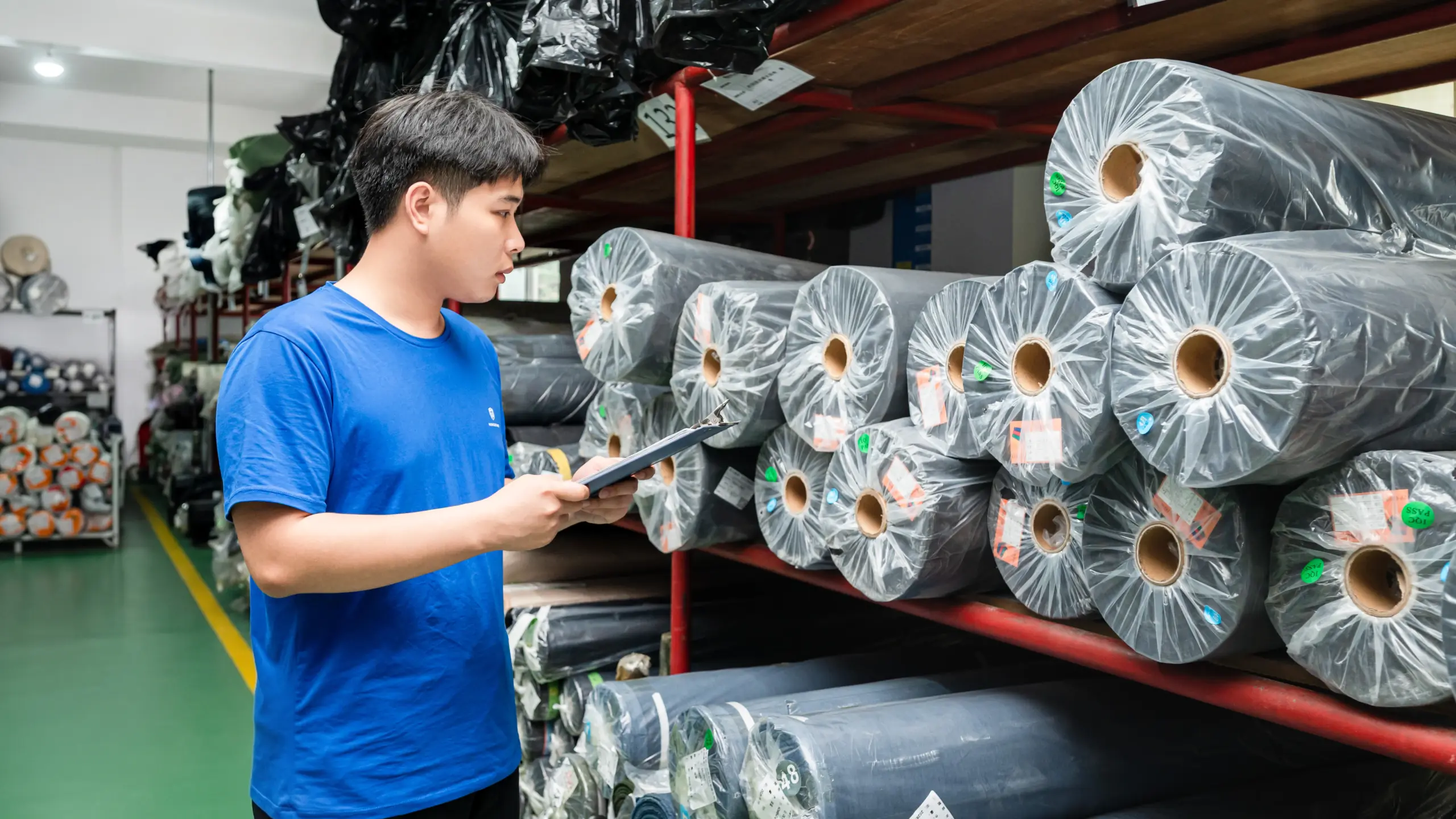
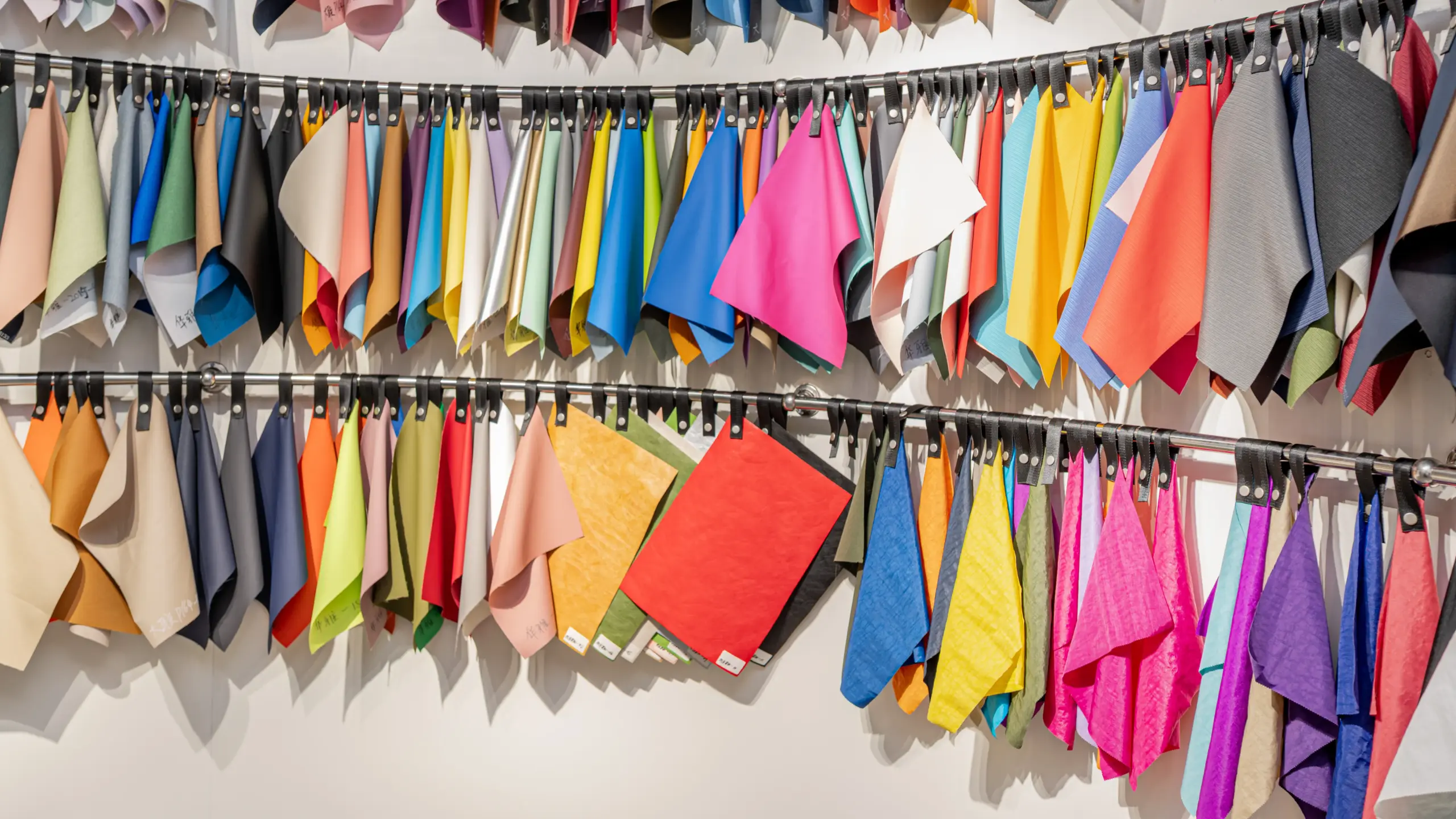
- A restricted-substances declaration per material — fabric, lining, foam, film, PVC/PU trim, webbing, thread, zippers, buckles, logo plates, inks and adhesives — stating whether any contains a Prop 65 listed chemical above a set threshold.
- Third-party test reports on the finished configuration — lead and cadmium on accessible metal/plated parts, phthalates on PVC/vinyl and printed parts, from an accredited lab (SGS, Intertek, Bureau Veritas and peers). Screen with XRF, confirm exceedances by wet chemistry.
- A component bill of materials flagged for risk — every plated, printed, vinyl-coated or faux-leather element called out, so testing maps to parts, not to a generic “bag.”
- Change-control duty — a written commitment that the factory notifies you before switching any supplier, plating chemistry, plasticizer or pigment, and re-tests after the change.
- Contractual indemnity — the factory warrants material conformity to your stated Prop 65 / RSL spec and shares responsibility for undisclosed substitutions.

None of this requires the factory to hold a magic “Prop 65 certificate,” which does not exist as a product label. It requires that your spec is explicit and that the finished product is tested against it.
Designing the exceedance out: materials that lower risk
The cheapest compliance is the one you design in. Practical substitutions that bag buyers and manufacturers use:
- Hardware — specify zinc-alloy or controlled-plating hardware with declared lead/cadmium content and salt-spray-tested coatings; name the supplier rather than accept “whichever plating is available.”
- Trim and graphics — replace phthalated PVC/vinyl piping and printed “rubber” logos with PU or non-phthalate plasticized alternatives, or with embroidered/woven labels that carry no plasticized film at all.
- Faux leather — choose PU over PVC where the hand-feel allows; where PVC is required, demand non-phthalate plasticizers with test backing.
- Inks and coatings — require heavy-metal-controlled screen and transfer inks; avoid cheap pigment mixes whose lead content is undeclared.
These decisions belong in the material selection and the tech pack, made before tooling — the same place you would settle any REACH or CPSIA requirement, since the SVHC and CPSIA lead questions often touch the identical components.
Testing logistics: cost, cadence and who pays
Importers routinely ask how much Prop 65 testing costs and how often to run it. Rough planning guidance:
| Test type | Typical use | Order-of-magnitude |
|---|---|---|
| XRF screening (per material/part) | Fast lead/cadmium screening across a BOM | Low; a screening pass across components |
| Wet-chemistry confirmatory (EPA/CPSC methods) | Confirm any XRF hit; quantify phthalates | Mid; charged per analyte per material |
| Full finished-product RSL panel | Baseline on a new SKU / new factory | Highest; one-off before scale |
| Periodic re-test / re-screen | Confirm no silent material change | Recurring, light |
Reasonable cadence: a full panel when a SKU or supplier is new, XRF screening each production lot for high-risk components, and a confirmatory re-test whenever a material, plating or pigment changes. A handful of dollars of per-lot screening is trivial against a five- or six-figure settlement; budget for it as insurance, not as a grudge cost.

The California-65 evidence file
Assemble one folder per SKU and keep it for the product’s life. Contents:
- Signed restricted-substances declaration from the factory, per material.
- Component BOM with every plated, printed, vinyl and faux-leather part flagged.
- Third-party test reports on the shipped configuration, dated and matched to the production lot.
- Change-control log: any substitution, with re-test.
- If a warning is used instead of elimination: the exact warning artwork and proof it was applied on-pack and online.
- Contract clause text on conformity and indemnity.
When a 60-day notice arrives, this file is what lets your counsel respond with evidence rather than settle blind. Build it before you need it — retroactive testing cannot recover a lot already sold.
How Kingsons supports Prop 65 programs
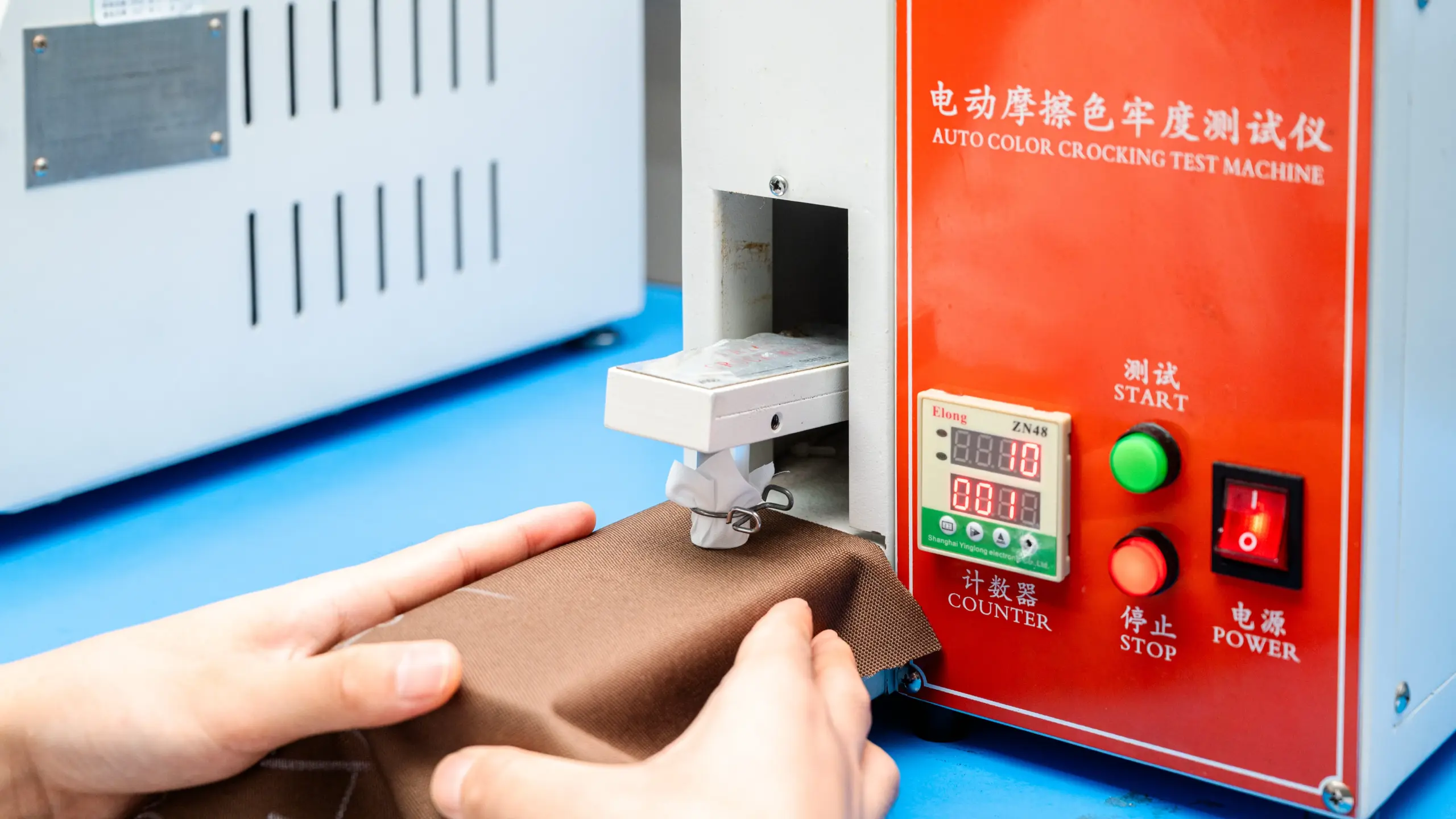
Kingsons is a functional-bag OEM/ODM manufacturer (Guangzhou; founded 1997; a 50,000 m² park with 20 production lines and roughly 300,000 units monthly) that already runs full-process quality control with in-house material and hardware testing — tensile, color-fastness, zipper durability, hardware salt-spray and environmental checks — and names its component suppliers (YKK/SBS/SAB zippers, established fabric and accessory sources). For a California-bound program, that infrastructure is the base you build a Prop 65 file on:
- Specify a Prop 65 / restricted-substances clause in the tech pack so material and plating choices are fixed and declared, not improvised.
- Have the finished configuration third-party tested (SGS-type labs) for lead, cadmium and phthalates on accessible parts, on a documented cadence.
- Use documented alternatives — PU over phthalated PVC, controlled-plating hardware, heavy-metal-free inks — where they reduce exposure below safe harbor.
- Apply the change-control duty so any future substitution triggers re-testing, keeping the SKU’s evidence file current.
Kingsons carries RoHS, CE, FCC and SGS product testing among its certifications; a Proposition 65 position, however, is product- and configuration-specific and is not a certificate you simply request. The right move is to build it per SKU — agree the restricted-substances spec, test the actual product, and keep the report matched to the lot you sell.
Frequently Asked Questions
Do bags need a California Prop 65 warning label?
Only if a bag exposes users to a listed chemical above its safe-harbor level. Many bags do not; risk concentrates in plated/printed parts, PVC-vinyl trim and some faux leather. The way to know is to test the actual configuration. If exposure is under the harbor, no warning is needed; if it is not, either reformulate or apply a clear-and-reasonable warning.
Is there a fixed lead limit for backpacks under Prop 65?
No. Prop 65 works through safe-harbor exposure doses, not a single ppm limit per product. The numbers buyers quote (e.g., ~100 ppm lead in accessible parts, ~1,000 ppm per phthalate) come from case-by-case settlement decrees and are useful internal screening targets, not a universal statutory threshold. Confirm with testing on your specific product.
Can Prop 65 compliance be delegated to the Chinese factory?
Not in liability terms. The factory can supply compliant materials and generate the test reports, and a good partner will — but the importer of record and the brand are the parties a US plaintiff sues. Delegate the work, keep the evidence file and the contractual indemnity on your side, and verify finished-product conformity yourself.
What is the difference between Prop 65 and CPSIA or REACH?
CPSIA is a US federal product-safety law (lead in substrates, phthalate limits, tracking labels, especially for children’s products); REACH is the EU chemicals regime (SVHC restrictions). Prop 65 is a California warning-and-liability law with its own chemical list and no outright bans. A bag can pass CPSIA and still trigger Prop 65 — the frameworks overlap on components but not on thresholds. See our REACH and CPSIA guide for how the three relate.
Which bag components should I test first?
Start with the highest-risk, most-accessible parts: plated and die-cast metal hardware (zipper pulls, buckles, logo plates) for lead and cadmium, and PVC/vinyl trim, printed graphics and faux-leather components for phthalates. Screen with XRF across the bill of materials, then run confirmatory wet chemistry on any hit.
Is Kingsons Prop 65 compliant?
Kingsons runs full-process quality control with in-house material and hardware testing, names its component suppliers, and carries RoHS, CE, FCC and SGS product testing. Proposition 65 status is not a blanket certificate, though — it is configuration- and market-specific. For a California-bound SKU, specify a restricted-substances requirement and confirm the shipped product with dated third-party lead, cadmium and phthalate reports matched to the production lot before you sell.
Build California-ready bags with a manufacturer that declares materials, controls hardware plating and documents its testing — then verify the finished product for your exact SKU.