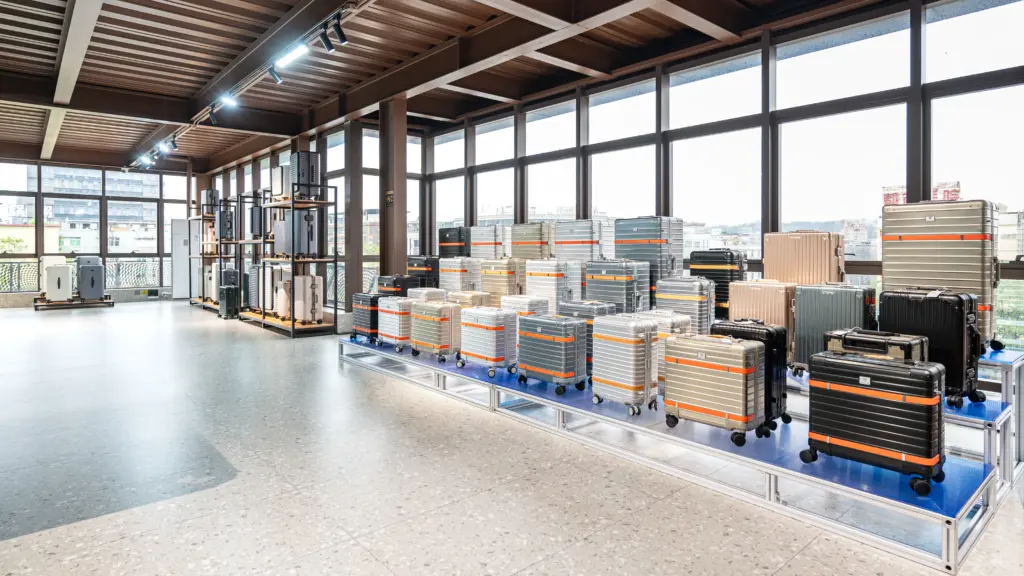
Backpacks and laptop bags are one of the most reliably demanded products on Amazon — and one of the most crowded. A generic black rucksack competes on price against thousands of near-identical listings; one with a real feature story competes on margin. On FBA, the product you choose is the strategy: fees, reviews and return rate are set before a single unit ships to the warehouse.
This guide is for the Amazon and DTC seller sourcing bags from a manufacturer: which features win, how the unit economics work, and how to vet a supplier so a listing scales.
Key Takeaways
- On FBA, product selection is your moat: a commodity backpack competes on price, while a differentiated one (anti-theft, RFID, charging, eco fabric) earns a premium and a defensible review base.
- Model the full FBA fee stack — referral, fulfillment, storage, and returns — before you commit; a $2 unit-price saving is worthless if the product’s size, weight or return rate erodes the margin.
- Sourcing for Amazon rewards small, fast test batches and reliable replenishment over the lowest quote: over-ordering a losing SKU into an FBA warehouse is the classic cash-flow killer.
- Compliance and prep are listing blockers, not afterthoughts — US material-safety requirements and FBA packaging rules must be solved at the factory, not discovered at the dock.
- Kingsons supports FBA-style sourcing with low trial MOQs (from 200–300 pieces, 50-piece small batches), differentiated product lines, pre-FBA prep, and a 12-month manufacturing-defect warranty that protects your review score.
Why bags are a strong — but unforgiving — FBA category
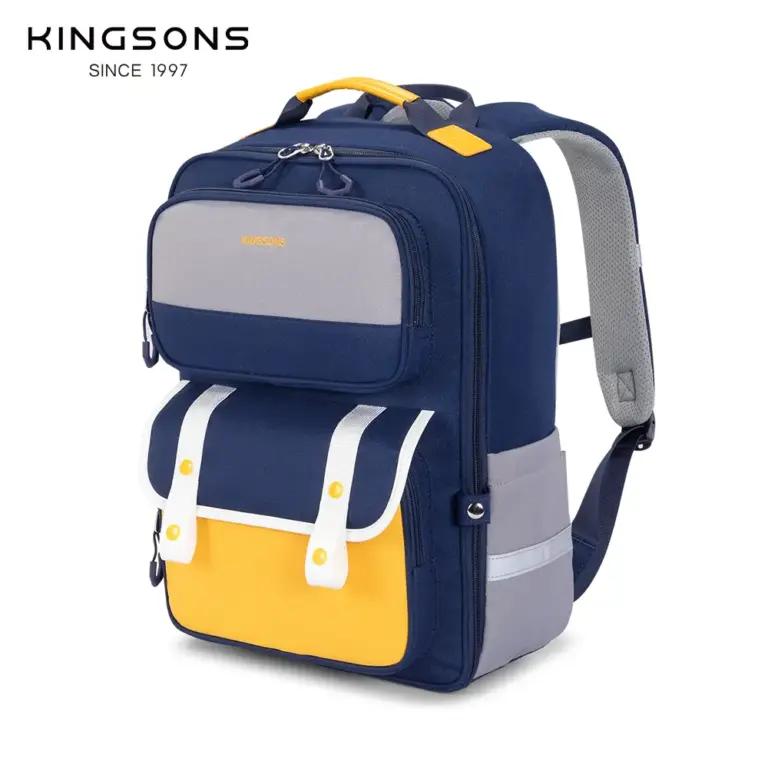
Bag is a high-volume, evergreen Amazon category: laptop backpacks, travel backpacks, commuter and school bags all sell year-round with predictable peaks around back-to-school and Q4 gift season. Demand is not the problem. The problem is sameness — the search results are wall-to-wall black nylon packs, and the sellers who win are the ones who break that sameness with something a buyer will pay a premium for and a competitor cannot quickly copy.
That makes the sourcing decision, not the advertising budget, the highest-leverage choice an FBA bag seller makes. A product with a genuine differentiator gives your listing a story, your reviews a reason to be positive, and your PPC a better conversion rate — all of which compound into rank. This article works through how to choose and source that product.
The FBA economics: where bag sellers make and lose money
Before any feature discussion, understand what an FBA unit actually costs you. The ex-works price from the factory is only the first line:
| Cost / fee layer | What it means for a bag |
|---|---|
| Ex-works unit cost | The factory price — the least important single number on its own |
| Inbound freight + duty | Ocean to the FBA or prep center; HS-code duty for your marketplace |
| Amazon referral fee | Category percentage taken on each sale |
| FBA fulfillment fee | Size/weight-tiered pick-pack-ship — bags are bulky, so this bites |
| Storage fees | Monthly, with steep Q4 surge; unsold stock bleeds cash |
| Returns & refunds | Bag return rates are material; a design flaw doubles your fulfillment cost |
| PPC / advertising | The cost of buying visibility in a crowded category |
The implication: a slightly dearer, lighter, more compact, better-made product that converts well and rarely comes back will usually beat the cheapest quote on true landed margin. Size and weight are design decisions with a fee consequence, and quality is an advertising budget you don’t have to spend.
The features that actually win on Amazon
In a category this commoditized, differentiation is what earns the Buy Box price premium and the four-and-a-half-star average. These are the feature stories that consistently pull their weight in bags, and that Kingsons already builds:
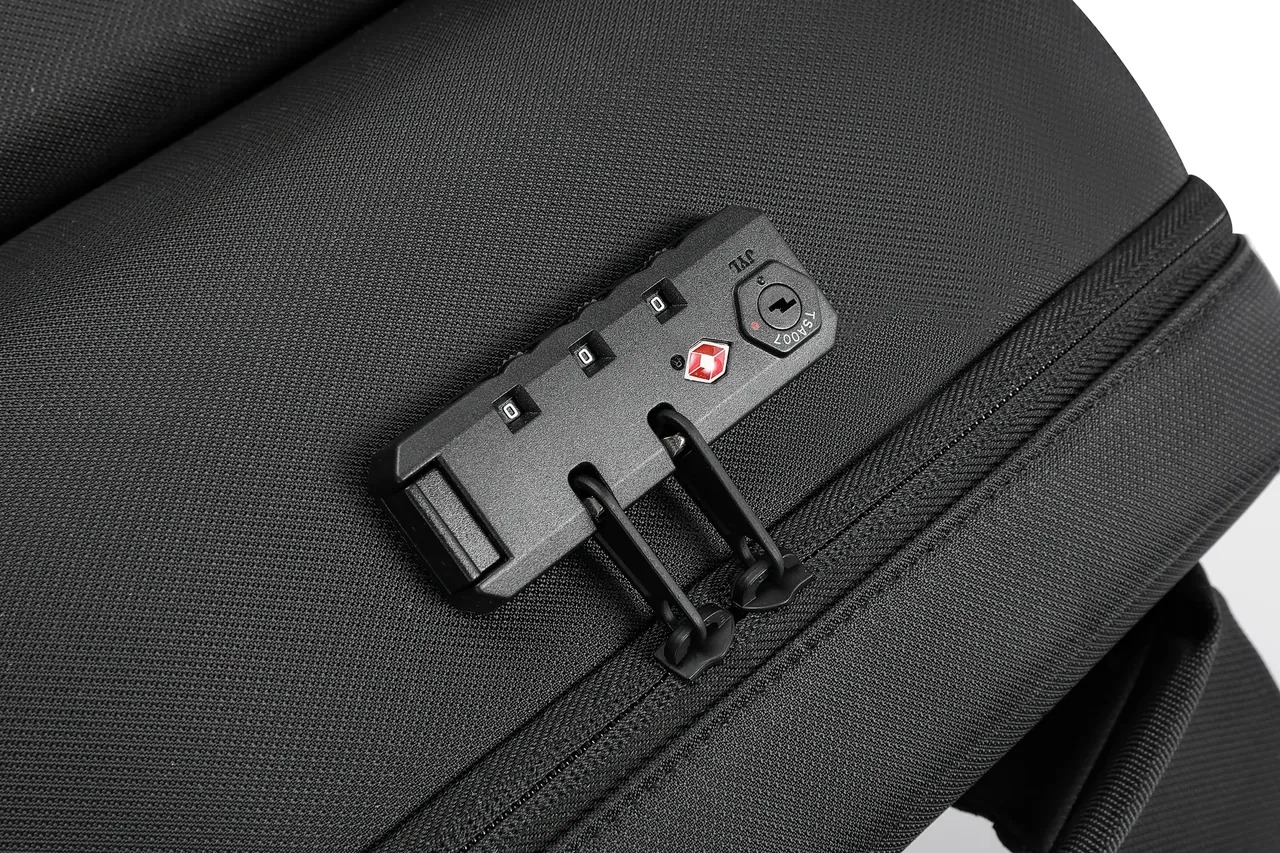
- Anti-theft design — lockable and hidden zippers, cut-resistant panels, back-access pockets. Kingsons’ anti-theft line is a category flagship (one model crowdfunded past US$1.2 million on Kickstarter), which shows the demand a security story can pull.
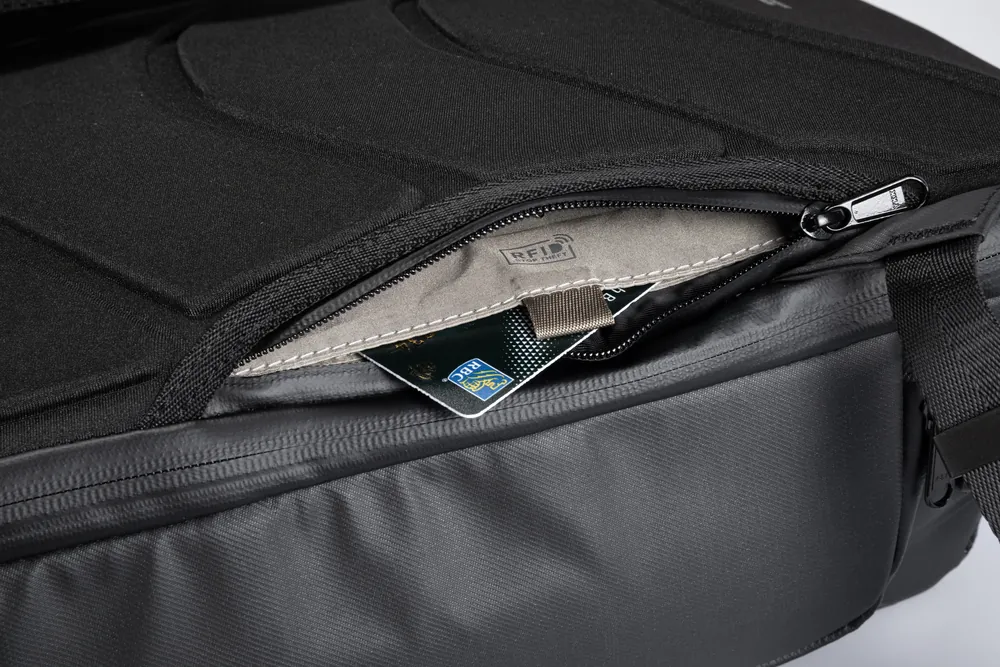
- RFID-blocking pocket — a lined compartment advertised to block contactless card skimming. It is a small addition that photographs well and reads as premium.
- Charging integration — external USB / USB-C pass-through ports (and, on some models, solar or wireless options) turn “you can charge on the go” into a headline bullet.
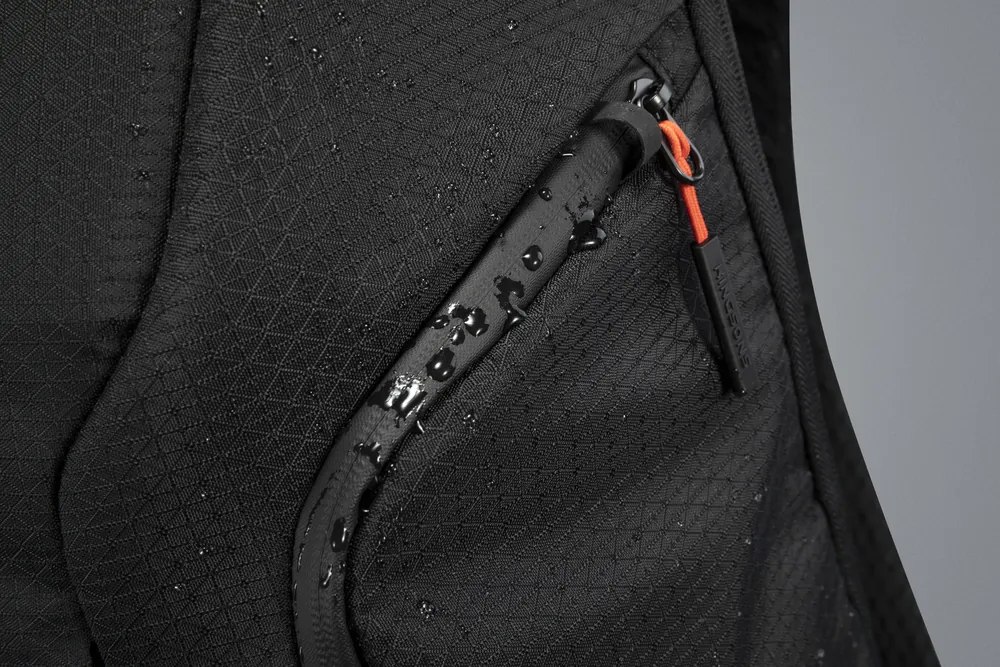
- Durable hardware — double-layer, explosion-proof zippers and named-brand sliders (YKK, SBS, SAB) are both a real quality signal and a review-protector.
- Eco fabric — recycled (rPET/nylon) materials with credible certification increasingly win the “sustainable” search and let you raise the price.
The rule for choosing a feature: it must be visible in a thumbnail or a two-second video, expressible in one Amazon bullet, and defensible long enough to recoup your tooling. Subtle internal improvements don’t sell; problems-solved features do.
Sourcing model: private label vs ready stock for FBA
You have two ways to get a bag onto Amazon, and they suit different stages:
- Ready-stock / white-label — sell an existing, proven model, adding only your logo. Fast to launch, low MOQ, low risk — ideal for a first listing where you are testing demand. Kingsons prices branded in-stock goods from 200 pieces with colour mixing.
- Custom / private-label OEM — your own combination of features, fabric and colours, at 500 pieces per style/colour (mixable) with 200–300-piece trials negotiable and 50-piece small batches available. Slower and higher MOQ, but this is how you build a differentiated, hard-to-copy listing.
Most successful FBA bag sellers start with a ready-stock or lightly-customised product to validate the market cheaply, then move winning SKUs to a fully custom, exclusive spec once velocity justifies the MOQ — the pattern we break down in our guide to wholesale bag MOQ and pricing.

MOQ, sampling and cash-flow for an FBA launch
FBA punishes over-ordering harder than any other channel. Stock sits in Amazon’s warehouse accruing storage fees, and a losing SKU is expensive to remove or liquidate. That flips the usual sourcing priority: the supplier who lets you test small and replenish fast is worth more than the one with the lowest per-unit quote.
- Start small deliberately — a 50–300 piece test across two or three variants tells you which listing converts before you commit capital to a 1,000-unit run.
- Sample before you scale — 7–10 working-day samples let you photograph, list and even soft-launch before the bulk order.
- Replenishment speed matters — a stockout kills your rank; a reliable 30–45 working-day production cycle you can forecast against is a competitive weapon.
Listing-ready: packaging, prep and compliance
Two things can stop an otherwise good product at the door:
- FBA prep requirements — polybag suffocation warnings, barcodes, carton labelling and dimension rules. Solving prep at the factory avoids rejected shipments and unplanned prep-center fees; see our FBA-ready packaging for bags guide.
- Market compliance — US material-safety obligations (CPSIA and California Proposition 65 warnings for bags) and, where you sell into regulated channels, documentation your buyers may ask for. Confirm the manufacturer can supply a current test file before you list.
Quality: the review-killer you cannot fake
On Amazon, quality is not a marketing claim — it is your review average and your return rate, both visible, both compounding. A zipper that fails, a seam that splits or a colour that fades produces the one-star reviews that bury a listing, and no amount of PPC recovers a product with a bad defect rate. This is why supplier QC and hardware choices (named-brand zippers, in-house material and finish testing) belong in your sourcing scorecard, not just the unit price. Kingsons backs its products with a 12-month manufacturing-defect warranty, 24-hour response and a root-cause process — structure that protects a seller’s review score, not just a spec sheet.
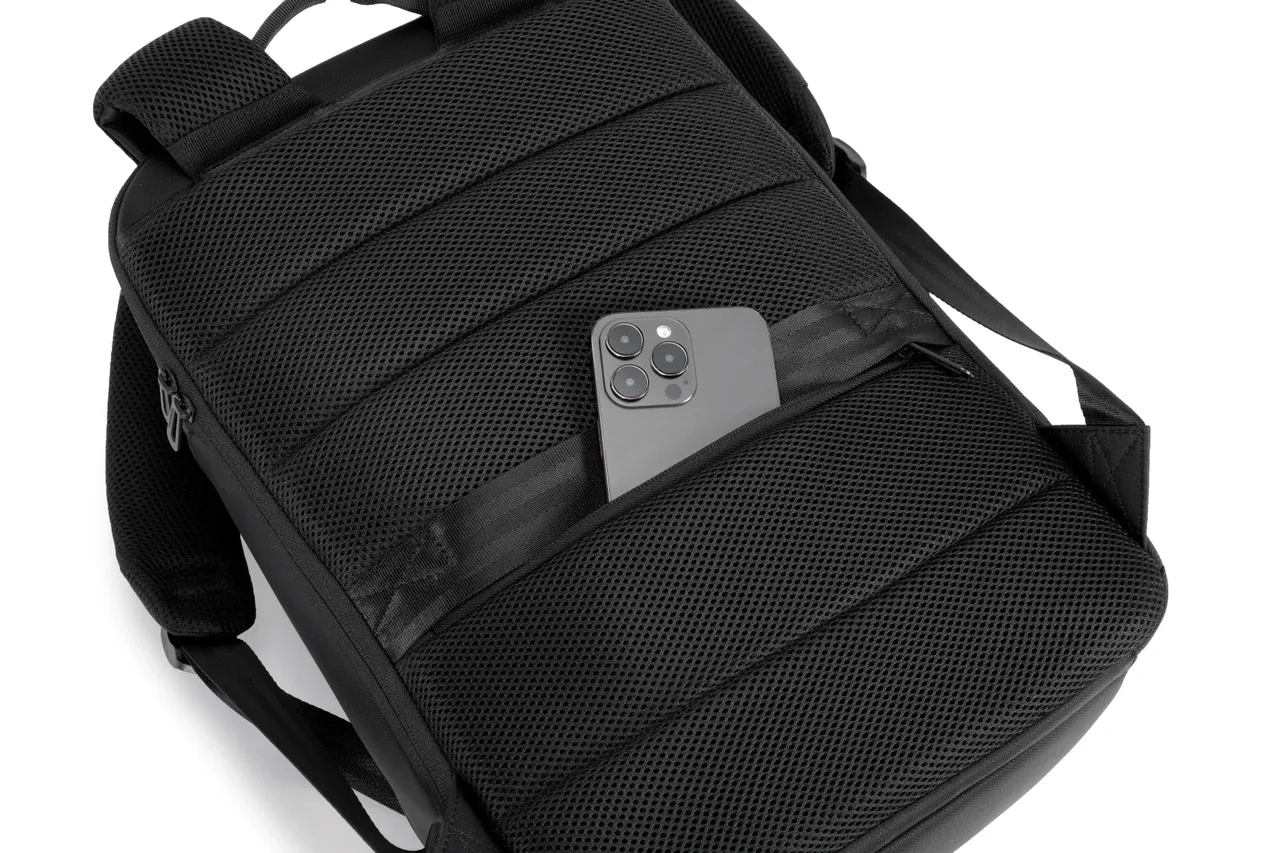
An FBA seller’s manufacturer scorecard
Score each candidate supplier one to five on what actually determines an FBA outcome. Anything below a three on the first four is a disqualifier for a marketplace launch:
- Differentiation capability — can they actually build the anti-theft / RFID / charging / eco features you are betting the listing on?
- Low test MOQ & fast sampling — a real small-batch path so you can validate before you over-buy.
- Quality & hardware — named-brand zippers, in-house QC, a warranty; the defence against returns.
- Compliance & prep — test documentation and FBA-ready packaging solved at source.
- Replenishment reliability — capacity and lead-time discipline to keep the listing in stock.
- Landed-cost honesty — transparent freight, duty and fee-inclusive math.
Why Kingsons fits an FBA sourcing model
Kingsons is a functional-tech bag manufacturer (founding heritage back to 1997) whose product DNA maps directly onto what wins on Amazon: anti-theft, RFID-blocking, smart-charging and recycled-material lines built on named-brand hardware (YKK/SBS/SAB), backed by ISO 9001/14001/45001 and social-audit credentials (BSCI, SEDEX, a passed Walmart factory audit). For an FBA seller the practical fit is the sourcing motion, not just the catalogue: 50-piece small batches and 200–300-piece trials for cheap market tests, branded in-stock goods from 200 pieces for fast launches, custom programs from 500 mixable pieces when a SKU proves out, 7–10 working-day samples, a 50,000 m² / 20-line plant for reliable replenishment, FBA-ready packaging, and a 12-month warranty that guards your review score. The result is a supplier that lets you test many products cheaply and scale winners quickly — exactly the behaviour a crowded Amazon category rewards.
Frequently Asked Questions
Are backpacks a good product to sell on Amazon FBA?
Yes, but only when differentiated. Demand is evergreen and high-volume, yet the category is saturated with near-identical packs that compete on price and lose on FBA’s size-and-weight fees. Winners pick a genuine feature story — anti-theft, RFID, charging, eco fabric — that earns a premium and a strong review base, and they test small before committing capital to bulk stock.
What MOQ do I need to launch a bag on FBA?
You do not need a huge first order — and you should not place one. Kingsons supports 50-piece small batches and 200–300-piece trials, plus branded in-stock goods from 200 pieces, so you can validate a listing cheaply before scaling. Custom private-label programs typically start at 500 mixable pieces once a SKU has proven its velocity.
Which bag features sell best on Amazon?
Problem-solving features that are visible in a thumbnail and expressible in one bullet: anti-theft locking or hidden zippers, RFID-blocking pockets, USB-C charging ports, durable named-brand hardware, and recycled eco fabrics. The best feature is one a competitor cannot quickly copy and that justifies a price premium over the generic pack beside your listing.
Do I need compliance documents to sell bags on Amazon?
For the US market, expect material-safety obligations such as CPSIA and California Proposition 65 warning requirements, and have FBA packaging prep (polybag warnings, barcodes, carton labelling) solved at the factory. Choose a manufacturer that can supply a current test file — Kingsons carries ISO 9001/14001/45001 plus BSCI, SEDEX and a passed Walmart audit — so compliance never blocks your listing.
How do I avoid a bad review average on a new bag listing?
Source for quality, not just price. Named-brand zippers, in-house material and finish testing, and a real warranty prevent the defect-driven one-star reviews that bury a listing, while an accurate product keeps returns low. Kingsons backs its bags with a 12-month manufacturing-defect warranty and a root-cause process — protecting the review score your ranking depends on.
Can Kingsons supply Amazon FBA sellers directly?
Yes. Kingsons supports the FBA sourcing motion with low test MOQs (50-piece batches, 200–300-piece trials), differentiated anti-theft/RFID/charging/eco product lines, FBA-ready packaging, reliable replenishment from a 50,000 m² / 20-line plant, and DDP/CIF shipping options — so you can test many products cheaply and scale winners fast.
Source a bag that wins the Buy Box: differentiated features, low test MOQs and FBA-ready quality from a functional-tech manufacturer.