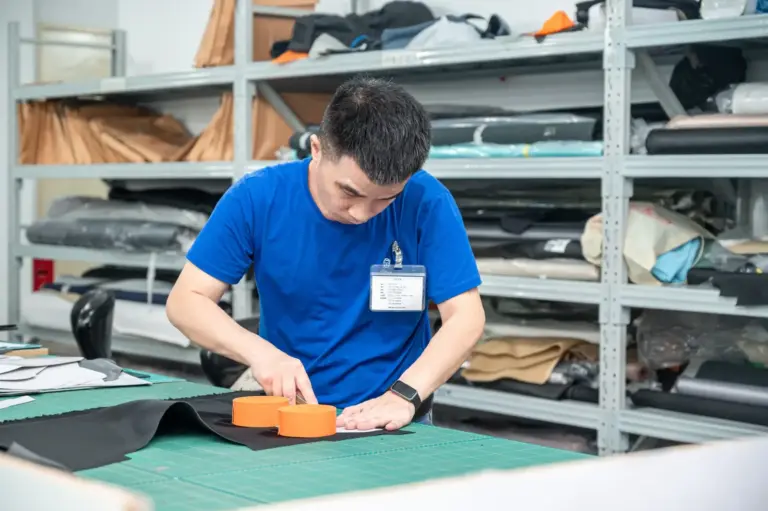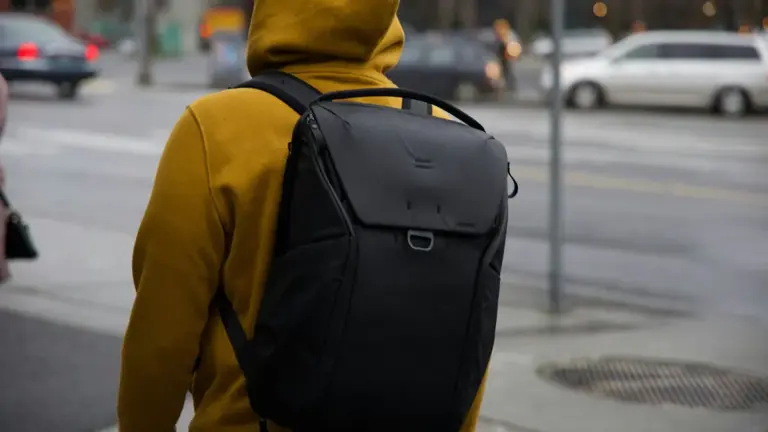
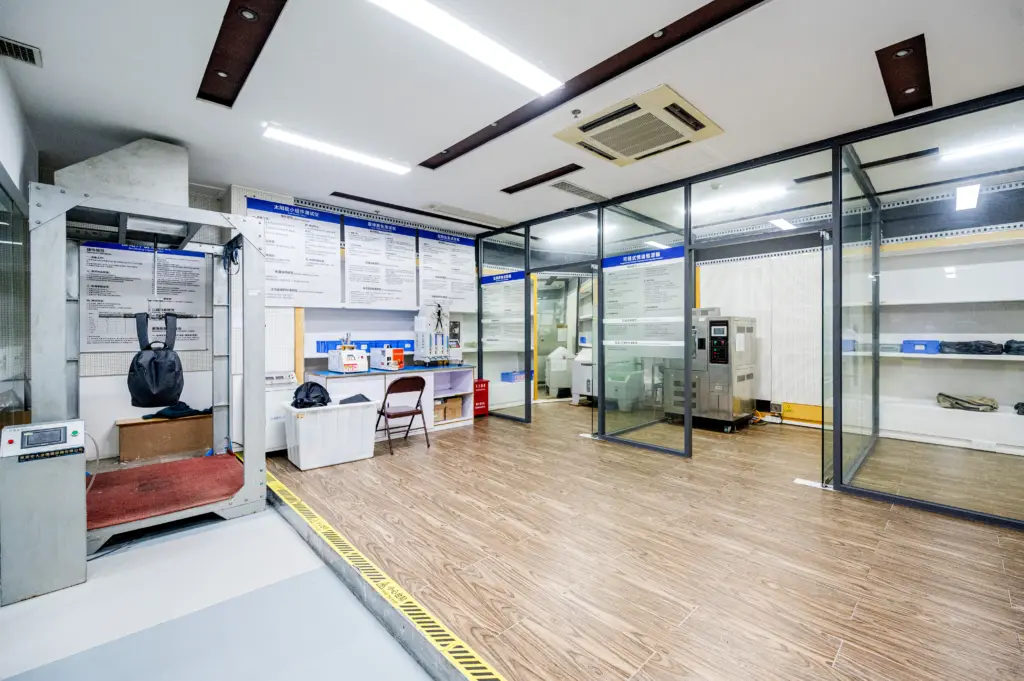
backpack manufacturing defects a prevention is the first checkpoint buyers should lock before they approve a supplier, budget, or production slot. Backpack Manufacturing Defects: A Prevention Checklist is the first checkpoint buyers should lock before they approve a supplier,
The fix isn’t about having a bigger travel budget to personally oversee every production line. It’s about shifting from simple sample approval to defining a clear, visual standard for what’s acceptable and what’s not. Your contract and QC checklist need to specify not just the material, but the acceptable quality tolerance for things like stitch density, panel alignment, and zipper track smoothness. Without that, you’re leaving your investment up to the factory’s interpretation on a busy production day.
مادة & Fabric Defects
A perfect sample approval is worthless if the raw material for the main run comes from a different, cheaper dye lot.
أ $50,000 order can become unsellable because the ‘Forest Green’ of the pre-production sample turns into three slightly different shades across the bulk order. The sales rep won’t tell you they’re switching fabric rolls. Your QC inspector has to catch it on the cutting floor, not when the container lands.
Color Consistency: Beyond the Pantone Swatch
The most common fabric defect is color variation. This happens when a factory uses fabric from different dye lots for the same production run to save costs or manage inventory. Simply referencing a Pantone number in your tech pack is not enough protection. You must define the acceptable quality tolerance for color.
-
- Dye Lot Approval: Before mass cutting begins, demand a cutting from the actual production fabric roll. Compare this against your golden ‘sample approval’ master swatch under controlled lighting.
- Metamerism Check: Specify that colors must match under multiple light sources (على سبيل المثال, D65 daylight, CWF fluorescent). A color that matches in the factory might look completely different in a retail store or outdoors. This is a classic OEM backpack defect.

Weave, Texture, and Material Integrity
Beyond color, look for physical fabric defects like neps (small knots), slubs (thick spots), or inconsistent weave density. These signal low-grade material and can lead to premature wear. Preventing material substitution risks requires a documented supply chain. This is where certifications like GRS (المعيار العالمي المعاد تدويره) provide value, as they mandate traceability.
A manufacturer’s relationship with its mills is a key indicator. Sourcing from established material suppliers like Teijin or Covestro, as some top-tier factories do, provides a defense against the random variations common with unvetted, low-cost fabric brokers.
| Defect Category | Specific Defect | How to Spot | Impact on Brand | Recommended QC Action |
|---|---|---|---|---|
| لون & Dyeing | Color Inconsistency | Compare fabric panels from the same bag or different units under a D65 standard light source. Look for noticeable shade variations between batches. | Creates a perception of low quality and poor process control. Leads to customer returns for aesthetic reasons. | Establish strict Pantone color standards in the tech pack. Approve pre-production lab dips. Reject material lots that fall outside the approved tolerance. |
| Weave & Texture | Weaving Slubs / Neps | Visually inspect the fabric surface for thick, raised knots or bumps that are not part of the intended texture. Run your hand over the material to feel for irregularities. | Weakens the fabric’s tensile strength, creating potential tear points. Gives the product an unrefined, flawed appearance. | Define an acceptable number of slubs per square meter in your material specification. Inspect incoming raw material rolls before the cutting process begins. |
| الانتهاء من السطح | Coating Delamination / Peeling | Flex, fold, or gently scratch a corner of the fabric. Watch for any signs of the waterproof or protective layer flaking, bubbling, or separating from the base textile. | Complete failure of functional features like water resistance, leading to negative reviews and warranty claims. Indicates use of substandard materials. | Specify adhesion strength tests (على سبيل المثال, cross-hatch test) for coated fabrics. Partner with suppliers using proven materials from vendors like Covestro or DuPont. |
| Material Integrity | Incorrect Fabric Density/Weight | Use a fabric weight scale to check if the GSM (grams per square meter) matches the approved sample and tech pack. The fabric may feel flimsier or stiffer than expected. | Directly impacts durability, بناء, and perceived value. A lighter fabric can lead to premature failure, a key risk in material substitution. | Mandate and verify material certifications for every batch. Conduct random GSM testing on incoming fabric rolls as part of the quality control checklist. |
| Handling & Contamination | Stains, Oil Marks, or Dirt | Perform a final visual inspection of the finished product under bright, even lighting. Check all surfaces, especially near seams and hardware, for any marks. | Immediately rejected by end-users and distributors. Reflects a sloppy production environment and poor 5S management, damaging supplier trust. | Enforce strict 5S clean-handling protocols on the production line. Ensure all finished goods undergo a 100% visual inspection before packing. |
Stitching & Seam Failures
Seam integrity is the first line of defense against warranty claims and the clearest sign of a factory’s discipline.
I’ve seen $50K orders ruined by nothing more than bad thread and rushed operators. The stitching is the skeleton of a backpack. When it fails, everything else falls apart. This isn’t a minor cosmetic issue; it’s a critical structural failure that leads directly to customer returns and damages your brand’s reputation for quality.
Low Stitches Per Inch (SPI)
This is the most common cost-cutting tactic. A factory can save fractions of a cent on thread and labor by reducing the stitch density. On a single bag, it’s nothing. Across a 10,000-unit run, it adds up. The problem is, this saving is transferred directly to you as risk. A low SPI seam, especially on a load-bearing point like a shoulder strap anchor, will fail under stress. For any high-stress area on a nylon or polyester bag, your quality tolerance should flag anything below 7-8 SPI as a major defect.
Crooked Lines and Back-Tacking Errors
Wavy, crooked stitch lines are not just ugly. They are a clear indicator of poor operator skill or, more likely, a production line being pushed past its capacity. It signals a lack of discipline. Modern facilities use intelligent sewing workstations that automate patterns and ensure consistency, but many factories still rely on manual skill. Inconsistent seams create uneven tension along the fabric, making a tear more likely. Also, check the beginning and end of every major seam for proper back-tacking (reverse stitching). Missing or messy back-tacks are guaranteed failure points.

Laptop Compartment Padding Defects
The laptop sleeve is where a supplier’s cost-cutting becomes a brand’s biggest liability.
This isn’t just a pocket; it’s a shock absorption system. A failure here doesn’t just lead to a bad review; it can trigger warranty claims and erode customer trust. The defects are almost always intentional cost-saving measures hidden from the initial sample approval stage.
Incorrect Foam: The Density Deception
A primary material substitution risk involves the protective foam. A tech pack might specify closed-cell EPE (Expanded Polyethylene) foam for its rigidity. A factory under pressure may swap it for cheaper, low-density open-cell polyurethane. It feels soft but compresses fully on impact, offering no real protection.
-
-
- The Spec to Check: Your laptop backpack quality control checklist must specify foam density (على سبيل المثال, 25-30 kg/m³ for standard EPE) and require a cut-section verification from a random unit in the production batch.
- The Risk: Low-density foam leads to device damage from minor drops. This is a critical failure, not a cosmetic issue, and can destroy a product line’s reputation.
-
Padding Gaps: The Corner-Cutting Trick
Even with correct foam, protection is useless if it’s not in the right place. To save material and speed up assembly, workers may use foam panels cut slightly too small. This creates unprotected gaps along the seams and, most critically, at the corners and bottom of the compartment.
-
- The Spec to Check: Mandate a zero quality tolerance for gaps. Specify that padding must provide complete ‘corner-to-corner’ and ‘false bottom’ protection, where the laptop is suspended away from the bag’s base.
- The Risk: A laptop’s corners are its most vulnerable points. A gap of just 1cm means the device’s corner will hit the ground directly during a drop, bypassing the entire protection system.
Hardware Failures
A backpack is only as strong as its cheapest component.
The fabric can be perfect, but a single hardware failure renders the entire bag useless. This is the most common source of warranty claims and negative customer reviews. You aren’t just checking for looks; you’re checking for mechanical integrity. These components are moving parts that must endure thousands of cycles.
السوستة: The First Point of Failure
A jammed or broken zipper is the number one complaint. The difference between a no-name zipper and a reliable one is stark. During a factory audit, I always check the hardware supply room. Seeing boxes of YKK or SBS zippers—which are part of the Kingsons approved supplier list—is a strong positive signal. A factory using unbranded zippers is a major red flag for your OEM backpack project.
-
- What to check: Look at the back of the zipper slider. Does it have the YKK or SBS brand mark? Or is it blank? A blank slider means a generic part with no accountability.
- Action item: Demand a “zipper reciprocating test” report. A good zipper should withstand at least 5,000 open/close cycles without tooth breakage or slider malfunction.
أبازيم & Adjusters: The Brittleness Test
The second most common hardware failure is a cracked buckle. This is almost always a material issue. To shave costs, some factories use cheap, recycled ABS plastic instead of virgin POM (Polyoxymethylene). The sample approval might look fine in a climate-controlled office, but that recycled buckle will become brittle and snap in cold weather or after UV exposure.
Strap Anchors: The Real Stress Point
A strap itself rarely fails; the failure point is where it’s sewn to the body of the bag. A simple box stitch (a stitched square) is not enough for any load-bearing point. Look for heavy bartack stitching—a series of dense, repeated stitches—at every shoulder strap and handle anchor. Skipping this reinforcement saves the factory a few seconds per bag but guarantees failure under a heavy load.
Symmetry & Dimensional Errors
A 5mm difference in shoulder strap length is a major defect, not a minor flaw.
Symmetry and dimensional errors are the silent killers of perceived value. A bag that looks slightly lopsided or has an off-center pocket immediately feels cheap to the end customer, trashing brand reputation before the zipper is even opened. These aren’t just aesthetic issues; they can be functional failures, like a 15.6″ laptop not fitting in its designated sleeve.
The Source: Cutting and Assembly
These defects almost always trace back to two areas: the cutting workshop or the sewing line. Inconsistent manual cutting of fabric panels is the number one cause. Advanced manufacturing facilities utilize automatic cutting machines to ensure every single piece is identical, which is a critical process control for large orders. Assembly jigs can help on the sewing line, but they can’t fix a poorly cut panel.
Defining Your Quality Tolerance
Your tech pack must specify acceptable deviations. Without a defined quality tolerance, the factory decides what’s ‘good enough’. This is a detail that separates professional buyers from amateurs. Your third-party inspector needs these numbers for their report.
- Pocket & Logo Placement: Must be centered on the panel. Any deviation greater than 3mm from the geometric centerline is a visual defect. This often points to rushed assembly.
- Overall Dimensions: Verify against the approved sample using proper dimension measuring instruments. A variance of more than +/- 5mm on the bag’s height or width should fail inspection.
- Strap Symmetry: Measure the attachment points of both shoulder straps from a common reference point. A difference greater than 5mm is a major functional defect affecting wearability.
| Defect Category | QC Inspection Point | Impact on Product | Kingsons’ Prevention Standard |
|---|---|---|---|
| Overall Dimensional Deviation | Measure final product’s height, width, and depth against the approved tech pack specifications (على سبيل المثال, +/- 5mm tolerance). | Fails to fit specified devices (على سبيل المثال, a 15.6″ laptop). Creates issues with packaging and shipping. Misleads end-customers. | Utilizing 3D pattern systems and automated laser cutters for precise panel cutting. Dimensional measuring instruments are used for verification in our dedicated QC workshop. |
| Asymmetrical Construction | Verify that shoulder straps, side pockets, and other paired features are attached at identical heights and distances from the bag’s centerline. | Causes user discomfort and uneven weight distribution. Appears visually unprofessional, damaging brand perception and increasing returns. | Intelligent sewing workstations and strict adherence to jigs and markers on the assembly line ensure consistent component placement. All units are checked against a ‘golden sample’. |
| Component Misalignment | Check if logos, patches, and external pockets are perfectly centered or positioned according to the design template. Ensure straightness. | Immediately signals low quality and poor attention to detail. Directly harms the brand’s premium image, especially for OEM clients. | Dedicated craft workshop uses high-precision embroidery and printing machines with alignment guides. A multi-stage QC process checks alignment before and after assembly. |
| Incorrect Proportions | Measure individual components (على سبيل المثال, الجيب الأمامي, top handle) to ensure they scale correctly relative to the main body as per the design. | The bag looks visually unbalanced or ‘off’. Can affect functionality, such as a handle being too small for a hand or a pocket being unusable. | Our R&D team creates exhaustive tech packs with all component dimensions specified. The mandatory pre-production sample approval process locks in all proportions before bulk manufacturing. |
Building a QC Checklist for Your Supplier
Your QC checklist isn’t a suggestion; it’s a contractual addendum to your purchase order.
A buyer got burned on a $50k backpack order. The pre-production sample was perfect. The mass
A generic checklist is worthless. A professional one is a manufacturing agreement. It defines the pass/fail criteria for every component production starts. This isn’t about trust; it’s about creating a shared, objective standard. It protects you from material substitution and ensures consistency from the first unit to the last.
Beyond the Basics: Actionable QC Demands
Stop just ‘checking’ things. Start demanding verifiable proof. Your laptop backpack quality control checklist should be a series of questions that require evidence. This is how you move from hoping for quality to engineering it into the contract.
- Material Verification: Don’t just list ‘600D Polyester’. Specify the Pantone color code and demand a spectrophotometer reading from the first production batch to match the approved sample. For compliance, require REACH or California 65 test reports for the exact material batch being used.
- Component Stress Tests: Instead of ‘check zippers’, demand a report from a zipper reciprocating tester for 500 cycles on 1% of the batch. For straps, specify a load test using a tensile strength machine, confirming they hold a minimum weight (على سبيل المثال, 15كجم) without seam slippage.
- Process Documentation: Ask for the supplier’s internal QC reports from the sewing line. A factory operating under an ISO 9001 certification will have these. If they can’t produce them, their quality control is informal and unreliable.
- The Contract Question: “Will you sign our detailed QC checklist as a binding addendum to the purchase order?” (A ‘no’ means they want the freedom to fail.).
- The Transparency Question: “Can you provide the final inspection report from your last production run of a similar product?” (Hesitation signals they don’t have a formal process or are hiding something.).
- The Tolerance Question: “What is your AQL (Acceptable Quality Limit) for major and minor defects, and is it documented?” (If they don’t have a clear answer, you will be the one defining quality after a problem occurs.).
Your 3-Point Decision Framework
Before signing the next PO, ask your supplier these three questions. Their answers will tell you everything you need to know about their commitment to quality.
خاتمة
- Structural seams on load-bearing straps should meet a minimum of 7-8 stitches per inch (SPI).
- Verify laptop padding is uniform EPE foam, not cheaper filler materials that create protection gaps.
- Confirm zippers are from specified suppliers like YKK or SBS, as unbranded hardware is a primary failure point.
- Check for symmetry with a measuring tape; deviations over 5mm in panel alignment indicate poor assembly.
Your next step is to move from informal checks to a documented standard. Use these points to define your brand’s official quality tolerance and build a formal laptop backpack quality control checklist for your sourcing team. You can then evaluate how a potential manufacturing partner’s internal QC processes align with your requirements by reviewing their product specifications and production standards. Seeing these principles applied across a full product range is the best confirmation of a supplier’s capabilities.
الأسئلة المتداولة
How do you prevent stitching and seam failures?
We use intelligent sewing workstations to maintain consistent stitches-per-inch (SPI) and seam integrity. Our quality control includes in-line checks during the sewing phase, not just at final inspection. This prevents seam bursts and crooked lines from reaching the packing stage.
How do you prevent fabric color and material defects?
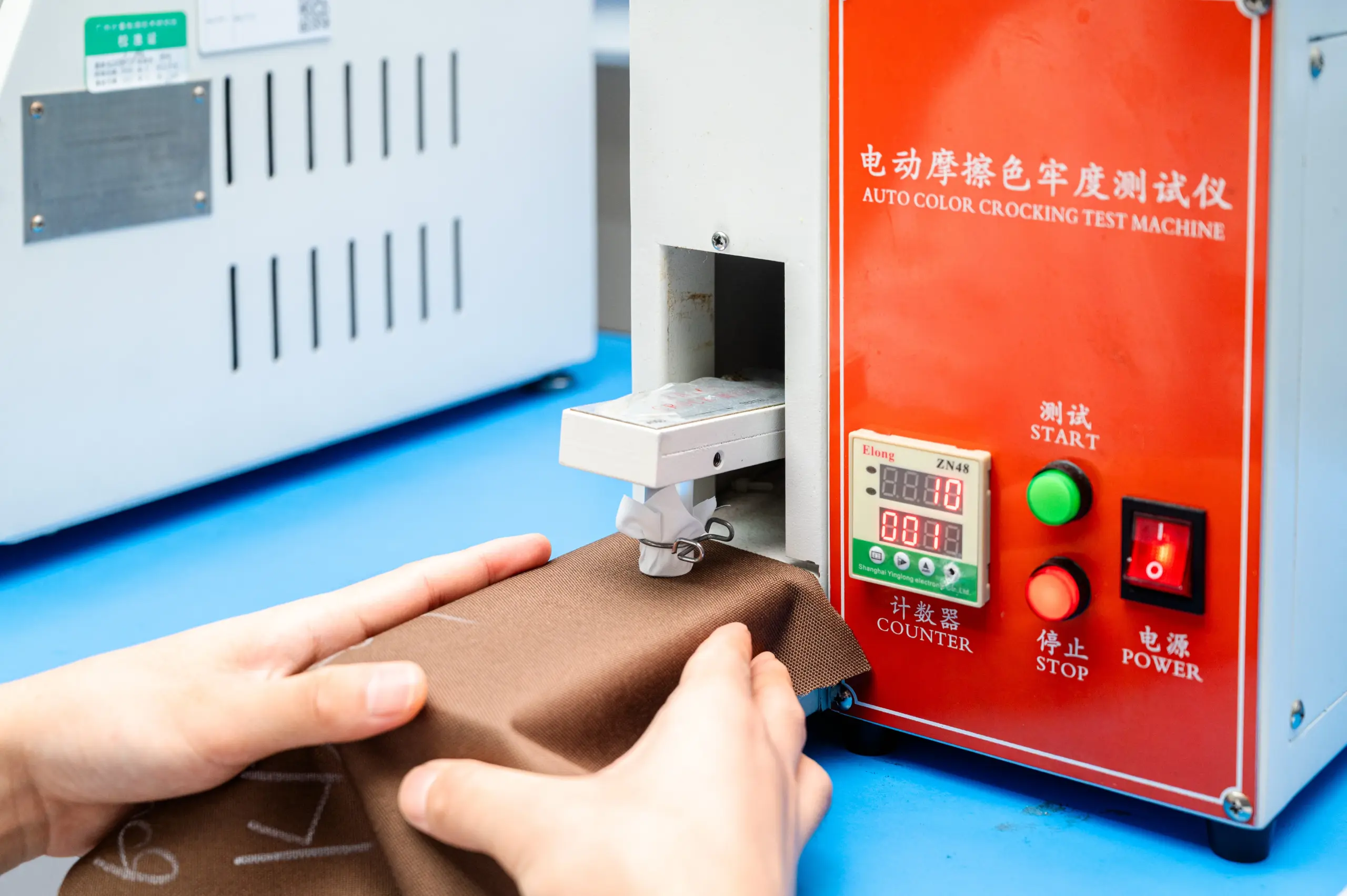
We prevent fabric defects by testing all incoming raw materials for wear, waterproofing, and tensile strength in our lab. We also source from pre-vetted global suppliers like. All materials must pass internal testing and comply with standards like REACH before being cut.
How do you test for hardware failures like zippers?
We test for hardware failure using a dedicated zipper reciprocating tester to simulate thousands of cycles. We primarily use certified hardware from brands like YKK and ITW to minimize. This combination of sourcing and testing ensures zippers and buckles meet durability requirements.
What certifications prove your quality control system?
The quality control system is proven by the ISO9001 certification, which governs the entire manufacturing process. ال
How do you prevent laptop compartment padding defects?
We prevent padding defects using patented designs like our airbag shockproof technology for critical protection zones. Our R&D process includes 3D modeling and physical tests to validate padding placement. This is critical for our OEM partners in the electronics and gaming industries.