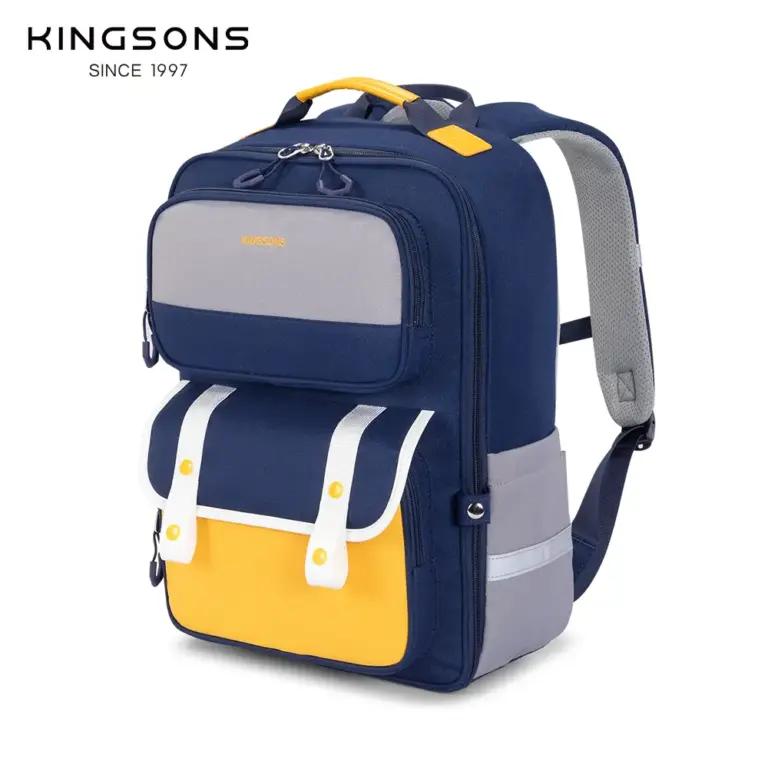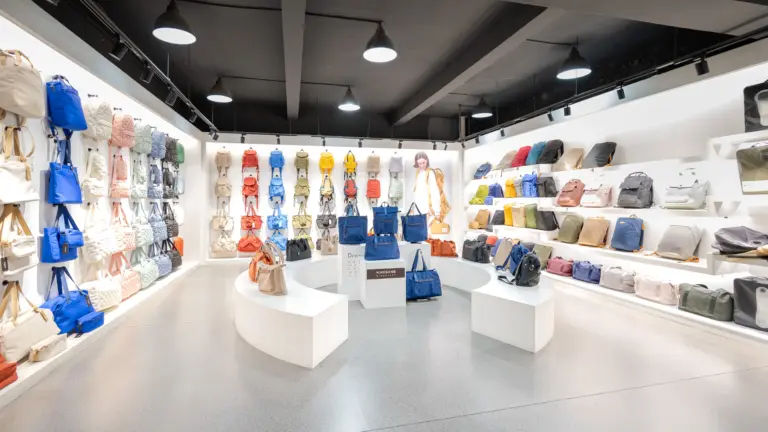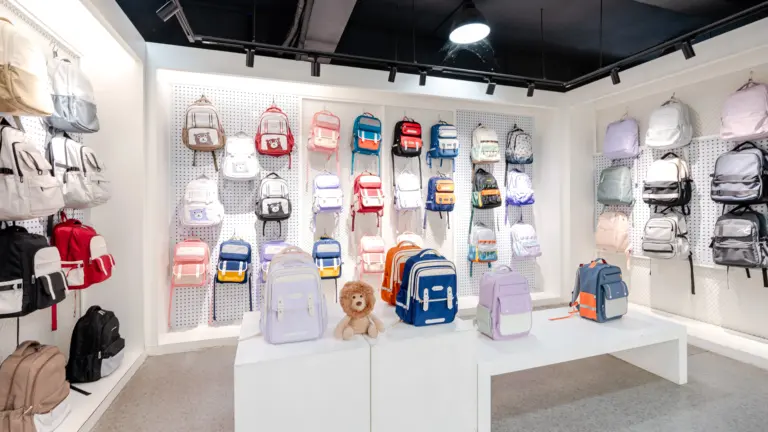
A custom handbag is not a stock bag with a logo stamped on it. It is a shape, a material, a set of hardware and a finish chosen deliberately so the finished piece carries your brand’s price point and feel. Done well, custom manufacturing is how a fashion label escapes the commodity rack; done badly, it is six months and a warehouse of unsold prototypes.
This guide walks the custom handbag path end to end — from design and pattern through materials and hardware to branding and private label — and shows where each decision moves cost, MOQ and lead time.
الوجبات السريعة الرئيسية
- Custom handbag work spans four levels — logo-only, recolour and material swap, feature and hardware change, and fully bespoke ODM — each with its own MOQ and timeline.
- Materials and hardware decide perceived quality: hide or PU grade, lining, سستة العلامة التجارية, and whether metal clasps are plated and polished or stamped and painted.
- A written spec (tech pack) with dimensions, مواد, hardware list, Pantone colours and artwork prevents most expensive sampling errors.
- Branding methods — embossing, foil, metal label, embroidery — must suit the material and the price point, not just the mood board.
- Standard custom MOQ is 500 pieces per style per colour, with trial runs of 200–300 and bespoke ODM from higher volumes; sampling 7–10 days, production 30–45 working days.
- Kingsons supports full ODM handbag development from a concept brief, backed by an in-house design team and 500+ patents across a 50,000 m² campus.
Four Levels of Handbag Customisation
Decide your customisation level before quoting materials, because the level drives everything downstream. Buyers who skip this either pay for bespoke tooling they did not need, or under-specify a bag that then cannot carry a premium price.
| مستوى | What Changes | Typical MOQ | الجدول الزمني | أفضل ل |
|---|---|---|---|---|
| 1. Logo-only | Your mark on an existing factory design | 200 جهاز كمبيوتر شخصى (stock) | Sample 5–7d · Prod 25–30d | First brand tests, gifting |
| 2. مادة & لون | Existing shape rebuilt in your leather/PU, لون, lining | 500 جهاز كمبيوتر شخصى / لون | Sample 7–10d · Prod 30–40d | Matching a brand palette |
| 3. ميزة & الأجهزة | المقصورات, clasp type, strap, size adjusted | 500 جهاز كمبيوتر شخصى / style | Sample 10–15d · Prod 35–45d | Differentiating a line |
| 4. Full bespoke ODM | New pattern and hardware engineered from your brief | 500–1,000+ pcs | Sample 15–20d+ · Prod 40–50d | Proprietary signature pieces |
مستوى 4 is where a custom handbag manufacturer earns its keep: not copying a catalogue shape but developing one. The OEM-versus-ODM decision — bring your own design, or hand over a concept and let the factory engineer it — is covered in our guide to OEM versus ODM manufacturing, and the same logic applies to handbags.
From Sketch to Pattern: The Design Stage
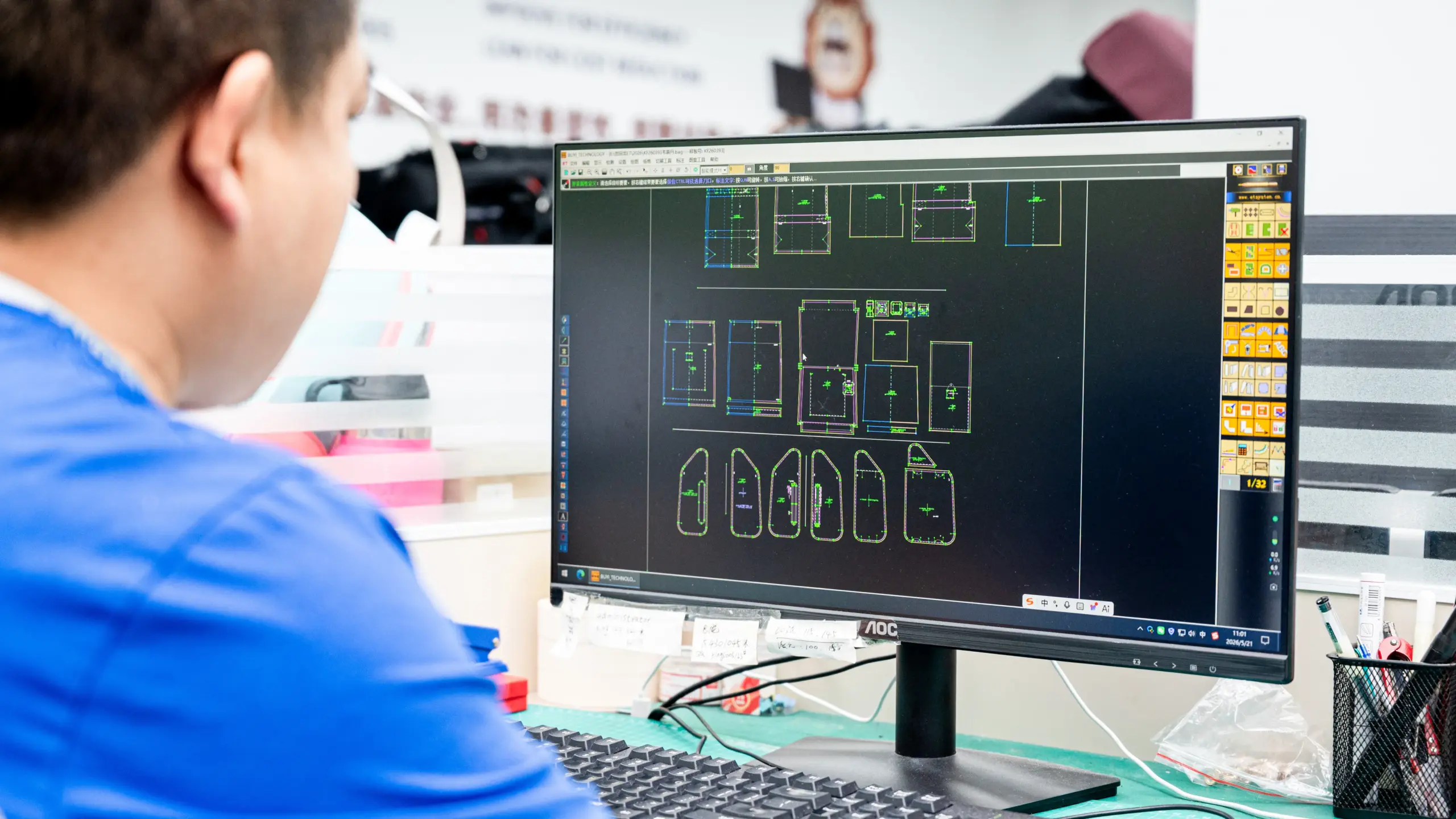
A custom handbag begins as a silhouette and a set of constraints: what it carries, how it opens, how structured it must hold its shape, and what it must cost to hit your retail price. That brief becomes a technical drawing and then a pattern — the flat pieces that, cut and sewn, produce the three-dimensional bag.
Pattern development is where a designer’s intent survives or dies. A gorgeous sketch that ignores how leather skives, how a gusset folds, or where a clasp can physically sit will fail at sampling. An experienced factory flags these problems on the first review rather than after three rounds of prototypes.
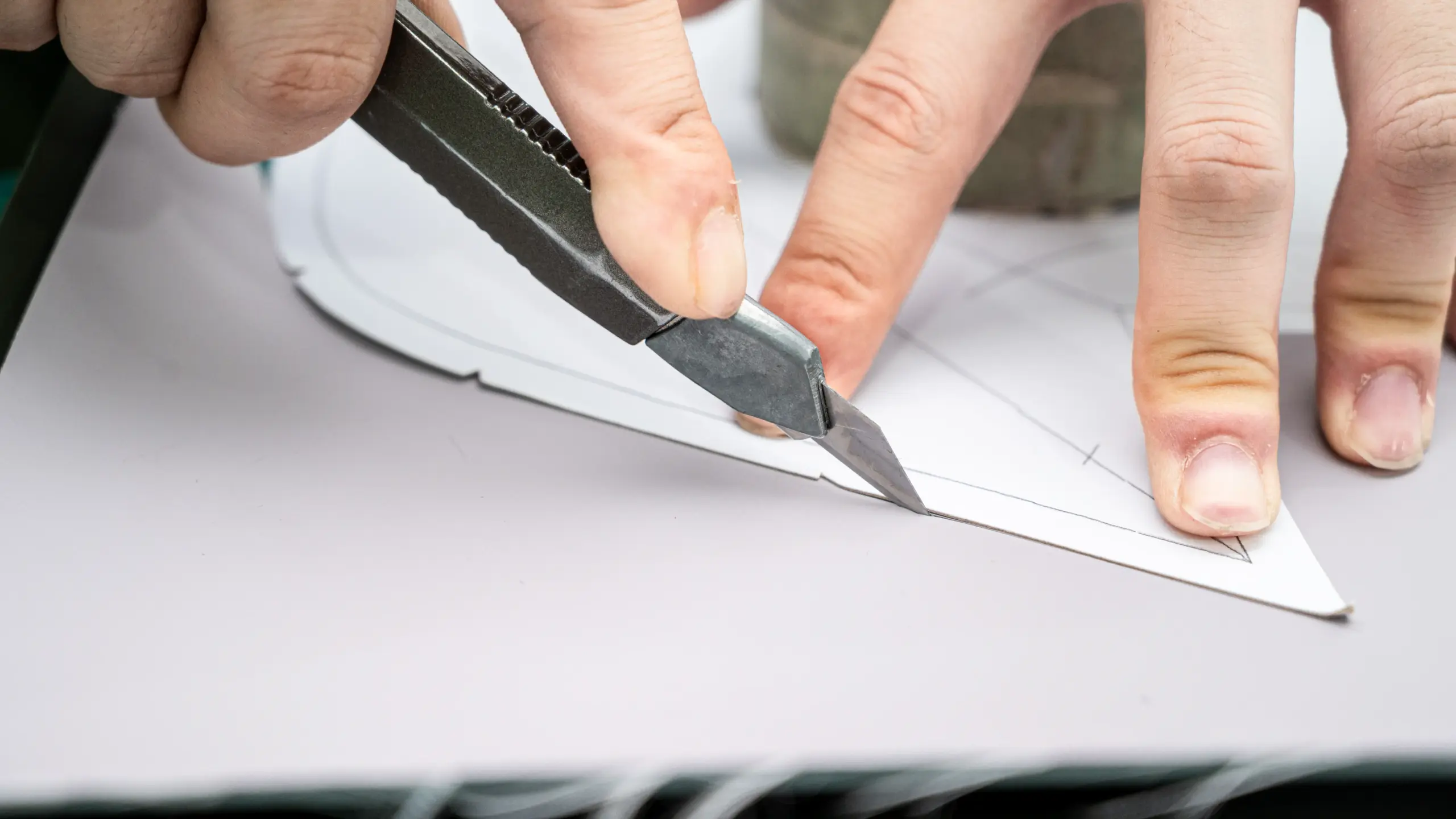
Document all of it before cutting. A tech pack with dimensions, panel layout, مواد, الأجهزة, Pantone colours and artwork is the difference between a factory building what you imagined and building what a previous buyer imagined. ملكنا bag tech pack guide lists the components that prevent costly rework.
مواد: Choosing Leather, Synthetic and Lining
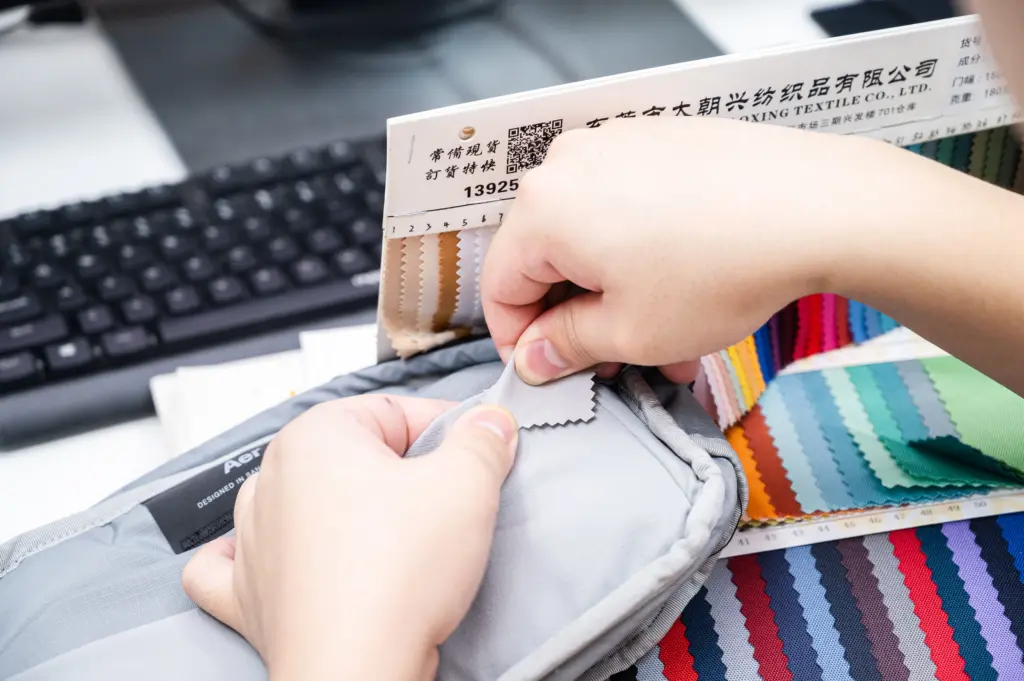
Material selection is the largest single decision in a custom handbag. It sets hand feel, متانة, وزن, price point and target market all at once.
| عنصر | خيارات | Effect on the Bag |
|---|---|---|
| صدَفَة | Cowhide, sheepskin, PU, PVC, coated canvas, نايلون | Feel, look, وزن, price band |
| بطانة | البوليستر, suede-cloth, microfiber, cotton canvas | Perceived interior quality, pocket layout |
| Trim & webbing | Leather straps, padded webbing, chain | Carry comfort and style signature |
| بناء | Interliners, board, moulded panels | Whether the bag holds shape or slouches |
Kingsons sources from established material suppliers including Covestro, Teijin, Arkema and Amann, with imported Korean leather and Taiwanese nylon, and offers recycled and eco options under GRS certification for sustainability-positioned lines. Because material drives cost so directly, a factory embedded in a leather and hardware cluster can hit a target price without silently downgrading the hide.
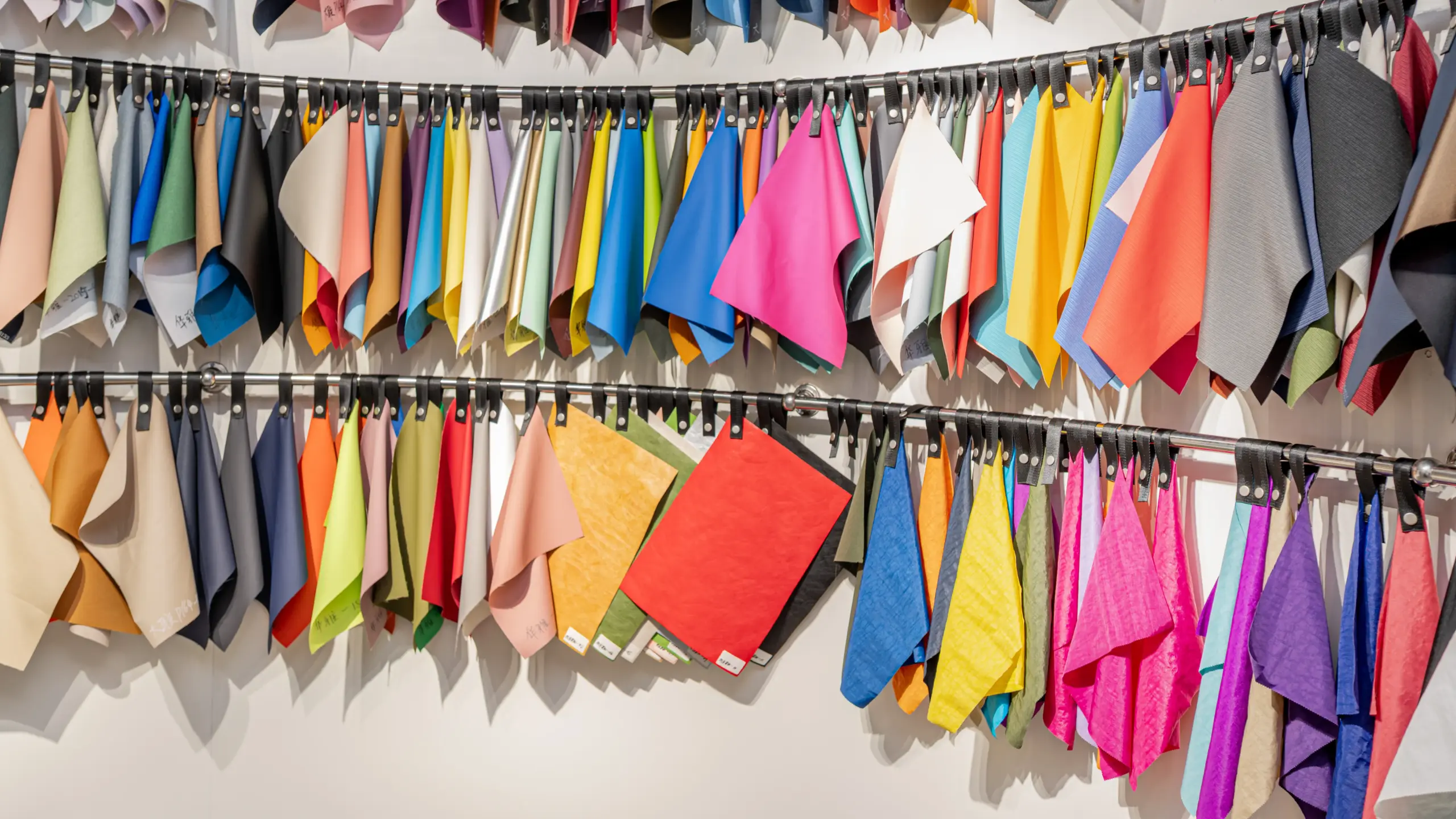
For the trade-offs behind each fabric family, see our bag materials guide.
الأجهزة: The Detail Buyers Feel
Nobody feels the denier of a lining, but everyone feels a clasp. Hardware — zippers, المشابك, حلقات على شكل حرف D, chains, قدم, logo plates — is where a custom handbag either reads as premium or as cheap, and it is where costs hide. Specify the brand tier and the finish, not just “metal”.
- السوستة: YKK where the brand names it; SBS and SAB for reliable performance at lower cost.
- Clasps and locks: turn-locks, magnetic snaps and hook closures from ITW/SFS, plated and polished rather than painted.
- Logo plates: a moulded, hand-plated metal brand plate survives far longer and reads as premium against a printed tag.
- Chains and feet: base studs protect the shell; a shoulder chain changes both drape and price.
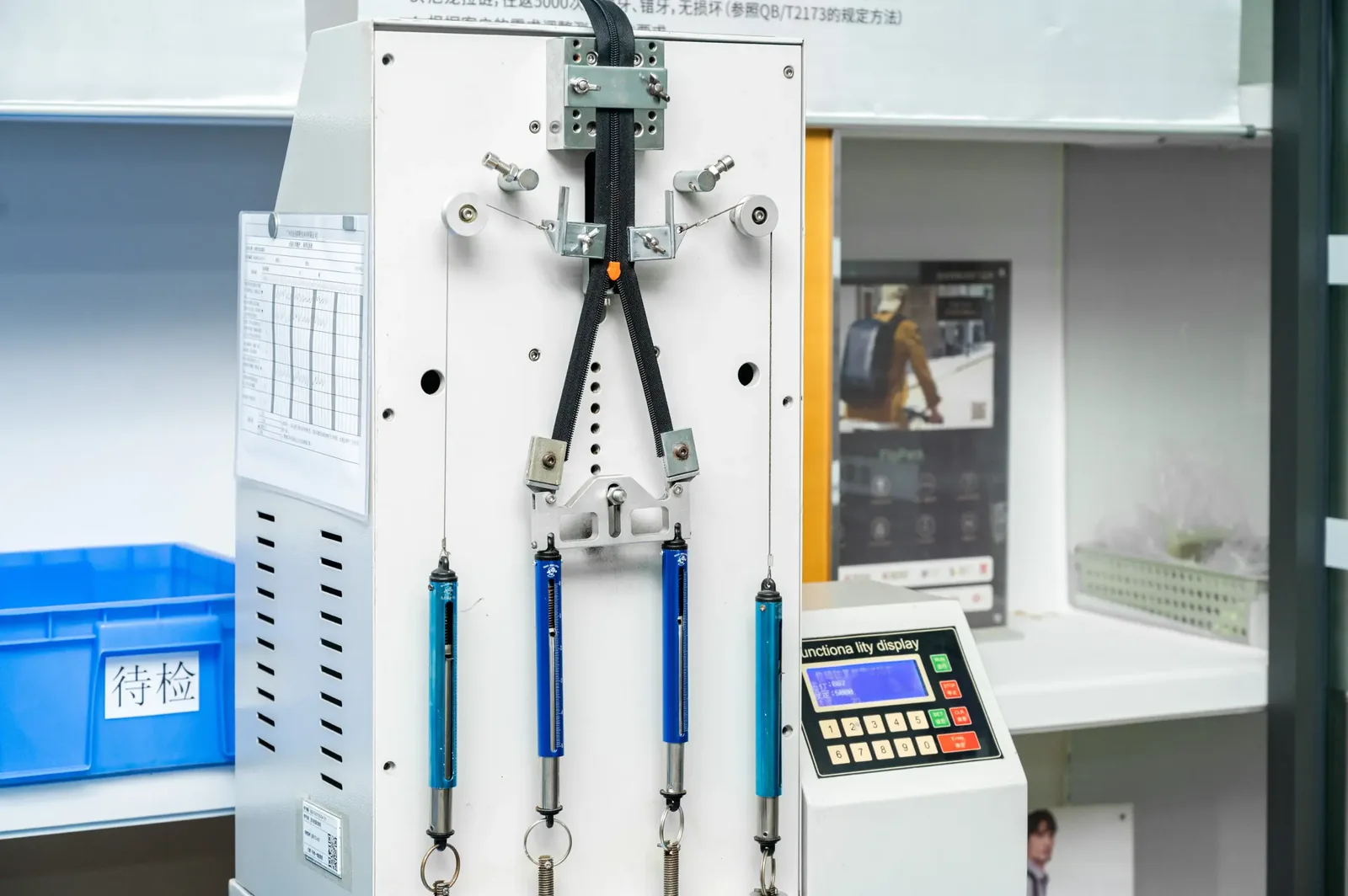
Finish quality separates tiers. Kingsons hardware goes through hand-plating and hand-polishing for a consistent, corrosion-resistant surface — the kind of detail that survives a salt-spray test and a year of daily use, not just the first photo.
Branding and Private Label
Private label means the bag carries your brand as if you made it — and the branding method must match the material and price point. Embossing and foil suit leather and PU; a metal label suits a premium line; embroidery and woven patches suit canvas and casual pieces; heat transfer handles detailed full-colour artwork.
Placement and artwork quality matter as much as method. Supply vector artwork with Pantone references and fix the maximum logo area and position before sampling — a logo that lands across a seam or on a curved panel cannot be applied cleanly. Private label also extends to packaging: branded dust bags, hangtags and boxes turn a good bag into a retail-ready product. For gifting and corporate programs, see our corporate gift bag guide.
Cost, MOQ and Lead Time on a Custom Handbag
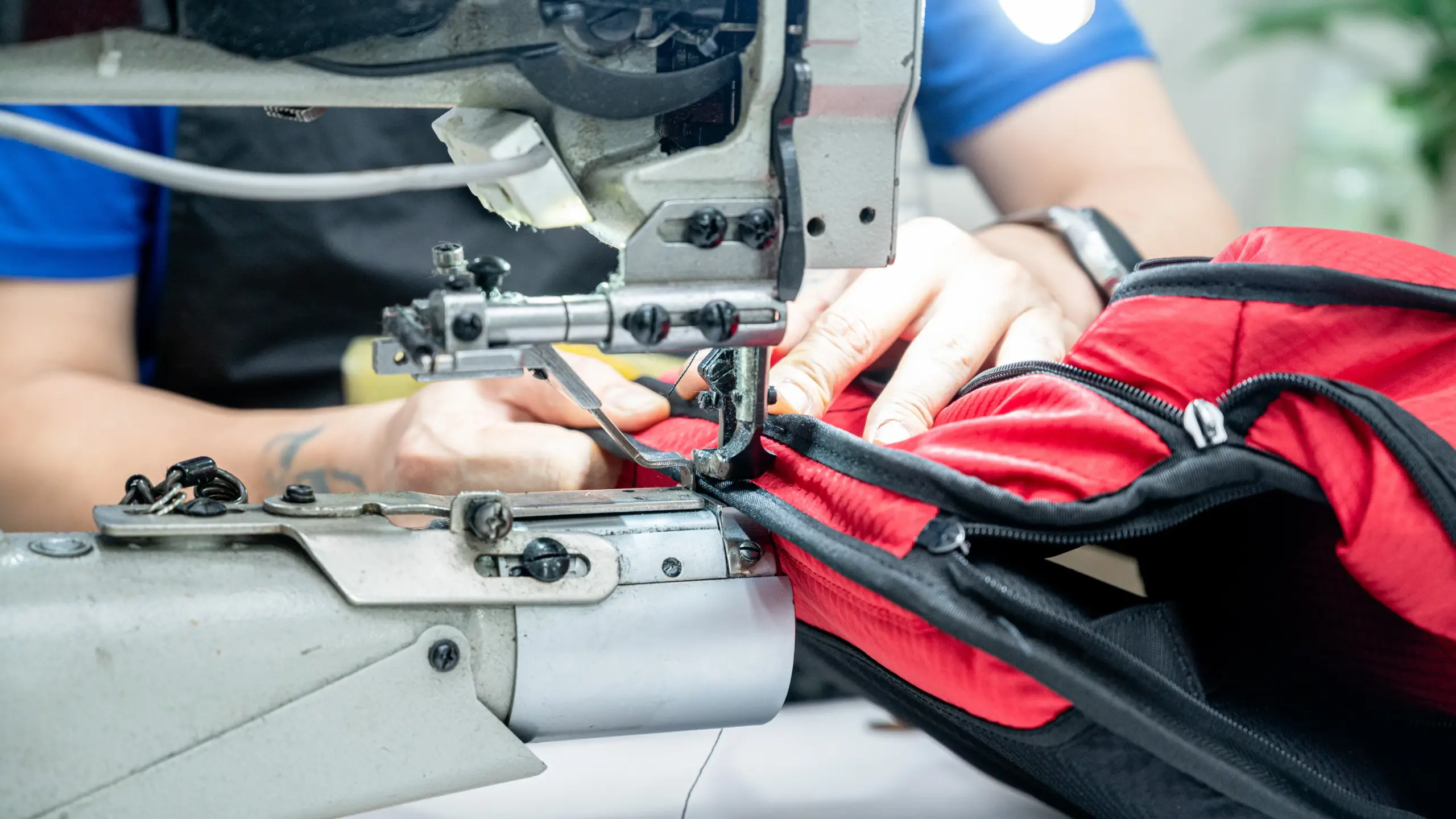
Every customisation axis pushes on minimum order, unit cost and timeline. Bespoke tooling — a custom clasp mould, a moulded panel — adds an up-front charge that amortises across volume, so it makes sense at higher runs and rarely at low ones.
Kingsons’ standard custom MOQ is 500 pieces per style per colour, with trial orders of 200–300 negotiable and flexible small runs from 50 for capsule drops; full bespoke ODM with new tooling starts higher. Samples take 7–10 working days, mass production 30–45, and mould charges are creditable against later orders. For the numbers behind a landed cost, read our manufacturing cost guide.
A custom programme is only as strong as the design and engineering behind it. Kingsons runs an in-house design studio of 11 designers holding more than 500 براءات الاختراع, with Red Dot, iF and Good Design recognition, so a buyer can move from a mood board or a competitor reference to a production-ready pattern without outsourcing the thinking. That capability is what turns “custom” from a colour-and-logo change into a genuinely differentiated product someone pays a premium for.
الأسئلة المتداولة
What is the MOQ for a custom handbag?
Around 500 pieces per style per colour for a custom run, with logo-only work on a stock model from roughly 200 and trial orders of 200–300 negotiable at an adjusted price. A fully bespoke ODM design with new tooling starts higher because the pattern, moulds and material sourcing are all new. Kingsons also runs flexible small batches from 50 pieces for capsule tests and events.
Can a manufacturer design a handbag from my concept?
نعم, through ODM development. An in-house design, pattern and materials team turns a mood, sketch or market brief into a production-ready pattern with your chosen structure, hardware and branding. Kingsons supports this with a dedicated design team and more than 500 براءات الاختراع. Bring your own finished design (تصنيع المعدات الأصلية) or hand over a concept (أوديإم) — the cost and MOQ differ, so choose based on how much of the design work you can supply.
What should I send to start a custom handbag project?
Send a tech pack: dimensions and panel layout, shell and lining materials, hardware list with brand tier and finish, Pantone colour references, and vector logo artwork with placement. Add target quantity, market, target landed cost and any compliance needs. Complete specifications let the factory quote accurately on the first pass and keep the sampling rounds short.
Which branding method should I use on a handbag?
Match the method to material and price point. Embossing and foil work on leather and PU; a moulded metal label reads premium; embroidery and woven patches suit canvas and casual bags; heat transfer handles detailed full-colour artwork. Supply vector files and fix placement and maximum size before sampling, since a logo over a seam or a tight curve cannot be applied cleanly.
How long does custom handbag production take?
A pre-production sample takes 7–10 working days once materials and artwork are agreed, and longer for a fully bespoke design needing new tooling. Mass production runs 30–45 working days, 40–50 for full ODM builds, plus sea or air transit. Custom colour dyeing adds 7–14 days, so plan the schedule backwards from your delivery date and confirm it in the contract.
Develop your custom handbag line with a manufacturer that designs, sources, cuts, sews, plates and inspects under one roof — 27 years of OEM/ODM and 500+ patents behind every pattern.