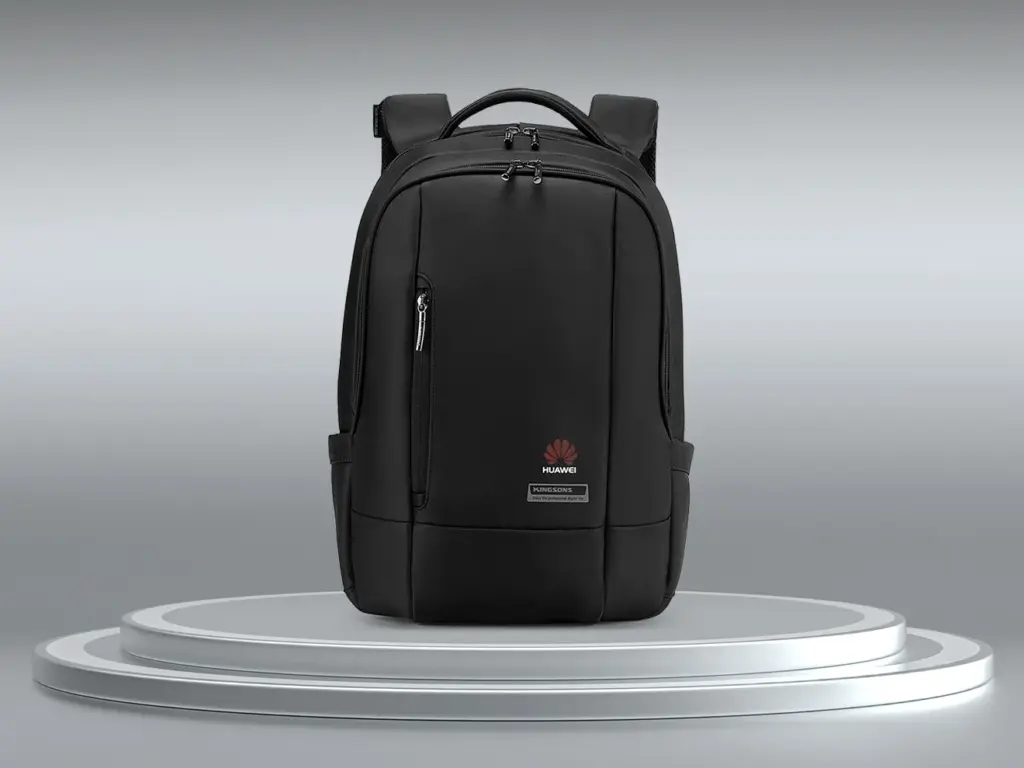
A corporate gift bag is a small procurement project wearing the costume of a nice gesture. Get the format, branding and timing right and it quietly earns its budget back every time the recipient carries it through an airport or a campus. Get it wrong and a crate of half-used totes becomes the story a company tells about itself. This guide lays out how to plan, brand and order a gift bag program at scale without the usual surprises.
Key Takeaways
- A gift bag program is defined by four variables set before any quote: audience tier, occasion, per-unit budget, and delivery date. Everything downstream follows from these.
- Match bag format to recipient seniority — high-volume totes and drawstrings for awareness, padded laptop backpacks for employees and clients, premium briefcase or smart-tech formats for executives.
- Branding method drives perceived value more than price: embroidery, metal badges and woven labels read as a gift; a single-colour screen print reads as swag.
- Plan 8–10 weeks for a custom program and 4–5 weeks for logo-on-stock; kitting contents at the factory removes a warehouse step and a common delay.
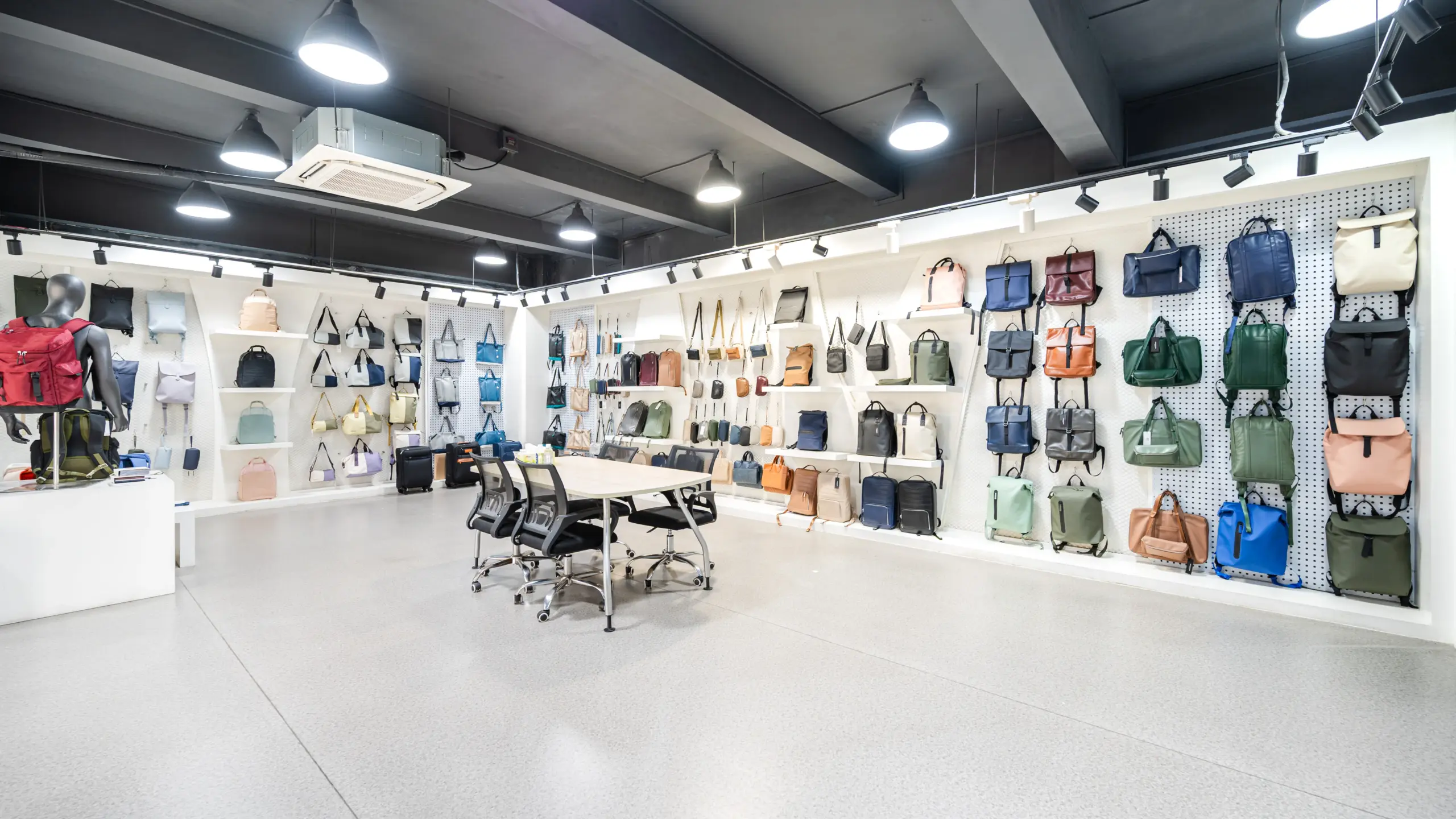
- Kingsons runs corporate gift and promotional bag programs at 300,000 units/month across 20 lines in a 50,000㎡ campus, with BSCI, SEDEX, GRS and ISO certification for compliance-governed buyers.
What Separates a Gift Bag Program from a Swag Order
A swag order answers one question: what can we hand to a lot of people cheaply. A gift bag program answers a different one: what do we want a specific audience to feel and do. That difference shows up in three places:
- Audience segmentation — employees, clients, and prospects rarely deserve the same bag, and mixing them into one SKU is the most common way a gifting budget under-delivers.
- Contents and presentation — a gift bag is often a carrier for other items; how it is packed and presented is part of the message.
- Procurement governance — larger programs need compliance documentation, consolidated invoicing, and phased delivery that a one-off swag buy does not.
Treat the program as a small product launch with a delivery deadline, and the sourcing decisions become far easier to make in the right order.
Define the Program: Four Variables to Fix First
Before approaching a factory, lock these four down. A quote requested without them comes back as a guess, and a guess is how budgets get blown.
| Variable | What to Decide | Why It Drives Everything Else |
|---|---|---|
| Audience tiers | How many recipient groups, and who is in each | Sets format mix and number of SKUs |
| Occasion | Launch, onboarding, year-end, conference, client appreciation | Sets perceived-value bar and decoration level |
| Per-unit budget | Target landed cost per bag, contents separate | Filters fabric, format and branding method |
| Delivery date | The hard date bags must be in recipients’ hands | Determines custom vs stock, and incoterm |
The delivery date is the one buyers underestimate most. Work backwards from it through production and transit, not forwards from a brief.
Choosing the Right Bag Format by Recipient
Format is the loudest signal in a gift. Recipients read the bag before they read the card inside it. The mapping that holds across most programs:
- Mass awareness (large events, footfall campaigns) — non-woven or light canvas tote, drawstring cinch sack. Maximum units, minimum cost, brand travels but does not stay.
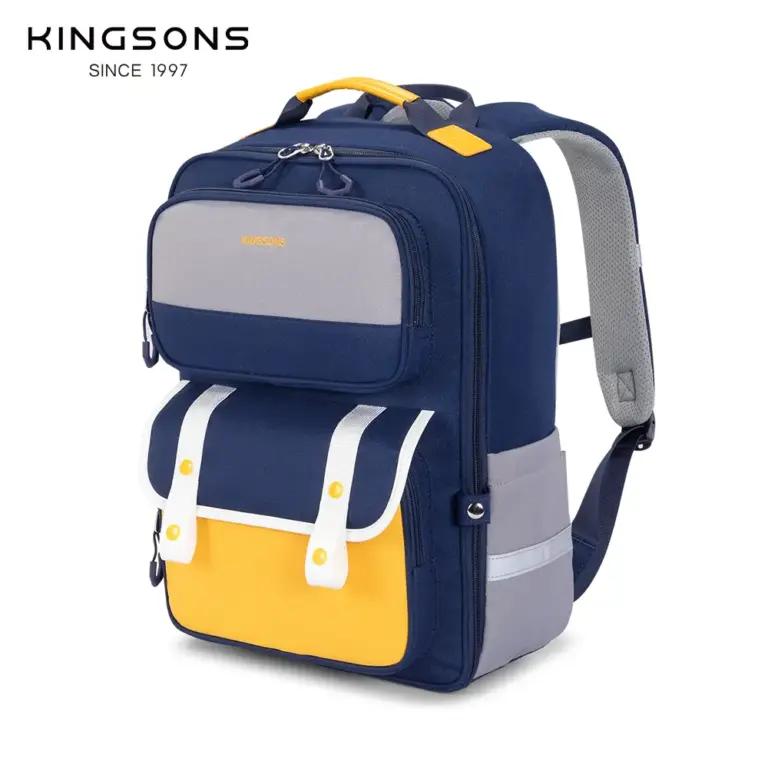
- Employee and client gifts — a structured 600D casual backpack or padded laptop backpack. This is the tier where a bag becomes a genuinely used item and the brand earns repeated exposure.
- VIP and executive gifting — briefcase, messenger, or a smart-tech backpack with USB or RFID features. The message is relationship value, so finish quality and understated branding matter more than logo size.
A useful rule: size the bag to the recipient’s real carrying life. A slim 15-inch laptop backpack gets used weekly; an oversized novelty bag does not. Format should follow the recipient and the capability of your supplier, not the catalogue — our guide to how to choose a bag manufacturer covers how to match factory capability to a program.
Branding: From Logo-on-Bag to Considered Gift
Two identical bags can sit two price tiers apart purely on how the brand is applied. The methods, roughly in order of perceived value:
| Method | Reads As | Best On | Notes |
|---|---|---|---|
| Screen print | Event swag | Light canvas, non-woven | Cheapest; solid-colour logos only |
| Heat transfer | Mid-range | Smooth fabrics | Handles gradients and detail |
| Embroidery | Corporate gift | Heavier cotton, 600D, PU panels | Tactile, long-lasting, premium |
| Woven / rubber label | Retail product | Anywhere a sewn patch fits | Permanent brand marker |
| Metal badge / debossed leather | Executive | Briefcases, premium backpacks | Understated, high perceived value |
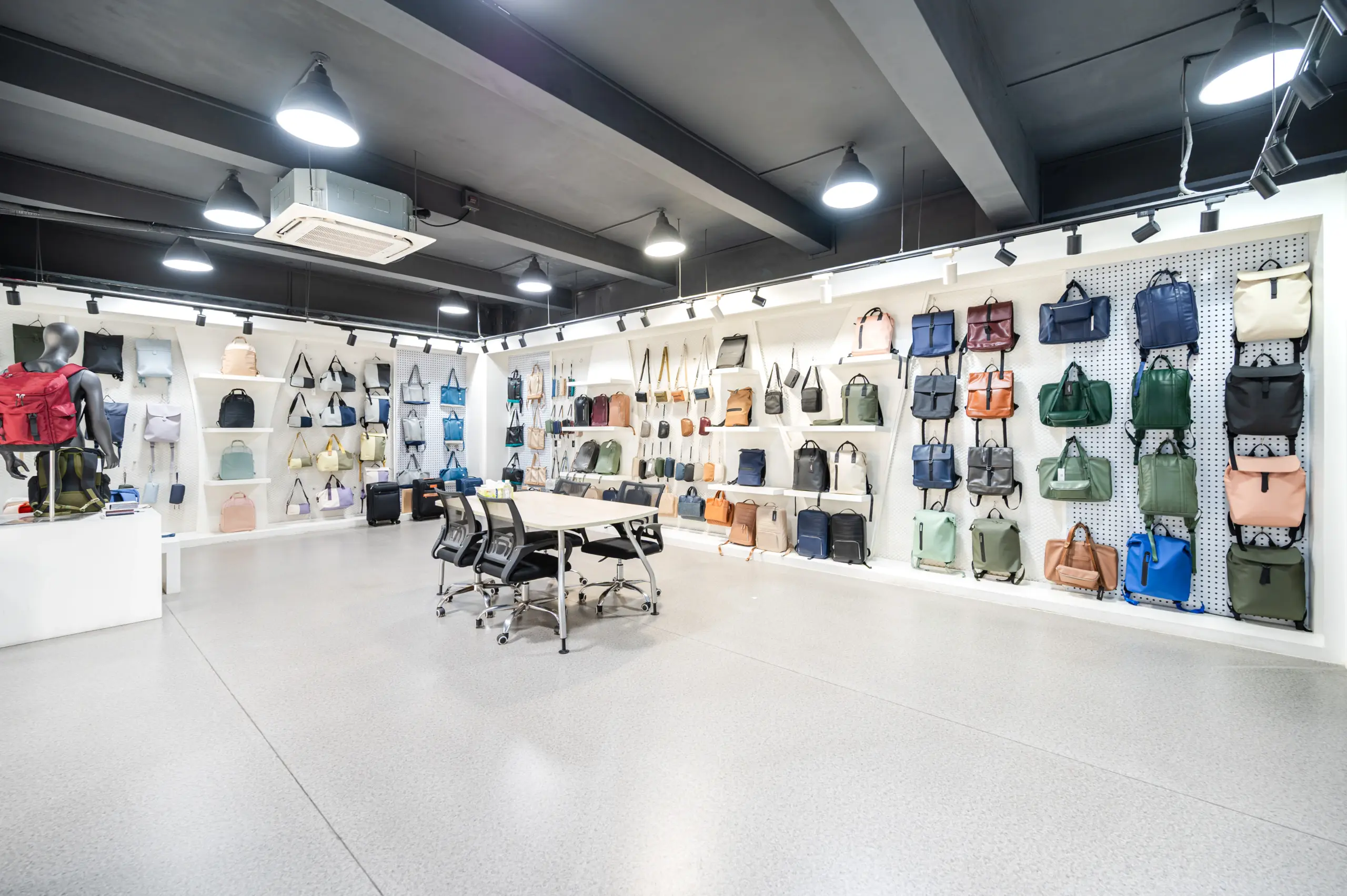
For premium programs, smaller and better-applied branding usually outperforms a large screen-printed logo. Provide vector artwork with Pantone references so the factory can judge whether a mark holds at embroidery or badge sizes — that judgement is where a quote becomes accurate. Kingsons runs embroidery, printing, heat-transfer and debossing stations in-house, so the artwork drives the method, not the reverse.

Contents, Kitting and Presentation
A gift bag is frequently a carrier for other things — a power bank, notebook, bottle, sample sizes, a handwritten card. The logistics of assembling those contents is where programs slip. Options, from least to most turnkey:
- Ship bags empty, kit locally — cheapest factory quote, but pushes assembly, storage and labour onto the buyer.
- Factory kitting — the factory packs bags with supplied contents and ships finished kits, eliminating a warehouse step. Requires clear contents specs and often a per-kit handling line in the quote.
- Drop-ship / phased delivery — finished kits shipped to multiple office locations or mailed to remote employees in tranches.
Presentation is part of the product: individual gift boxes, tissue, ribbon, hangtags and a card sleeve each add a small per-unit amount and a disproportionate perceived-value lift. Decide at the sampling stage — packaging has its own MOQ and lead time independent of the bag.

MOQ and Budget Planning at Scale
Gift programs are usually multi-SKU, which means MOQ compounds across formats and colours. How Kingsons’ thresholds apply:
- Logo on a stock bag: from 200 pieces, with no colour change.
- Custom colour on a stock shape: 500 pieces per style per colour.
- Bespoke design: from 1,000 pieces; full ODM 1,000–3,000.
- Trial orders of 200–300 pieces are negotiable at adjusted pricing; small-batch flexible runs start from 50 pieces for pilots.
Build the budget bottom-up per tier: (units x landed bag cost) + decoration + packaging + kitting + freight and duties. Because Kingsons prices by quote (no published list), the practical discipline is to normalise quotes to the same fabric, colour count and incoterm before comparing suppliers. The manufacturing cost guide details each cost component.
Compliance and Documentation for Procurement
Larger organisations, especially in the EU and regulated industries, need the program to survive a supplier audit, not just a budget review:
- Social audit — BSCI and SEDEX verify ethical labour conditions; Kingsons holds both, audited regularly.
- Environmental — ISO 14001 at factory level, GRS for recycled-content claims, with Transaction Certificates to substantiate them through the supply chain.
- Product safety — REACH and California 65 conformity for materials; CE/FCC at component level for smart-tech bags with charging electronics.
- Retailer onboarding — programs executed through a major retailer’s promotional division may need an existing factory audit report (Kingsons has passed Walmart factory audit).
Raise documentation requirements at the quotation stage. Retrofitting certification paperwork mid-production can add weeks. The manufacturer vetting checklist lists which certificates to request and verify before signing.

A 12-Week Program Timeline, Week by Week
A realistic sequence for a multi-tier custom program with kitting:
- Weeks 1–2 — Scope and quote. Lock the four variables, tier counts and quantities; brief the factory and receive normalised quotes.
- Weeks 3–4 — Samples and artwork. Approve physical samples, Pantone strike-offs and packaging prototypes; finalise vector artwork.
- Weeks 5–6 — Contract and deposit. Sign the order, confirm incoterms (FOB/CIF/DDP), pay the 30% deposit; place long-lead packaging.
- Weeks 7–10 — Production and decoration. Cutting, sewing, branding and inline inspection across the 30–45 day production window.
- Week 11 — QC and kitting. Final AQL inspection, kit contents, gift-box pack-out.
- Week 12+ — Delivery. Balance payment, release goods, phased delivery to sites; sea freight adds transit time, so build it into the backwards plan.
Logo-on-stock programs compress this to 4–5 weeks before transit. Sample production for any tier takes 7–10 working days, and mass production runs 30–45 working days.
Paying, Incoterms and Receiving
The commercial mechanics are standard but bite if left vague:
- Payment — typically 30% deposit with 70% before shipment (T/T), or L/C at sight; Alibaba Trade Assurance is available for newer relationships.
- Incoterms — FOB, CIF, CFR or DDP. Compare supplier quotes on the same term, or a cheap FOB hides into an expensive arrival.
- Receiving — agree packing quantities per carton and labelling per recipient site up front; multi-site drop-ship fails on unclear carton marks, not on the bags.
- Warranty and remedy — Kingsons backs production with a 12-month warranty, a 24-hour response commitment and root-cause analysis on confirmed defects.
Measuring the Program After Delivery
A gift bag program is a marketing expense that most teams never close the loop on. Three practical measures:
- Utilisation signal — a scannable tag or a QR on the hangtag converts a bag in the wild into counted impressions at near-zero cost.
- Recipient feedback — one question in the next engagement survey (“do you still use the gift?”) predicts next year’s format better than any internal debate.
- Cost-per-carried-unit — units actually in daily use divided by program cost; the argument for one premium tier over three mediocre ones.
Common Mistakes in Corporate Gift Bag Programs
- One SKU for every audience. The C-suite and the conference crowd receiving the same bag flattens the gesture for both.
- Planning forwards from the brief instead of backwards from the date. Every rush premium traces to this.
- Big logo, low finish. A large screen print on a thin bag reads as advertising, not gifting.
- Kitting discovered late. Contents sourcing and pack-out added after production is booked becomes the critical path.
- Compliance requested after the order. Certificates and test reports must be in the production plan, not chased at shipment.
Frequently Asked Questions
How far in advance should we order corporate gift bags?
For a custom program with branded bags, packaging and kitting, plan 8–12 weeks before the date bags must arrive. A logo-on-stock program can run in 4–5 weeks plus transit. The fixed anchors are sample approval (7–10 working days), mass production (30–45 working days) and sea transit to EU or US destinations, so always work backwards from the event date.
What is a realistic MOQ for a multi-tier gift program?
Per style, expect 200 pieces for a logo on stock bags, 500 pieces per colour for custom-colour programs, and 1,000 pieces for bespoke designs. Because MOQ applies per style and per colour, a three-tier program should be planned as three smaller orders rather than one big one. Trial quantities of 200–300 pieces are negotiable, and pilot runs from 50 pieces are possible for testing a tier before committing.
Should the factory kit the bags with gift contents?
If contents are sourced cleanly, factory kitting removes a warehouse step, a labour cost and the most common delay in gift programs. The trade-off is that kitting must be specified before production is booked, with clear contents lists and per-kit packing instructions, because late kitting changes land on the critical path. For multi-office or remote-employee distribution, ask for carton labelling by destination at pack-out.
What compliance documents do corporate buyers usually need?
Typically a social audit (BSCI or SEDEX), environmental certification where sustainability claims are made (GRS with Transaction Certificates for recycled content, ISO 14001 at factory level), and material conformity such as REACH and California 65 test reports. Smart-tech bags with charging features add CE and FCC at component level. Specify all of these at quotation stage — Kingsons holds BSCI, SEDEX, GRS, ISO 9001/14001/45001 and has passed Walmart factory audit.
How do we keep one brand consistent across three bag formats?
Standardise the brand elements, not the bag: one Pantone set for fabric, thread and ink; one logo lockup sized per format; one label or badge system that appears on every tier. Physical strike-offs of each decoration method on each fabric should be approved together in one sample round, because thread on 600D, ink on canvas and a metal badge each shift colour slightly. Consistency lives in the artwork system and the approval process, not in ordering one SKU.
Can we order sustainably made gift bags with a verifiable claim?
Yes — recycled rPET and organic cotton options are available, and GRS certification is what makes a recycled-content claim auditable rather than decorative. The wording matters: “recycled content” requires GRS chain-of-custody documentation for the order, while “recyclable” is a design statement about end of life. If the program will be publicised internally or externally, request the GRS scope and certificate numbers before printing claims on hangtags. Our recycled materials guide explains what each certificate covers.
PLAN a corporate gift bag program end to end — multi-tier formats, in-house branding, factory kitting and the compliance documentation procurement teams sign off on.