Kids’ backpacks are the bag category where a sourcing mistake stops being a margin problem and becomes a liability problem. A children’s product that fails a lead limit, lacks a tracking label or carries a choking hazard can be seized at the border, pulled from shelves and — worst — hurt a child.
This guide is for brands, retail chains and marketplace sellers sourcing children’s backpacks: what safety rules actually apply, how to size correctly, and how to vet a manufacturer so the range is both compliant and commercially strong.
Wichtige Erkenntnisse
- Children’s products carry the strictest obligations: in the US, CPSIA lead and phthalate limits, tracking labels, small-parts rules and a Children’s Product Certificate (CPC) based on third-party testing apply before a kids’ backpack can be sold.
- Sizing is a real spec, not guesswork — match pack size and strap geometry to age bands (pre-school, early primary, upper primary) so the load sits correctly on a small frame.
- Ergonomics is a differentiator in kids’ bags: padded, verstellbare Schultergurte, a load-limiting design and light construction protect growing backs and give retailers a story to sell.
- Never source unlicensed character artwork — branded or cartoon graphics require a licence; build differentiation on original design and colourways instead.
- Buy the compliance file, not the claim: commission current third-party test reports and a CPC for each specific kids SKU, and treat the manufacturer’s testing capability as a qualification gate.
Why children’s backpacks are a high-stakes category
An adult bag that uses an off-spec zipper is an annoyance; a children’s backpack that exceeds a lead limit or sheds a small decorative part is a recall and a legal exposure. Regulators treat products intended for children as a distinct, higher-duty class, and retailers and marketplaces increasingly demand proof of that duty of care before listing. For an importer or brand, this means compliance is a design-and-sourcing input from the first sketch, not a certificate chased after the container is booked.
CPSIA essentials for a US-bound kids’ backpack
In the United States, a children’s product — one primarily designed for children 12 and under — falls under CPSIA’s consumer-product-safety regime. The rules that matter most for a backpack are about materials and markings, not style:
| Requirement | What it means for a kids’ backpack |
|---|---|
| Lead in substrates | Total lead content in accessible components capped (commonly cited at 0.09% / 90 ppm for children’s products) |
| Phthalates | Restrictions on specified phthalates in plasticised/parts materials (relevant to coated fabrics, PVC trims, printed details) |
| Tracking label | A permanent marking on product and packaging identifying manufacturer, production site and date/batch |
| Small parts | For products aimed at children under 3, small-parts choking rules and warnings apply; older-kid packs still need secure, non-shedding components |
| Children’s Product Certificate | A written CPC, supported by passing third-party test reports from an accredited lab, that the importer retains |
The critical nuance: these obligations attach to your specific product and materials. A factory can be generally safety-conscious and still need to run the right tests on your exact fabric coating, zipper pulls, prints and hardware before a CPC can be issued. That is the same discipline covered for bag materials generally in our REACH and CPSIA compliance guide — with children’s products raising the stakes.
Sizing: match the pack to the child
“One size” is a false economy in kids’ bags. A pack that is too long presses a loaded base against a small back; too short and the shoulder straps ride and dig. Buy by age band and specify geometry accordingly:
| Age band | Typical build | Backpack spec |
|---|---|---|
| Pre-school (3–5) | Small torso, light load | Short back panel, ~10–14 L, wide padded straps, simple main compartment, keine kleinen abnehmbaren Teile |
| Early primary (6–8) | Growing, first book load | ~16–20 L, adjustable straps, padded back, a small organiser pocket, secure zip pulls |
| Upper primary (9–12) | Near-adult frame, heavier load | ~22–28 L, contoured padded straps and back, chest/waist clip optional, laptop-style sleeve where relevant |
A practical buying rule: the loaded pack should not exceed roughly 10–15% of the child’s body weight, and the design should encourage that with a comfortable, load-distributing carry. Specify it in the tech pack, not after the sample arrives.
Materials and construction safety
- Fabrics and coatings — source low-hazard, testable materials; recycled and coated textiles must still meet the phthalate and heavy-metal limits for a children’s product.
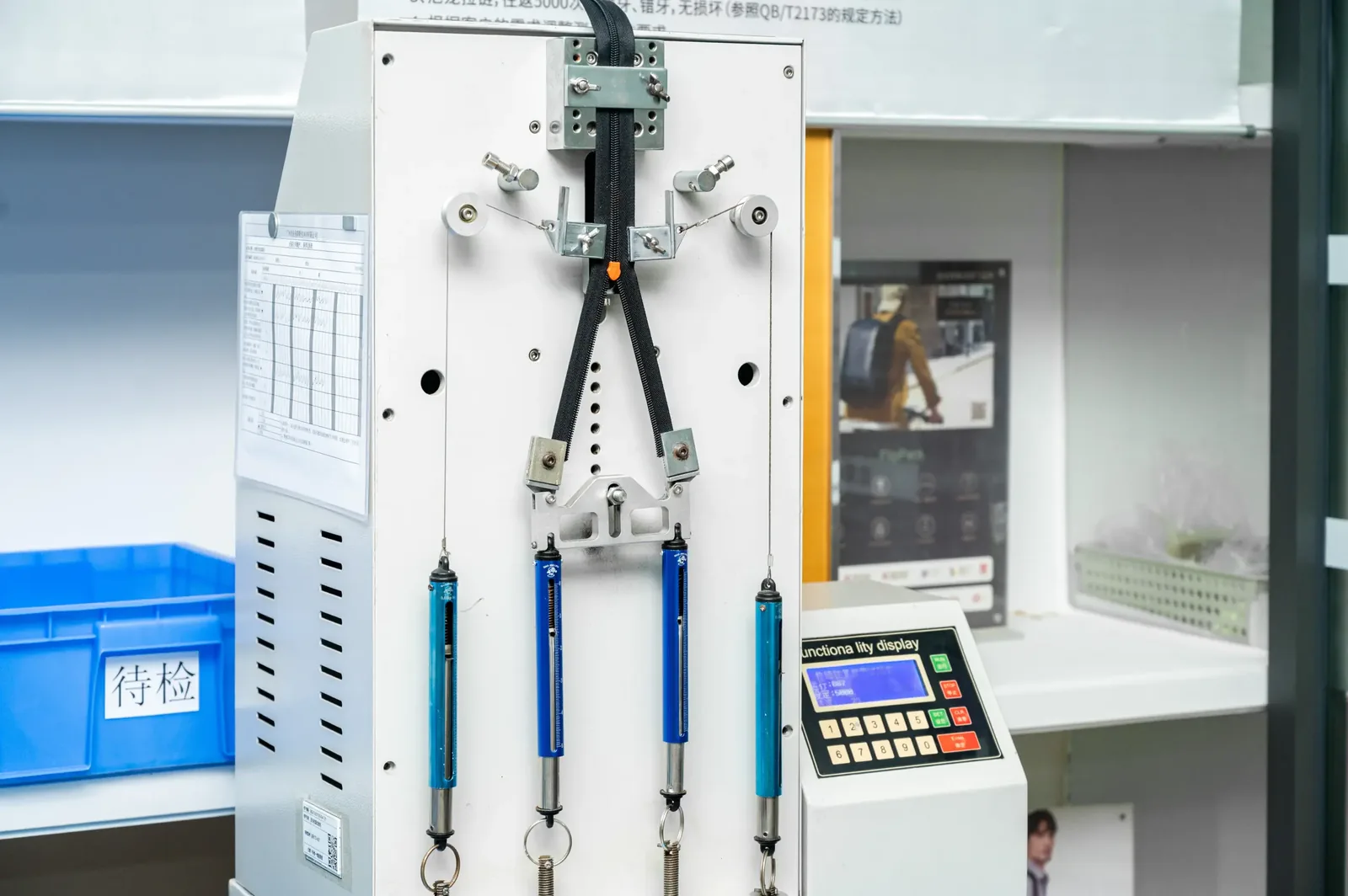
- Hardware — zippers, buckles and D-rings must be robust and securely anchored so nothing detaches into a swallowable part; named-brand sliders reduce field failure.
- Edges and points — no sharp edges, exposed wire ends or rigid points a child can snag on.
- Drawcords and straps — avoid long loose drawcords and trailing webbing that pose an entanglement risk, especially on younger-age packs.
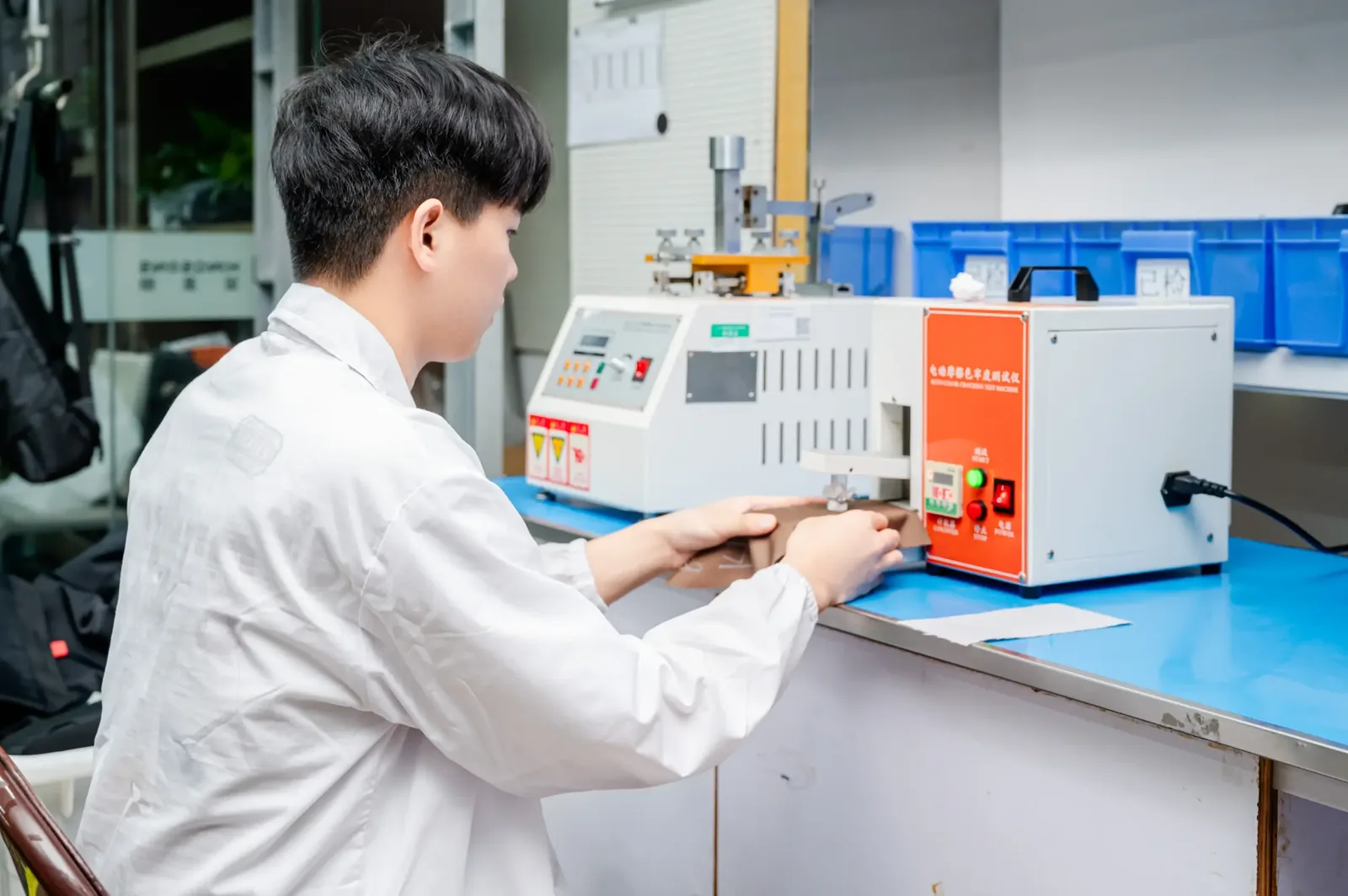
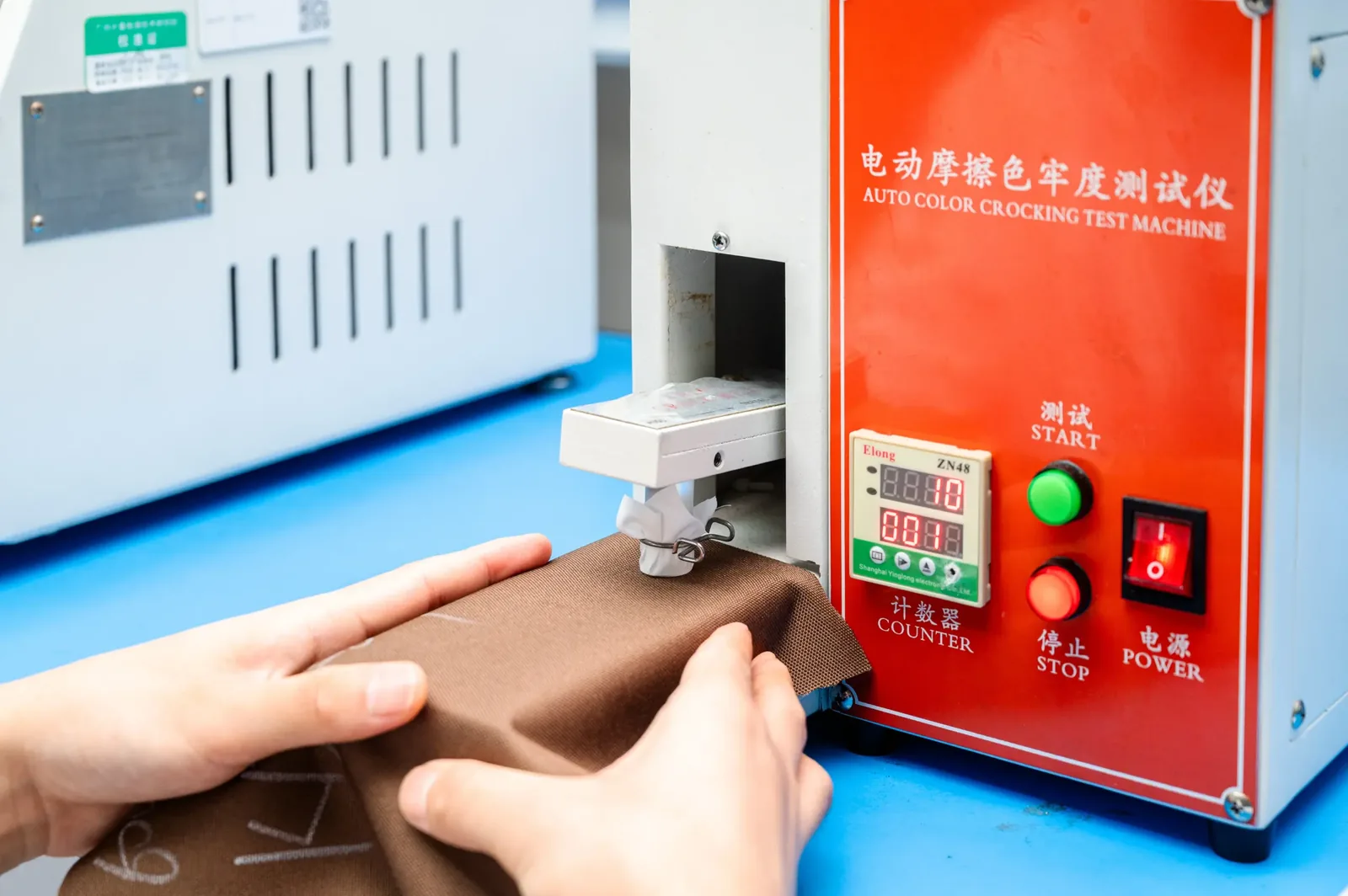
- Colourfastness — dyes should not bleed onto clothing or skin; colourfastness testing (part of our quality-control and testing process) matters more, not less, on products kids handle daily.
Ergonomics: the reason kids’ bags win reviews
Where a kids’ backpack earns loyalty is comfort. Kingsons positions its school-bag line around light-weight, spine- and shoulder-protective construction, and its product capability includes a Bounce-Bounce back-protection system listed on the company’s technology page. Treated as a design feature to verify on your own sample rather than a blanket guarantee, that ergonomics focus — padded, adjustable straps, a contoured back panel and a light build — is exactly what parents and retailers respond to, and what reduces the returns and complaints that erode a kids’ line’s margin.
The compliance file you must receive before you sell
Treat this as your pre-shipment checklist for any children’s SKU:
- Third-party lab test reports for lead, phthalates and any applicable mechanical/small-parts tests, run on the actual production materials.
- A Children’s Product Certificate (CPC) naming the product, the applicable rules, the manufacturer/importer and the test evidence.
- A tracking label design on product and packaging with manufacturer, site and date/batch.
- Documentation for the destination market’s other rules (z.B. EU chemical requirements where relevant).
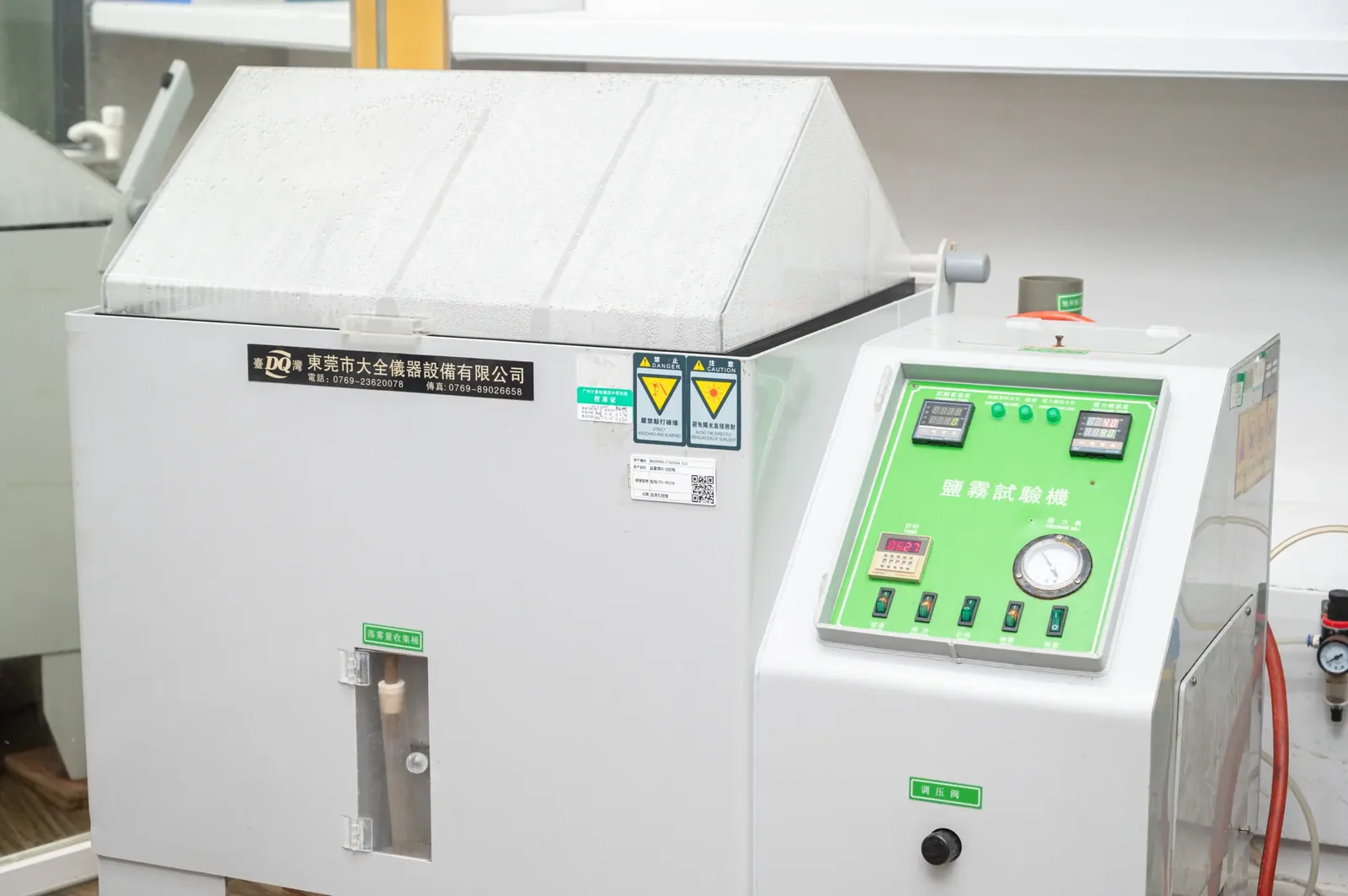
Confirm your manufacturer can support this process — supply material declarations, allow sample testing, and hold current safety certifications. Kingsons carries CE / FCC / RoHS / SGS product certification and in-house testing equipment with full-process quality control; for a specific children’s SKU you should still commission the current third-party test report and CPC tied to that product and market before selling.
Private label and MOQs for a kids’ line
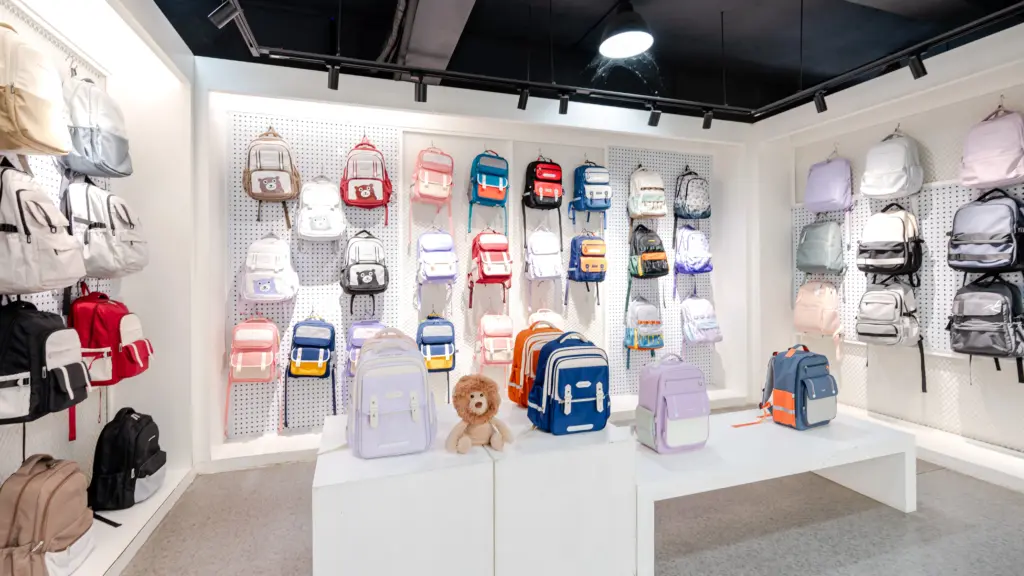
A kids’ range lives or dies on colourway variety and safe, consistent replenishment. Custom tooling and prints raise MOQ pressure, but a strong supplier offers low, mixable minimums and small trial batches so you can test designs before scaling — the same economics explained in our wholesale bag MOQ and pricing guide. Specify that every colourway and print repeats the same compliance testing; a new graphic is a new material, and a new material can need a new test.
The IP trap: no unlicensed characters
A word that keeps buyers out of trouble: licensed artwork only. Cartoon and brand characters (the superhero, movie or gaming imagery children gravitate to) are protected trademarks and copyrights. Sourcing an unlicensed character print invites customs seizure and infringement claims — the risk sits squarely on the importer. The safe commercial route is original design and colourways that ride a theme (space, animals, geometric, sport) rather than a protected character, which is also a harder-to-copy listing.
A kids-backpack manufacturer scorecard
- Children’s-product compliance capability — can they run to CPSIA limits and support a CPC for your SKU?
- Material declarations & testing access — do they provide bill-of-material detail and permit third-party sampling?
- Construction safety — secure hardware, no small shed parts, no entanglement hazards, colourfastness.
- Ergonomics & sizing — real age-band sizing and comfortable carry, verified on sample.
- Colourway MOQs — low, mixable minimums and consistent repeat across a range.
- IP hygiene — original designs only; no unlicensed characters.
Why Kingsons fits a children’s backpack program
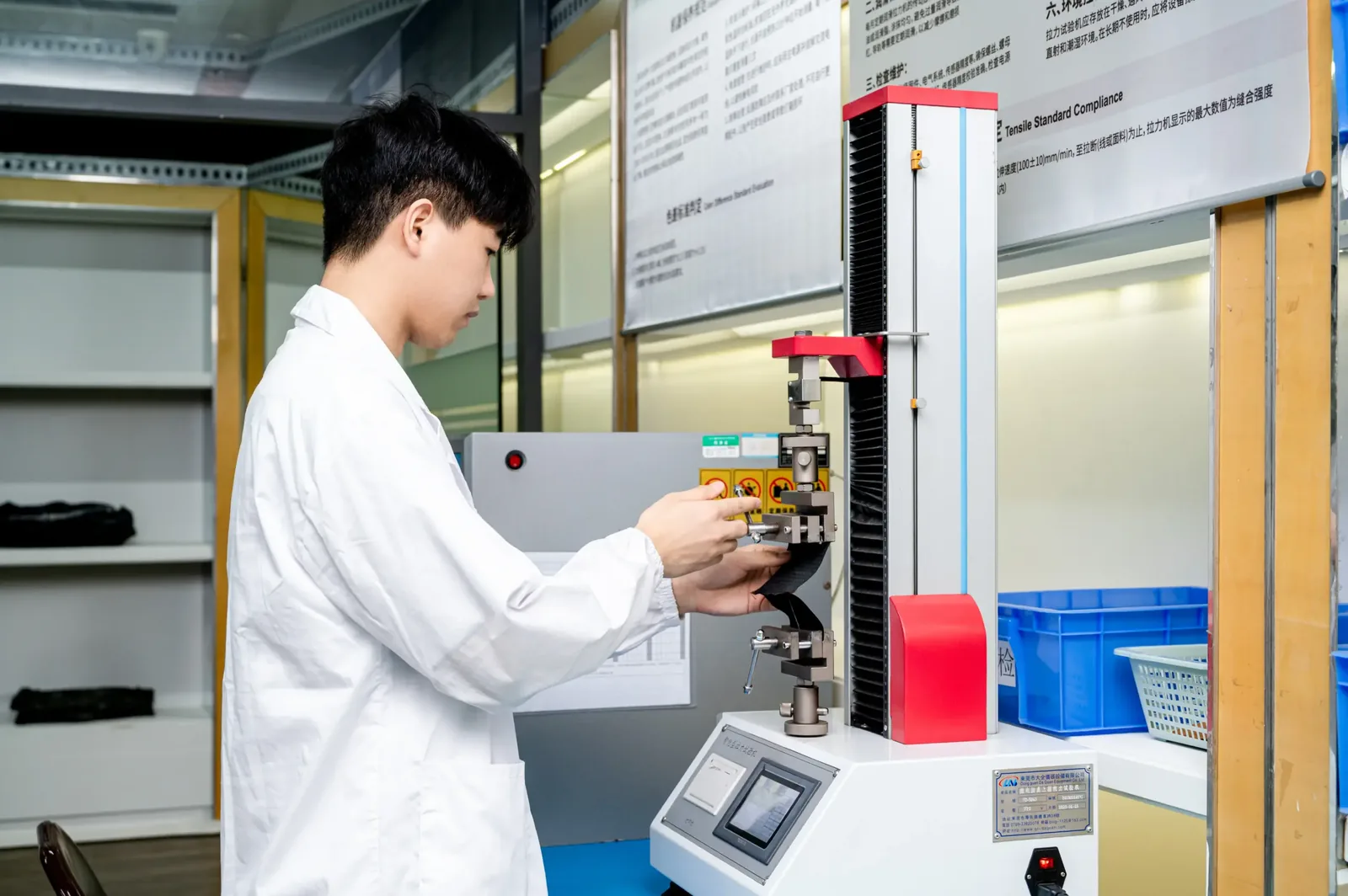
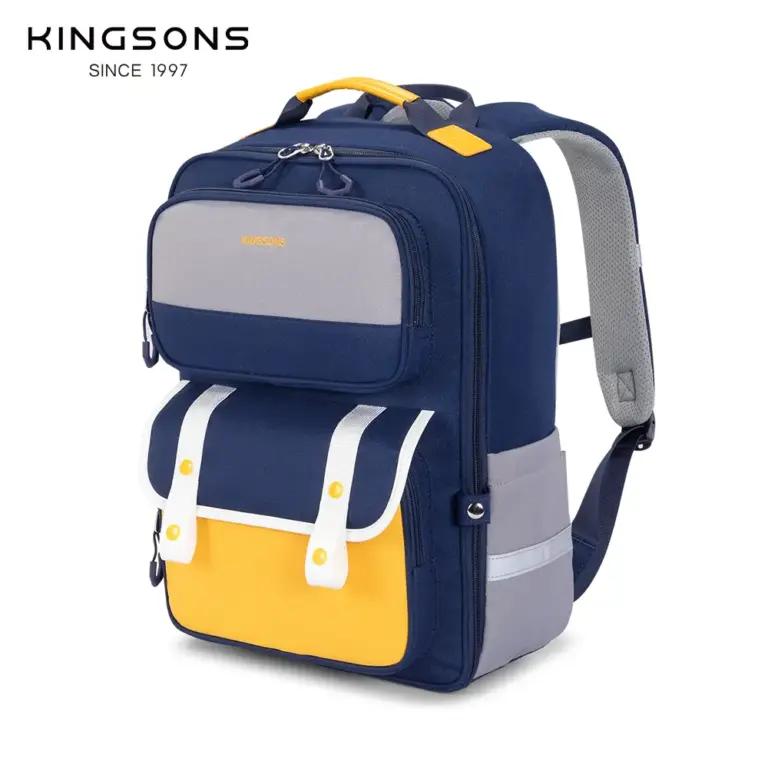
Kingsons is a functional-tech bag manufacturer (heritage back to 1997) with a dedicated school-backpack category positioned around light-weight, spine- and shoulder-protective design, supported by in-house testing equipment (tensile, wasserdicht, zipper-cycle and dimensional instruments), full-process quality control and CE / FCC / RoHS / SGS product certification. For a children’s program that combines with low, mixable MOQs and small trial batches to test colourways, named-brand hardware for durability, and the material documentation a CPSIA third-party test and CPC depend on. The ergonomics and eco-material angles give a retailer a genuine selling story; the compliance discipline is what keeps that story out of a recall notice. Confirm the age-band sizing, hardware safety and current product-specific test reports for your exact SKUs, and the same foundation supports a safe, differentiated kids’ range.
Häufig gestellte Fragen
Do kids’ backpacks need CPSIA compliance?
If the backpack is primarily intended for children 12 or under and sold in the US, yes — it is a children’s product under CPSIA. Expect lead and phthalate limits on accessible materials, a tracking label on product and packaging, small-parts rules where applicable, and a Children’s Product Certificate supported by third-party testing on your actual production materials. Confirm the current limits and tests with a qualified lab for your exact product and market.
What size backpack should a child carry?
Size to the child’s age band and torso, not one universal pack: roughly 10–14 L for pre-school (3–5), 16–20 L for early primary (6–8) and 22–28 L for upper primary (9–12), with adjustable padded straps and a back panel that keeps the load high and centred. A loaded pack should stay near or below 10–15% of the child’s body weight.
What safety features matter most in a children’s backpack?
Non-toxic, testable materials; securely anchored hardware with no detachable small parts; no sharp edges or rigid points; no long loose drawcords or trailing webbing that could entangle; and colourfast dyes. Reflective detailing is a plus for visibility. Each is a specification you set in the tech pack and verify on the production sample.
Can I use cartoon or brand characters on kids’ backpacks?
Only with a proper licence. Unlicensed character or brand artwork is a trademark and copyright risk that can trigger customs seizure and infringement claims, and that liability sits with the importer. The safe, commercially stronger route is original design built around a theme rather than a protected character — it is also harder for competitors to copy.
Are ergonomic features worth specifying in a kids’ bag?
Yes — ergonomics is the clearest differentiator in the category. Padded, adjustable straps, a contoured back panel and a light build protect growing backs, reduce complaints and returns, and give retailers a reason to trade a parent up. Kingsons positions its school line around spine- and shoulder-protective design; verify the comfort on your own loaded sample by age band.
What documents should I get before selling a kids’ backpack?
Before selling, hold current third-party test reports (lead, phthalates, applicable mechanical/small-parts) on your actual production materials, a Children’s Product Certificate for the SKU, a tracking-label design, and any destination-market chemical documentation. Choose a manufacturer that provides material declarations and allows sample testing — Kingsons carries CE/FCC/RoHS/SGS certification and in-house testing, but the SKU-specific reports and CPC must be commissioned for your exact product and market.
Source a kids’ backpack range that is safe, compliant and comfortable — spine-friendly design, testable materials and durable, child-safe construction.