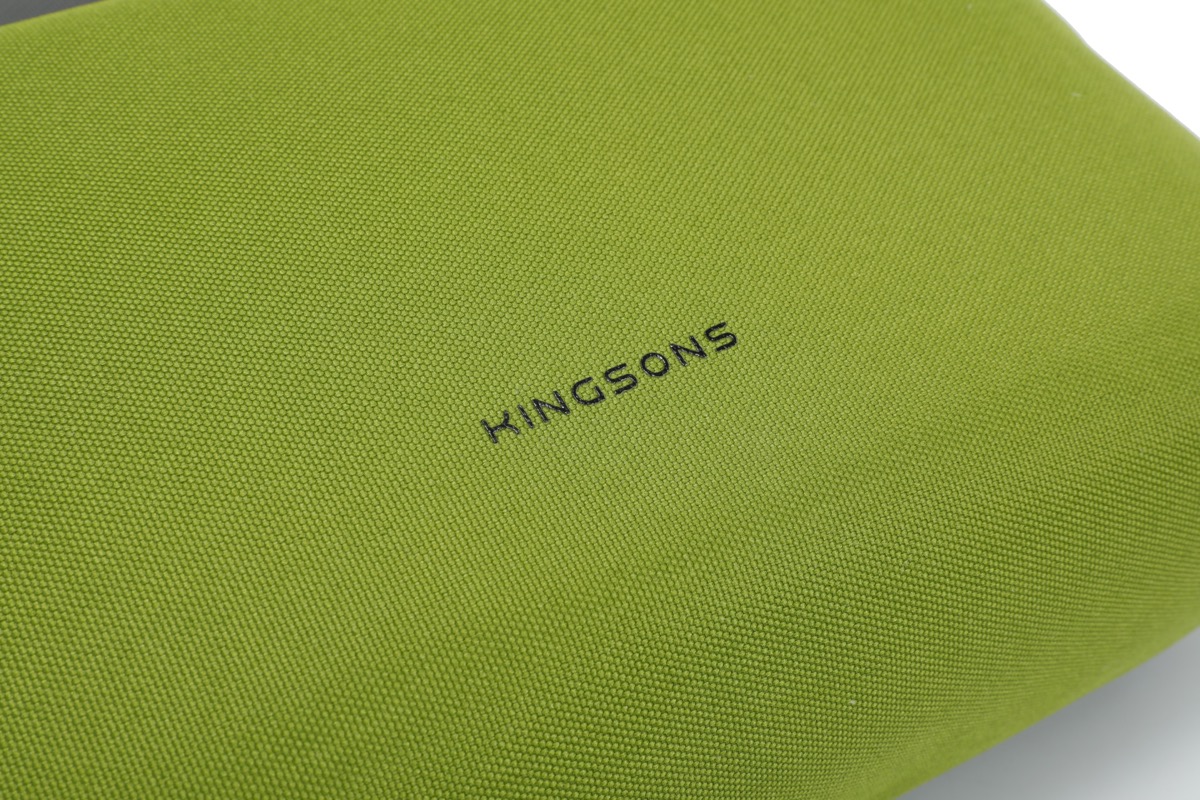
A Faraday bag is a soft enclosure lined with conductive fabric that blocks wireless signals, including cellular, Wi-Fi, Bluetooth, GPS, and RFID, from reaching the device inside. Demand has grown beyond digital forensics into mainstream markets. Products now include key-fob pouches that help prevent relay theft, phone sleeves for digital detox and privacy, and laptop protection for executives and journalists.
For brands, this creates a market opportunity, but only when the bag delivers the shielding performance it promises. This guide covers the key parts of Faraday bag manufacturing, including shielding fabrics, seam construction, MOQ, quality control, and how to evaluate a factory before placing an order.
Key Takeaways
- Shielding performance depends on the lining. Nickel-copper-plated fabrics and silver-fiber conductive fabrics offer different levels of attenuation across frequency bands. Specify the required performance in writing before placing an order.
- Seams and closures are common weak points. Folded double seams, conductive contact surfaces, and roll-fold or double-layer closures help separate well-made products from bags that only make shielding claims.
- RFID blocking is not the same as full signal shielding. Card-frequency shielding requires less complex construction, while broadband cellular, GPS, and Wi-Fi shielding needs more fabric layers and stricter manufacturing controls.
- Standard custom MOQ is 500 pieces per style per color. Sampling takes 7–10 working days, and mass production takes 30–45 working days.
- Request attenuation data for every production batch. Ask for decibel measurements across the required frequency bands, rather than relying only on a one-time laboratory report for a golden sample.
Why the Faraday Bag Market Is Growing
Three trends are driving demand for Faraday bags.
First, keyless-entry car theft has encouraged automakers, insurers, and accessory brands to offer Faraday key pouches as a standard countermeasure. Second, growing concerns about digital privacy, device tracking, notification fatigue, and executive travel security have made phone and laptop sleeves more common in product catalogs. Third, professional users, including digital forensics teams, evidence-handling services, and secure facilities, purchase these products in volume and often work to strict specifications.
As a result, the category attracts tens of thousands of monthly searches for the term “faraday bag” alone. Product formats range from key-fob pouches, the largest product category by format, to phone sleeves, tablet bags, and laptop bags.
For B2B buyers, the category offers another advantage: its value depends more on materials and construction than on the outer design. The shell can take many forms, including pouches, sleeves, wallets, and backpack compartments, because the main function comes from the lining system. This makes Faraday bags a natural extension for manufacturers that already work with functional fabrics.
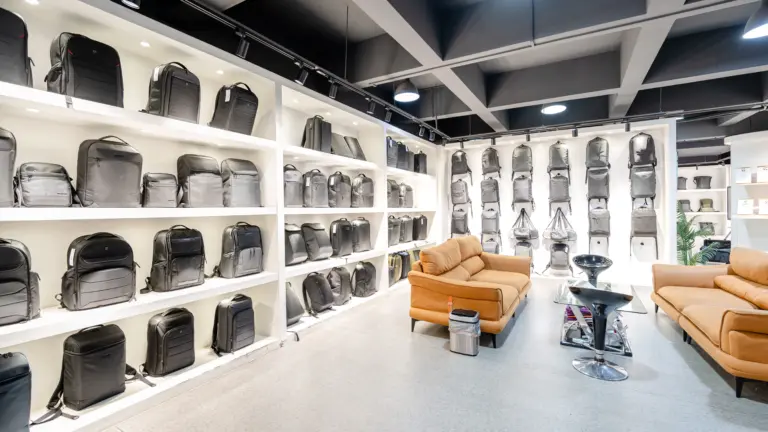
Kingsons’ functional-bag line follows this approach. Radiation-shielding technology is one of the company’s three core technology pillars and is covered by its 500+ self-developed patents, including a patented anti-radiation stand bag.
How Signal Shielding Works: What Buyers Need to Know
A Faraday bag works as a flexible Faraday cage. When a conductive layer fully encloses a device, incoming electromagnetic waves induce currents in the layer. These currents reduce the electromagnetic field inside the enclosure, preventing the signal from reaching the device’s antenna.
Two key measurements help buyers understand shielding performance.
- Attenuation in decibels (dB). Attenuation measures how much a signal is reduced. A 10 dB reduction means the signal’s power is reduced to one-tenth of its original level. Mainstream products often publish average attenuation across several bands, but serious procurement teams should request figures for each relevant band rather than rely on a single marketing number.
- Frequency coverage. A bag that shields frequencies from 800 MHz to 6 GHz covers legacy cellular signals, Wi-Fi (2.4/5 GHz), Bluetooth, GPS, and RFID. 5G mid-bands and ultra-wideband key protocols extend the required frequency range. Coverage must match the signals the product claims to block.
| Signal Type | Typical Band | Why Buyers Care |
|---|---|---|
| Cellular (incl. 5G sub-6) | ~700 MHz–3.7 GHz | Remote wipe, tracking, covert listening concerns |
| Wi-Fi / Bluetooth | 2.4 / 5 GHz | Network attacks, pairing exploits, beacon tracking |
| GPS / GNSS | ~1.2–1.6 GHz | Location tracking of devices and vehicles |
| RFID / NFC | 13.56 MHz, 125 kHz | Card skimming, contactless payment and access cloning |
| Key fob / UWB | ~315/433 MHz, 3.1–10.6 GHz | Relay attacks on keyless vehicles — the key-pouch use case |
For sourcing, the practical step is to define the required frequency bands in your product brief and ask the factory to provide measured attenuation results for those bands. If a factory cannot explain which frequencies its lining is designed to block, it is not yet ready to manufacture to your specification.
Faraday Bag Shielding Fabrics: What Goes Inside the Bag
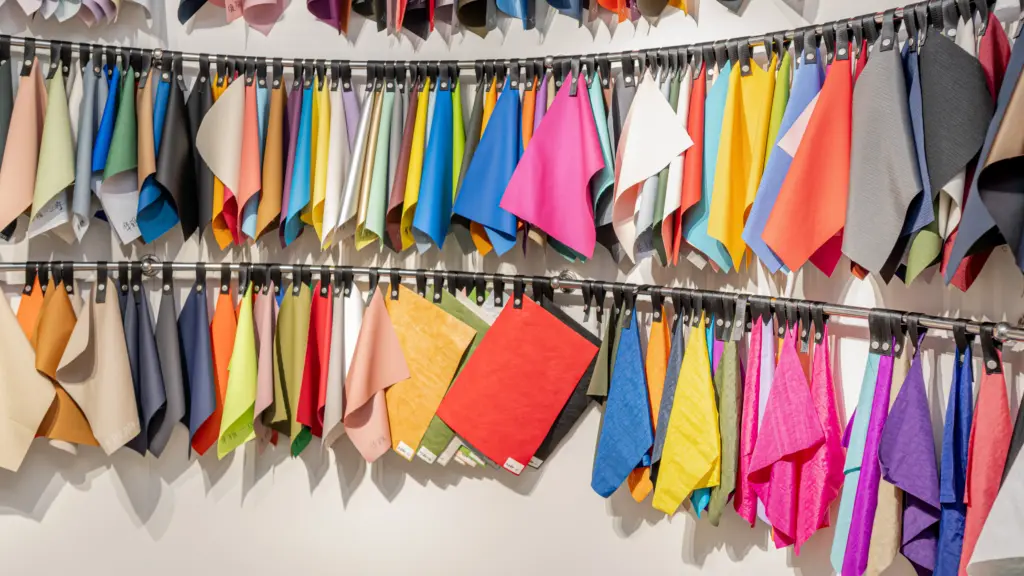
Shielding textiles use woven or non-woven base materials coated with or blended with conductive metals. Three main fabric types are common in commercial production.
| Lining Fabric | Characteristics | Typical Application | Relative Cost |
|---|---|---|---|
| Nickel-copper plated polyester/cotton | High broadband attenuation, durable, most common | Phone sleeves, laptop bags, key pouches | Low–Medium |
| Silver fiber blends | Excellent conductivity, softer hand, skin-friendly | Wearables-adjacent, premium EMF lines | High |
| Aluminum-layer laminates | Cost-effective barrier for lower frequencies | Entry key pouches, RFID card pockets | Low |
Two sourcing points deserve attention.
First, conductive fabric is sensitive to supply-chain changes. Fabric weight (GSM), plating ratio, and weave can all affect attenuation. Ask the supplier to provide a fabric specification sheet and lock the approved material before production, just as you would specify a Pantone color.
Second, the lining needs an outer shell that can handle regular use. Ballistic-style nylon or polyester shells help protect the relatively delicate conductive layer from repeated bending and abrasion.
Kingsons sources functional fabrics through established mills, including Covestro, Teijin, and Arkema, and combines them with conductive layers for its radiation-shielding bag programs. Published specifications for its smart-bag line describe aluminum-layer and radiation-shielding fabric construction, with RFID shielding up to 99.99%.
Seam, Closure, and Opening Design: Where Cheap Faraday Bags Fail
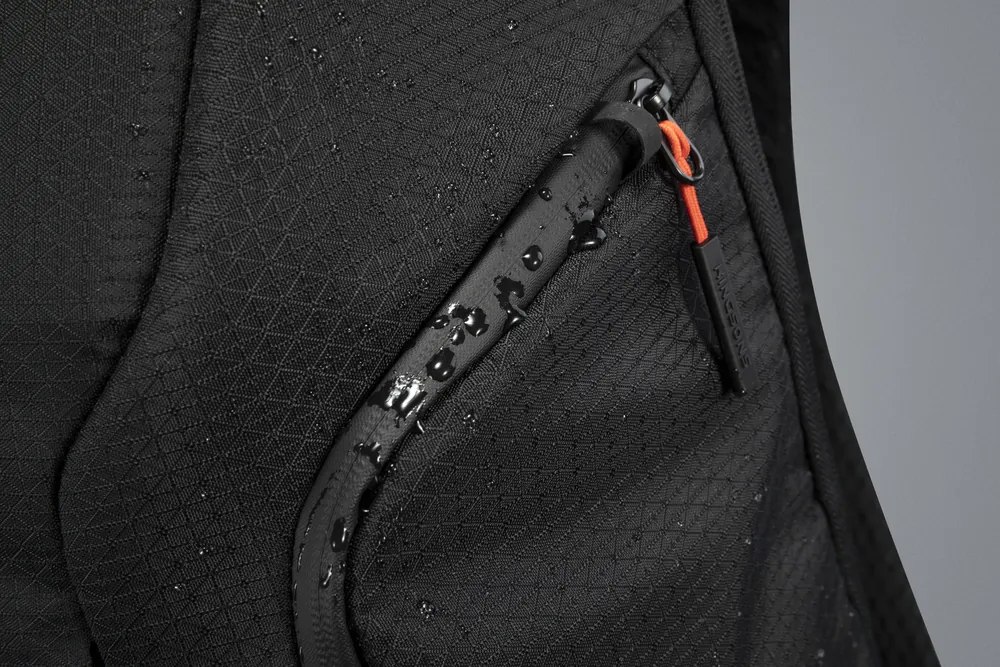
Signal shielding depends on the continuity of the conductive enclosure. Stitch holes, zipper tracks, and gaps around the opening can allow signals to pass through. Well-designed bags address these weak points in three ways.
- Folded double seams. Overlapping conductive layers at the seams help maintain electrical continuity across the joint and reduce signal leakage.
- Roll-fold or double-flap closures. These closures, commonly used in professional Faraday pouches, create several overlapping conductive layers instead of relying on a single Velcro edge.
- Zipper design. Standard metal zippers do not provide a complete electromagnetic seal. A design can avoid zippers by using a roll-fold sleeve, or it can accept a documented reduction in attenuation around the opening.
When evaluating samples, test each bag after closing and sealing it exactly as an end user would. A pouch that meets the specification only when folded perfectly may lead to returns once production volumes increase.
This is also where manufacturing discipline matters. Maintaining consistent seam overlap across a 5,000-piece production run is a process-control challenge, not just a design issue.
RFID Blocking vs. Full Signal Shielding: What Is the Difference?

Marketing materials often treat RFID blocking and full signal shielding as the same feature, but they require different levels of engineering and investment.
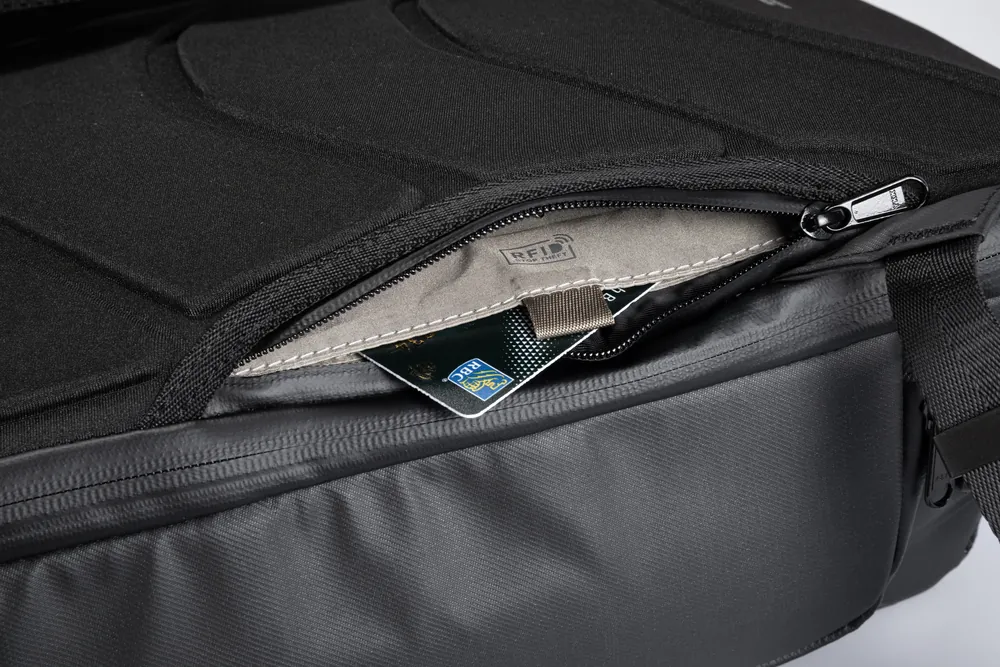
RFID blocking targets short-range card frequencies (13.56 MHz and 125 kHz). It can be achieved with lightweight lining in a single pocket. Broadband shielding, which covers cellular, Wi-Fi, and GPS signals, requires higher-performance conductive fabric, a fully enclosed design, and clear limits on performance claims.
If a product page says “blocks all signals,” the bag must meet that claim across the stated frequency bands. Consumer-protection risks depend on the claim made, not simply on the type of fabric used.
Before ordering, specify whether you need RFID-only protection or full signal shielding. Make sure the marketing copy matches the measured results.
This distinction also gives bag brands a clear way to expand their product ranges. A travel or business backpack with an RFID pocket can add a dedicated Faraday pocket or a fully shielded compartment as a premium option.
Kingsons’ smart-bag programs use this approach by integrating RFID-shielded pockets and radiation-shielded compartments into backpack designs. These features follow the same custom-production model as its anti-theft and charging features.
For more information on adding functional features to an existing design, see our guide on backpack customization options.
Faraday Product Formats for Brand Programs
| Format | Typical Envelope | Primary Buyers |
|---|---|---|
| Key fob pouch | Small pocket, roll-fold closure | Automotive accessory brands, insurers, car dealers |
| Phone sleeve | Single-device envelope | Privacy brands, travel retail, corporate gifts |
| Laptop / tablet bag | Full-size shielding sleeve or briefcase | Executive and security-focused lines |
| Shielded backpack compartment | Faraday pocket inside a standard backpack | Tech, travel and commuter bag brands |
| Forensic / evidence pouch | Serialized, window or non-window | Law-enforcement suppliers, integrators |
The product format affects fabric area, seam length, and the number of closures. These are the three main cost components.
Key pouches offer an entry point for higher-volume orders, while laptop bags and backpack formats support higher unit prices and stronger brand positioning.
If your product range already includes travel or business bags, adding a shielded compartment can be one of the fastest ways to enter the category because you can reuse an existing product platform.
Customization Options: Shell, Branding, and Shielding Level
Faraday bag programs can use the same customization options as other soft-goods products, with one additional requirement: the shielding level.
- Shell material and color. Choose nylon or polyester shells and match the colors to your brand’s Pantone palette. Custom dyeing adds 7–14 days.
- Branding. Options include embroidery, screen printing, heat transfer, debossing, and metal labels. Apply these to the outer shell so the conductive layer is not pierced by the decoration.
- Size and closure. Match the enclosure dimensions to the target devices. Specify a roll-fold, flap, or hybrid closure for each shielding level.
- Shielding level. Choose RFID-only protection, broadband shielding below 6 GHz, or extended frequency coverage. Record the fabric specification and attenuation target in the technical pa
The last point is where many Faraday bag sourcing briefs lack detail. A complete specification should name the conductive fabric supplier, GSM, and plating details, as well as the seam construction, closure design, target frequency bands, and acceptance test.
If you have not prepared a technical pack before, our bag tech pack guide covers the eight components that help factories provide accurate quotations from the start.
MOQ, Sampling, and Production Lead Times
| Stage | Timeline | Notes |
|---|---|---|
| Inquiry and quotation | Quote in 5–7 working days | Faster with fabric spec and attenuation target defined |
| Sampling | 7–10 working days | Custom conductive fabric sourcing can extend this |
| Sample evaluation | Buyer-side | Test sealed closure as-shipped, not laboratory-perfect folding |
| Mass production | 30–45 working days | Full OEM/ODM builds 40–50 days |
The standard custom MOQ is 500 pieces per style per color. Trial orders of 200–300 pieces can be negotiated at an adjusted price, while small flexible batches start at 50 pieces for pilot programs and events.
For ODM projects, where the brand provides a concept and the factory develops the construction, Kingsons uses a joint-development model supported by an in-house R&D team of 20, including 11 designers, engineers, and materials specialists.
Two of its smart-bag concepts have been validated from development through launch via crowdfunding campaigns that raised $1.22M and $362K, respectively.
For a detailed comparison of the two manufacturing models, see OEM versus ODM manufacturing.
Quality Control: Attenuation Testing and Batch Consistency
Shielding performance cannot be judged by appearance alone. This makes quality control a key factor when choosing a Faraday bag manufacturer.
A factory equipped to produce these bags should carry out the following checks.
- Incoming fabric verification — conductive fabric checked against the locked spec sheet (GSM, plating, supplier certificate) before cutting.
- Seam and closure inspection — overlap width and fold geometry verified on-line, since drift here silently degrades attenuation.
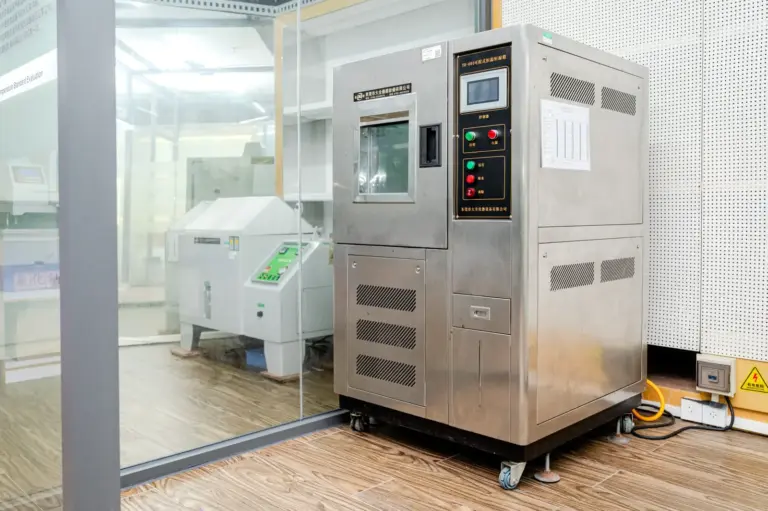
- Functional sampling per batch — finished bags from each production lot tested for signal block on reference devices, with results recorded per order.
- Standard bag QC — tensile, zipper-cycle, color-fastness and hardware tests on the shell, exactly as for any premium soft product.
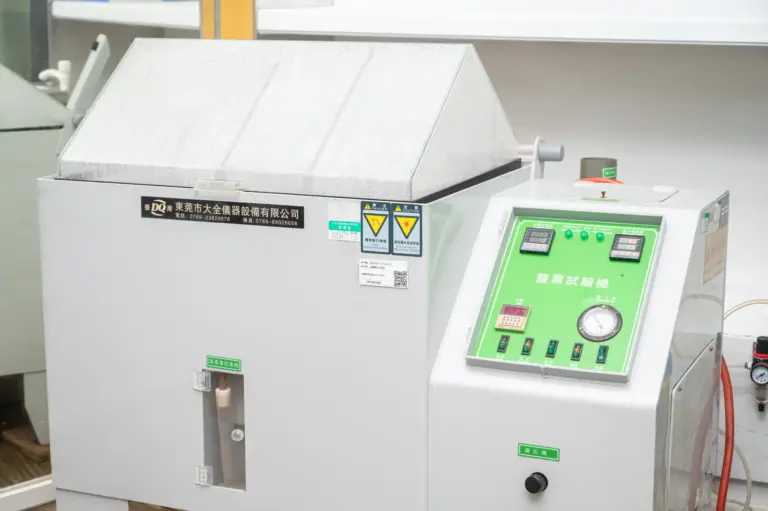
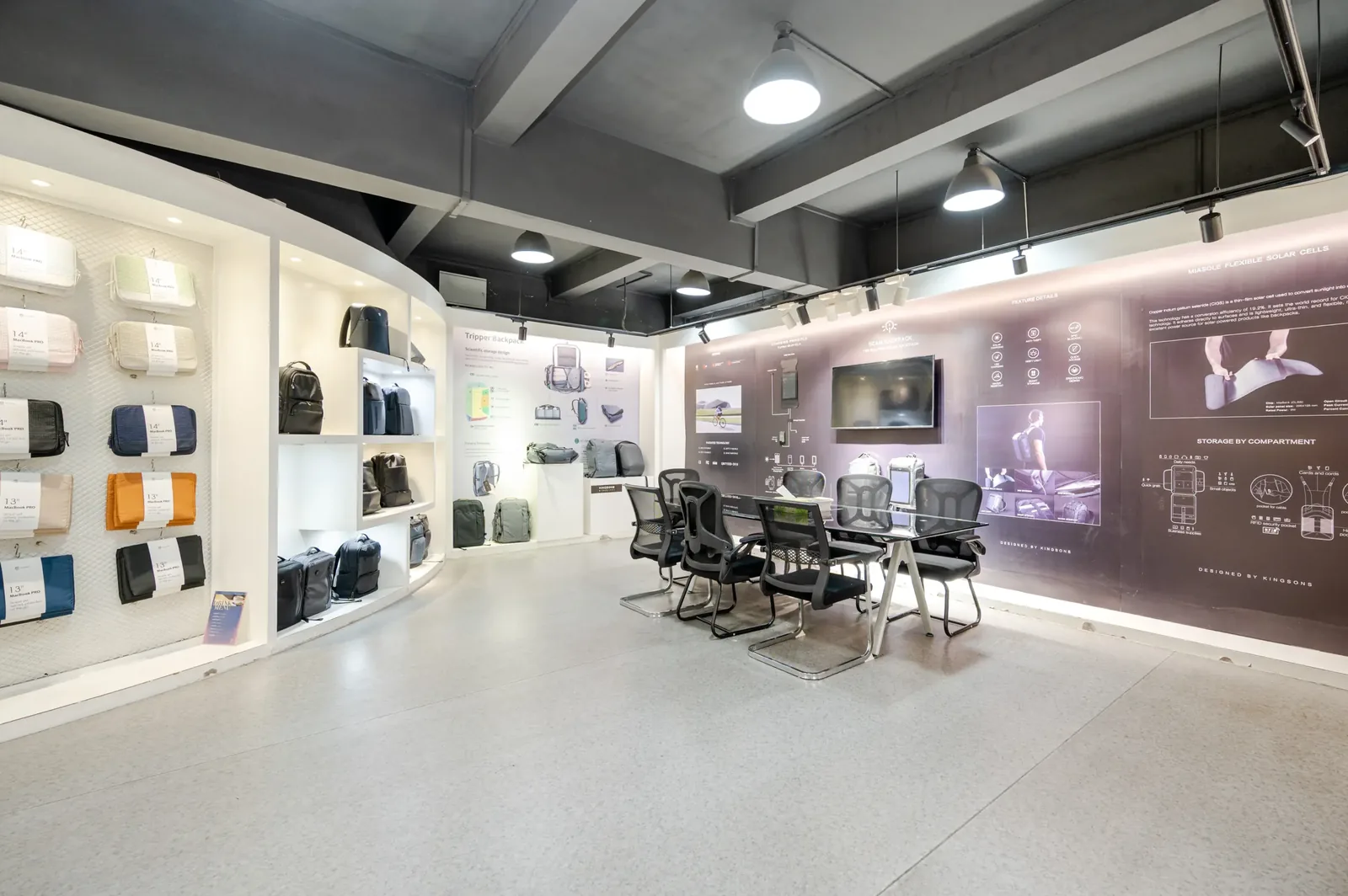
Kingsons runs this model through its full-process quality control system — incoming, in-process and final inspection — with dedicated lab equipment for tensile, waterproofing, zipper reciprocation and material performance testing. Our companion piece on quality control testing for functional backpacks details what a complete test battery looks like.
Certifications and Compliance for Signal-Shielding Products
Faraday bag programs need to meet the usual compliance requirements for soft goods. Additional checks may apply when products are marketed with claims about protecting electronic devices.
- Product safety and environmental compliance. CE, FCC, RoHS, and SGS documentation is standard for functional-bag exports. Kingsons lists these among its product certifications. REACH and California Proposition 65 compliance should be confirmed for the specific materials in the quotation. Request current documentation and attach it to the bill of materials.
- Clear performance claims. Claims such as “blocks signals” should be supported by attenuation measurements from the actual production configuration. Keep laboratory data on file for marketplace checks and consumer-protection reviews.
- Factory audits. BSCI, SEDEX, and ISO 9001/14001/45001 coverage can matter for retail and corporate-gift channels that audit their supply chains. Experience with Walmart audits can also indicate readiness for large-retail compliance processes.
How to Choose a Faraday Bag Manufacturer
Five questions can help you identify a reliable manufacturing partner and separate verified capabilities from claims on a product listing.
1. Can you provide the shielding fabric specification?
Ask for the supplier name, GSM, plating details, and attenuation data. If the factory cannot provide these details, the lining may change when fabric prices or suppliers change.
2. How do you control seams and closures?
Look for documented overlap tolerances and in-line checks rather than general assurances that the bags are carefully sewn.
3. What do you test in each production batch?
Testing only a golden sample does not protect a 10,000-piece production run. Ask how the factory checks performance across production batches.
4. What experience do you have with functional bags?
Experience with radiation-shielding, RFID, and smart-bag programs shows that a factory has worked with conductive materials at scale. Kingsons’ radiation-shielding line is backed by patents and has been developed for volume production, alongside its broader anti-theft range.
5. Will you agree to a written attenuation specification?
A factory that accepts written performance requirements and batch testing can be a more reliable partner. A factory unwilling to commit to measurable requirements creates a sourcing risk.
Checklist: What to Specify Before Ordering
Before placing an order, make sure your product brief covers these six items.
- Product format and target devices, including the dimensions of the enclosure.
- Frequency bands to block and the minimum acceptable attenuation for each band.
- Conductive lining specification, including fabric type, weight, and supplier level.
- Closure type and seam construction standard.
- Shell material, Pantone colors, and branding method, with artwork files.
- Order quantity by color, required compliance documents, and in-hand date.
A brief that covers these six items gives the factory a clear basis for preparing a quotation and sampling plan. It also helps ensure that the finished product can meet its stated performance claims in the market.
Frequently Asked Questions
What is a faraday bag?
A faraday bag is a pouch, sleeve or bag lined with conductive fabric that blocks wireless signals — cellular, Wi-Fi, Bluetooth, GPS and RFID — from reaching the device inside. It works as a flexible Faraday cage: the conductive layer redistributes incoming signals around the enclosure instead of through it, so a phone, key fob or laptop inside cannot transmit or be reached.
Do faraday bags actually work?
A properly constructed one does. Performance depends on the conductive lining’s attenuation across your target bands and, critically, on seam and closure construction — every gap leaks. Serious products publish measured attenuation in decibels across frequency ranges. Always test production batches sealed the way an end user closes them, and treat any product without testable figures as unverified.
What is the MOQ for custom faraday bags?
Standard custom MOQ is 500 pieces per style per color. Trial orders of 200–300 pieces are negotiable at an adjusted price, and small flexible batches start from 50 pieces for market pilots. Logo-only versions on an existing stock model can start at 200 pieces.
Is RFID blocking the same as a faraday bag?
No. RFID blocking shields short-range card frequencies (13.56 MHz and 125 kHz) and can be achieved with a light lining in a single pocket. A full faraday enclosure blocks broadband signals — cellular, Wi-Fi, Bluetooth, GPS — and requires higher-performance conductive fabric plus full-envelope construction. The two justify different claims and different prices.
How long does faraday bag production take?
Sampling takes 7–10 working days and mass production 30–45 working days, with fully bespoke OEM/ODM builds at 40–50 days. Custom Pantone dyeing adds 7–14 days, and specialized conductive fabric sourcing can extend sampling — brief early if you have a hard launch date.
Can a backpack include a faraday compartment?
Yes — integrating a shielded pocket or compartment into an existing backpack platform is one of the fastest routes to market, because the shell, straps and carry system are already validated. Kingsons configures RFID-shielded and radiation-shielded compartments into its smart-bag programs using the same custom-production model as its other functional features.
Kingsons manufactures signal-shielding and functional tech bags on a 50,000 m² campus — 500+ patents including radiation-shielding technology, 20 production lines and 300,000 units monthly capacity.
MOQ from 500 pcs/style · ODM joint development · CE/FCC/RoHS/SGS product certifications · Full-process QC with batch testing