By Kingsons Editorial Team · Published August 21, 2026 · Last updated August 21, 2026
Laptop backpacks are one of the most competitive categories in the global bags industry, and B2B buyers sourcing from manufacturers face a paradox: more factories than ever claim to produce them, yet significant quality gaps persist between those who can and those who merely say they can. Choosing the right laptop backpack manufacturer is the single highest-leverage decision a brand owner, e-commerce seller, or retail procurement team will make this year.
This guide distills 29 years of manufacturing experience — from a Guangzhou-based factory that produces 300,000 units monthly across 20 production lines — into a practical reference. It covers factory selection criteria, material specifications, quality control testing standards, OEM versus ODM models, customization processes, cost structures, and packaging requirements. Every number cited here comes from actual production data, not industry estimates.
Key Takeaways
- A qualified laptop backpack factory needs a minimum of 50,000 sqm production space, 15+ production lines, and ISO 9001 certification at baseline.
- Fabric choice alone accounts for 25–35% of unit cost — 600D polyester is the workhorse, but RPET recycled nylon now meets the same abrasion standards at a 10–15% premium.
- Seam strength must hold 800N minimum; zipper pull tests should reach 12,000 cycles. Any supplier who cannot quote these numbers from memory is not a serious manufacturer.
- OEM gives you full design control but requires a tech pack; ODM lets the factory engineer from your concept — both have distinct cost and timeline implications.
- MOQ for custom laptop backpacks typically starts at 500 pieces per style per color, with trial orders of 200–300 negotiable at adjusted pricing.
What Makes a Reliable Laptop Backpack Manufacturer
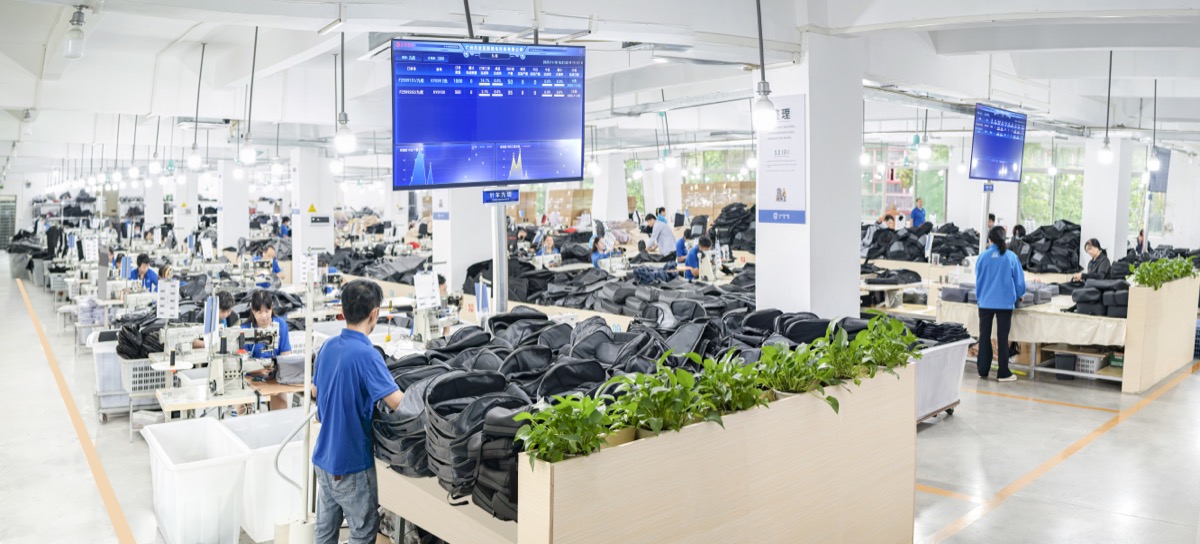
Not every bag factory qualifies as a laptop backpack manufacturer. Laptop bags require specific engineering — shock-absorbing compartments, structured organization panels, reinforced stress points — that generic bag makers often get wrong. Here is what separates a qualified factory from a generalist.
Factory Scale and Production Capacity
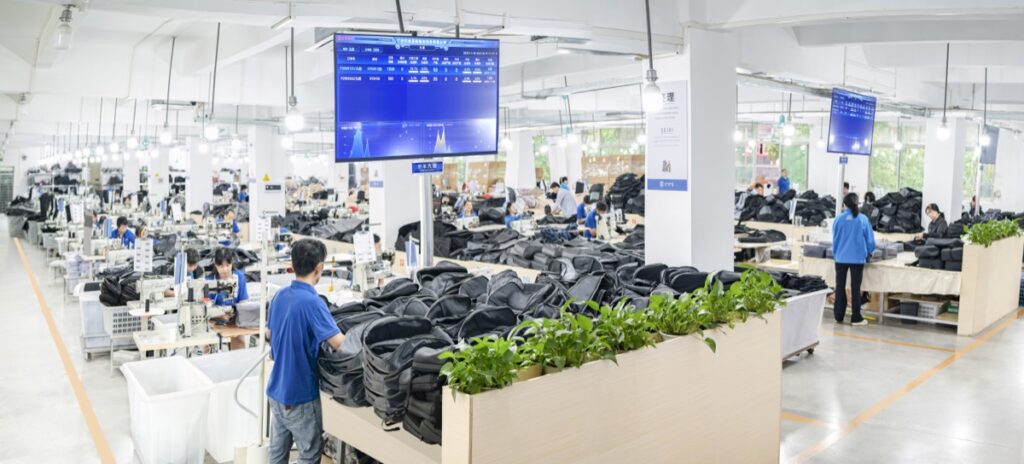
A serious laptop backpack factory operates a minimum of 50,000 square meters of production space with at least 15 dedicated production lines. At this scale, monthly output reaches 200,000–300,000 units. This matters because capacity directly determines lead time reliability. A factory running at 95% utilization cannot absorb your order without pushing someone else’s delivery.
For reference, a mid-tier laptop backpack manufacturer employs 400–500 production staff across specialized workshops: cutting, sewing, finishing, quality inspection, and packaging. If a supplier cannot tell you their exact workshop layout and headcount, treat that as a yellow flag.
R&D and Design Capability
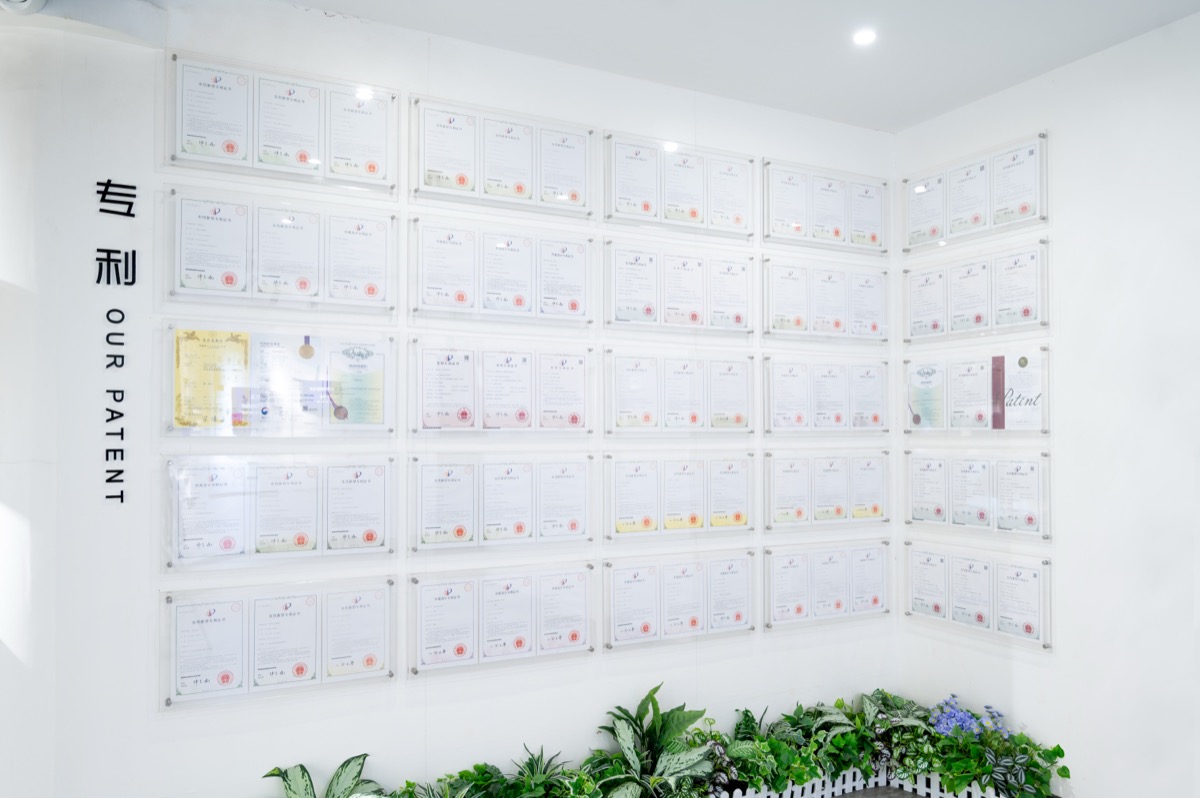
The gap between a factory that copies samples and one that engineers original products is measured in R&D headcount. A qualified laptop backpack manufacturer employs at least 20 dedicated engineers and designers. The top-tier operations — the kind that hold 500+ patents — run 80-person engineering teams covering structural design, material science, and prototyping.
This capability matters most for ODM projects. When you bring a concept rather than a complete tech pack, the factory’s engineering team becomes your product development department. Ask to see their patent portfolio. A factory with zero patents has zero innovation infrastructure.
Certifications That Actually Matter
For the laptop backpack category, these certifications carry real weight:
- ISO 9001 — Quality management system. Non-negotiable for any serious buyer.
- BSCI or SEDEX — Social compliance. Required by most European retail chains and increasingly by Amazon brand registries. Verify via amfori BSCI database.
- GRS (Global Recycled Standard) — Validates recycled material claims. Essential if your brand positions on sustainability.
- ISO 14001 — Environmental management. Signals the factory manages waste and emissions systematically.
- Walmart or Target factory audit — Passing a major retailer’s audit is one of the strongest capability signals available. It covers quality, social compliance, and structural safety in one assessment.
A factory holding all five has been stress-tested by multiple external systems. Request copies before placing any order — verified certificates have unique IDs you can check against issuing body databases.
Materials and Fabric Selection for Laptop Backpacks
Fabric choice determines durability, weight, water resistance, and 25–35% of your unit cost. The wrong material decision is the most expensive mistake B2B buyers make, because it only surfaces after the first batch of customer returns.
Fabric Options by Performance Tier
| Material | Denier | Best For | Cost Index | Water Resistance |
|---|---|---|---|---|
| 600D Polyester | 600 | Mid-range business backpacks, high-volume runs | Base | Moderate (PU coating) |
| 1680D Ballistic Nylon | 1680 | Premium business, anti-theft models | +40–60% | High |
| RPET Recycled Nylon | 420–600 | Eco-positioned brands, European market | +10–15% | Moderate–High |
| Canvas (cotton blend) | 12–18 oz | Fashion/lifestyle laptop bags | +5–20% | Low (needs treatment) |
| TPU Laminated Fabric | Varies | Outdoor/waterproof laptop backpacks | +50–80% | Very high |
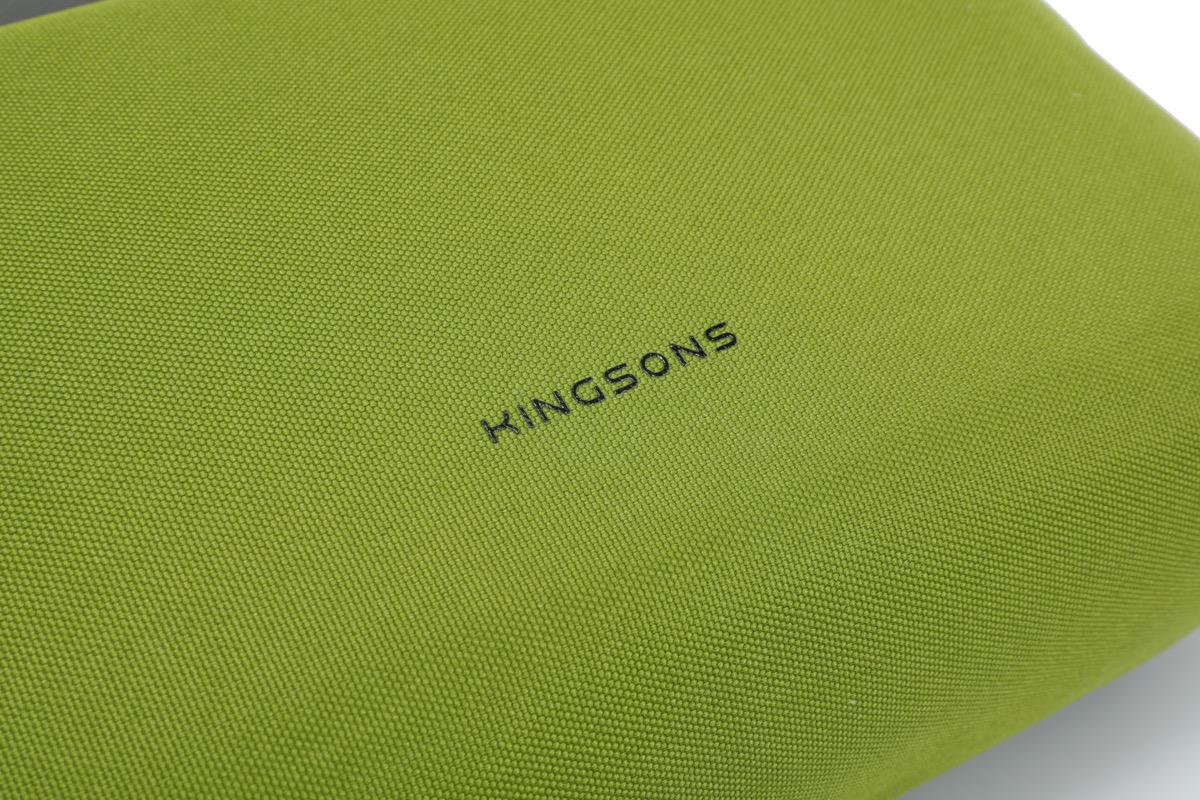
600D polyester remains the workhorse for B2B laptop backpack orders. It balances cost, durability, and printability. For brands targeting the North American or European premium segment, 1680D ballistic nylon or RPET recycled nylon are the upgrades buyers specify most often.
Zipper, Buckle, and Hardware Quality
The zipper is the single most failure-prone component on any backpack. Specify branded zippers: YKK (Japanese), SBS (Chinese premium), or SAB. The cost difference between a no-name zipper and a YKK is $0.30–$0.80 per unit. The cost of a zipper failure in the field — measured in returns, negative reviews, and brand damage — runs 10–50x that amount.
For buckles and hardware, insist on SFS or ITW sourcing. These are the same suppliers used by major outdoor brands. Cheap hardware cracks in cold weather and fails UV exposure tests within 200 hours. Branded hardware passes 500+ hours without degradation.
One more point buyers overlook: the foam used in laptop compartments. A proper laptop backpack needs closed-cell EPE or EVA foam with a minimum density of 25 kg/m³ for adequate shock absorption. Some factories substitute with recycled foam at 15 kg/m³ density — it compresses within weeks and leaves the laptop unprotected. Ask for foam density specifications before approving any sample.
Quality Control Testing Standards
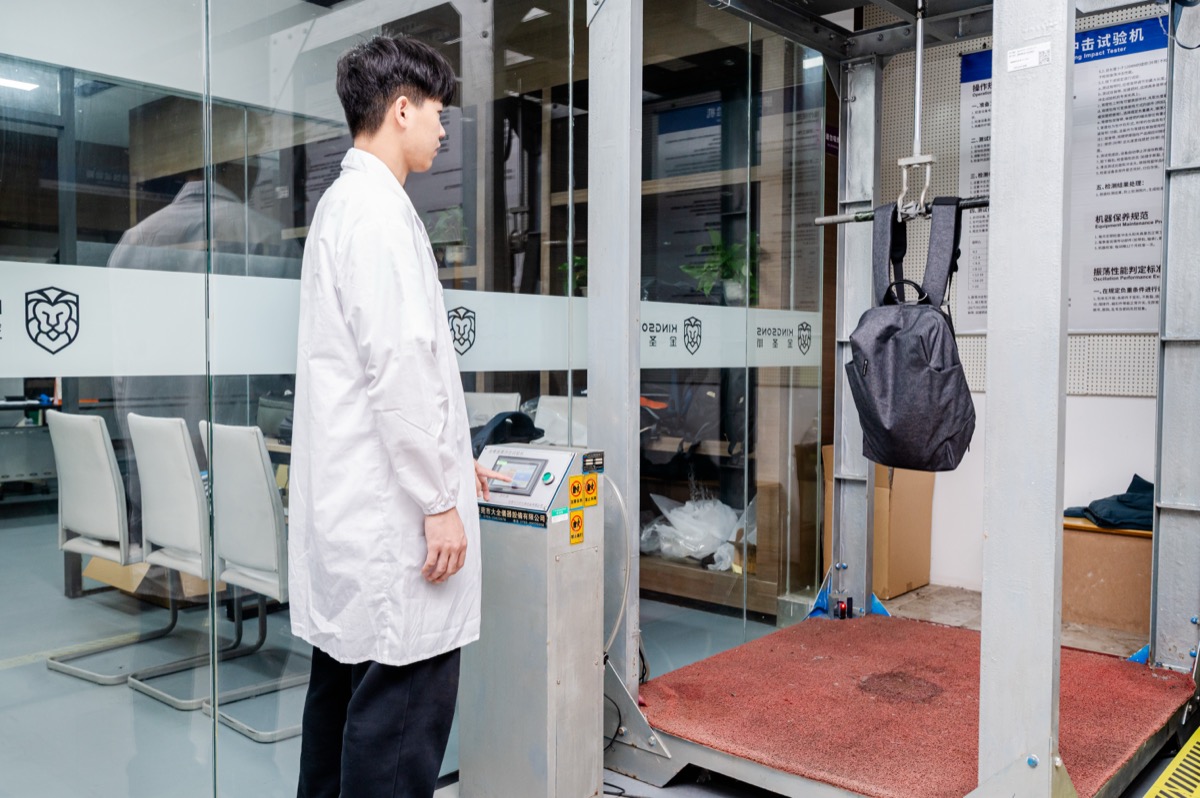
Quality control in laptop backpack manufacturing is not optional — it is the difference between a product that ships once and a product that ships repeatedly. A qualified factory runs testing at three stages: incoming quality control (IQC), in-process inspection, and final random inspection (FRI).
Critical Tests Every Buyer Should Require
These are the specific benchmarks a serious laptop backpack manufacturer should quote from memory:
- Seam strength test: Minimum 800N pull force on all load-bearing seams. If a seam fails below 600N, the backpack will split under normal laptop weight (1.5–2.5 kg) within months of daily use.
- Zipper reciprocating test: 12,000 open-close cycles without tooth separation. This simulates roughly 2 years of daily use at 15 cycles per day.
- Water resistance test: Fabric should withstand 1,000mm water column pressure for 24 hours without penetration. For “waterproof” claims, the threshold rises to 3,000mm+.
- Load-bearing test: Backpack loaded to 125% of rated capacity, hung for 24 hours. Straps, handles, and attachment points must show no deformation beyond 2%.
- Abrasion test: Fabric surface tested on a Martindale abrasion machine for 5,000 cycles. Color fading should not exceed grade 4 on the gray scale.
Testing Equipment a Qualified Factory Owns
A factory that takes quality seriously maintains its own testing lab. The essential equipment list includes: a universal tensile testing machine (for seam and strap strength), a waterproofness tester (hydrostatic pressure), a zipper reciprocating tester, a Martindale abrasion tester, and dimensional measurement instruments. If your supplier sends samples out to third-party labs for every test, their in-process QC is weak by definition — they only catch problems after production, not during it.
A buyer once received a sample batch where all zippers passed — but the factory had swapped to a cheaper zipper supplier for mass production without notification. The batch of 8,000 units failed at 4,000 cycles instead of 12,000. The only protection: a contractual specification sheet that names the exact zipper brand and model, with penalties for unauthorized substitution.
OEM vs ODM Laptop Backpack Manufacturing
B2B buyers often use “custom manufacturing” as a catch-all term. In practice, there are two distinct models — OEM (Original Equipment Manufacturing) and ODM (Original Design Manufacturing) — and choosing the wrong one adds months to your timeline and thousands to your cost.
| Dimension | OEM | ODM |
|---|---|---|
| Your input | Complete tech pack with specs, materials, dimensions | Concept, mood board, or market brief |
| Factory role | Build to your exact specifications | Engineer design from concept to production-ready |
| Design cost | Low (you provide the design) | Higher (factory invests R&D time) |
| Sample rounds | 1–2 rounds typically | 3–5 rounds typical |
| IP ownership | You own the design fully | Shared or negotiated; factory may sell similar designs to others |
| Best for | Established brands with design teams | New brands, e-commerce sellers expanding product lines |
| Timeline | Shorter (sample 7–10 days) | Longer (sample 15–20 days) |
Here is the practical decision rule: if you can hand the factory a complete tech pack with material specs, dimensions, color codes, and hardware details, go OEM. You save on design costs and get faster samples. If you have a market concept — “I need a slim anti-theft laptop backpack for urban commuters under $40 retail” — go ODM and let the factory’s engineering team translate your brief into a buildable product.
A growing number of laptop backpack manufacturers now offer a hybrid model. You provide the aesthetic direction and brand requirements; the factory provides a library of pre-engineered internal structures (laptop compartments, organization panels, strap systems) that you customize. This cuts sample rounds to 2–3 while still delivering a product that feels uniquely yours.
Sourcing a laptop backpack manufacturer with proven OEM/ODM capability? Kingsons has produced 300,000+ units monthly since 1997, with 500+ patents and certifications including ISO, BSCI, GRS, and Walmart factory audit.
29 Years Experience | 80 Engineers | MOQ from 500 pcs
Customization Options for B2B Buyers
Customization is where laptop backpack manufacturing separates commodity sourcing from brand building. A qualified factory offers customization across four dimensions: branding, materials, functional features, and packaging.
Logo and Branding Techniques
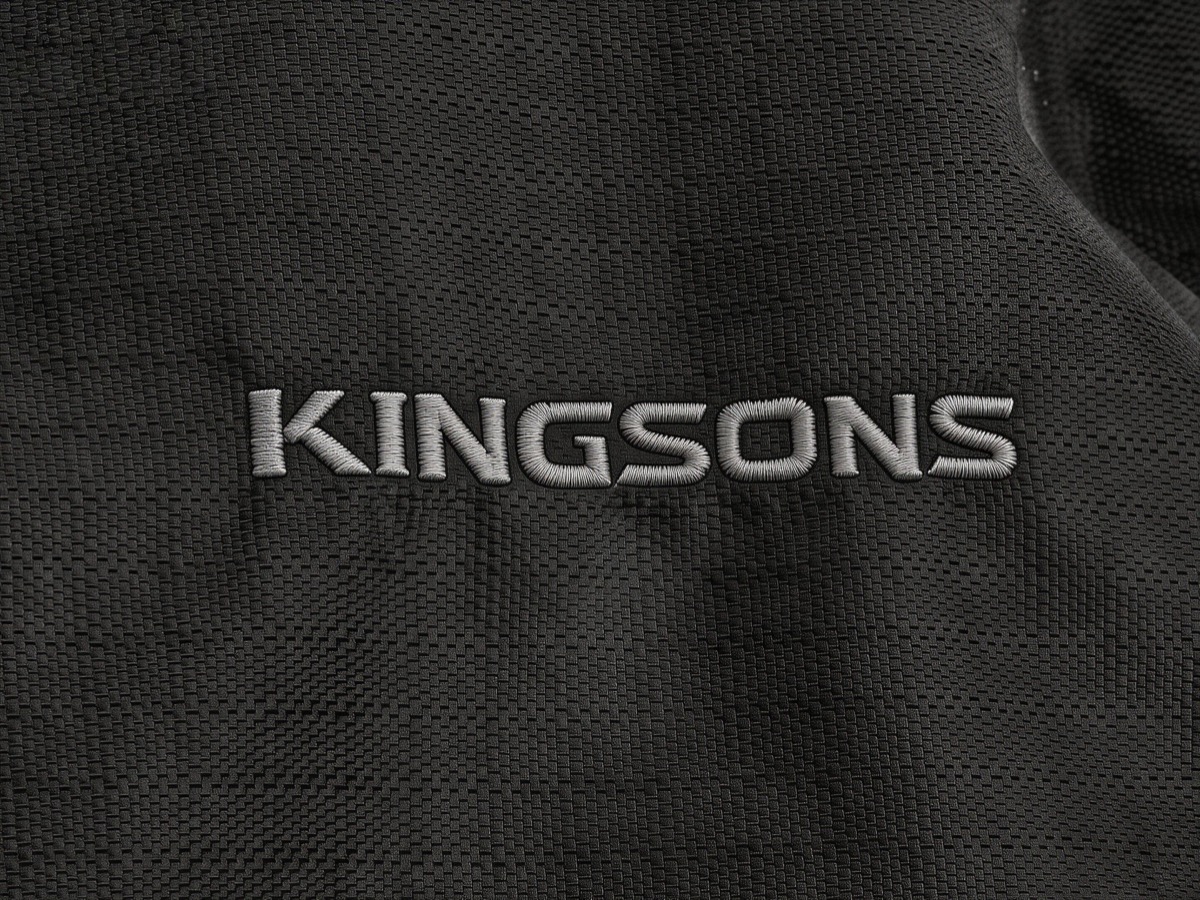
Four main techniques dominate the laptop backpack category. Embroidery delivers the most premium feel and holds up through years of daily use — it is the default choice for business-oriented products. Silk screening works for colorful logos on polyester and nylon surfaces at lower cost. Debossing (heat-pressed imprint) creates a subtle, tone-on-tone effect favored by minimalist brands. Metal badges or plates add a luxury hardware element, typically used on premium lines retailing above $60.
Functional Feature Add-Ons
The laptop backpack category has seen a surge in feature integration over the past three years. The most requested additions from B2B buyers include:
- USB/Type-C charging ports — Requires an internal cable route and power bank pocket. Adds $1.50–$3.00 per unit.
- Anti-theft features — Hidden zippers, RFID-blocking pockets (99.99% signal shielding), cut-resistant straps. Adds $2.00–$5.00 per unit depending on complexity.
- Vacuum compression compartments — A patented innovation that reduces backpack volume by 30% when not in use. Particularly popular for travel-oriented laptop backpacks.
- Solar charging panels — Flexible CIGS panels integrated into the front face. Viable for outdoor-positioned products; adds $8–$15 per unit.
One warning from production experience: resist the urge to add every feature to every product. A laptop backpack with USB ports, solar panels, anti-theft locks, and vacuum compression is not a better product — it is a heavier, more expensive product with more failure points. Pick the two or three features that match your target buyer’s actual use case and execute them well.
Production Timeline From Sample to Shipment
Lead time is the second most common source of disputes in laptop backpack manufacturing, right behind quality. Buyers who understand the production timeline and plan backward from their launch date avoid 90% of supply chain problems.
Phase-by-Phase Breakdown
| Phase | Duration | Key Milestone |
|---|---|---|
| Requirement discussion | Day 1–3 | Specs confirmed, materials selected |
| Quotation and material sourcing | Day 4–10 | Price confirmed, materials ordered |
| Sampling | Day 7–20 | First sample ready for approval |
| Sample approval and revision | Day 20–30 | Final sample signed off |
| Mass production | Day 30–50 | Production complete |
| QC inspection and packaging | Day 50–55 | FRI passed, goods packed |
| Shipping arrangement | Day 55–65 | Goods dispatched (sea/air/express) |
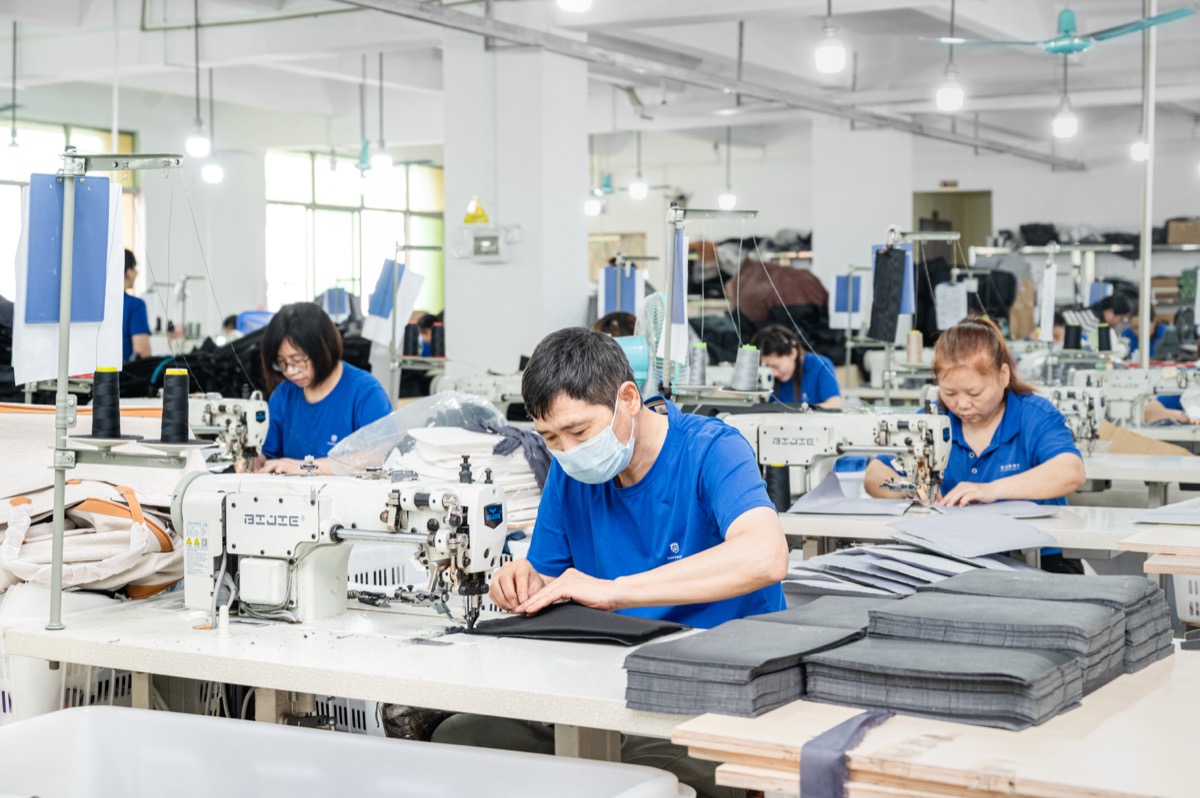
The total cycle from first conversation to goods dispatched runs 45–65 working days for a standard OEM order. ODM projects add 10–15 days for the additional design and engineering rounds.
Where Delays Actually Happen
Production delays in laptop backpack manufacturing cluster around three points. First: material sourcing. If you specify a fabric color that the factory does not stock, dyeing adds 7–14 days. Second: sample approval loops. Each revision round adds 7–10 days. Buyers who take 2 weeks to review a sample can double the sampling phase. Third: holiday periods. Chinese New Year (January–February) and Golden Week (October) shut down production for 2–3 weeks each. Plan your order placement around these dates, not after them.
Understanding Laptop Backpack Cost Structure
Pricing in laptop backpack manufacturing follows a transparent logic once you understand the components. The unit cost breaks down into materials, labor, overhead, and margin — and each component responds differently to order volume.
Cost Breakdown by Component
| Component | % of Unit Cost | What Drives It |
|---|---|---|
| Fabric and materials | 35–45% | Fabric type, zipper brand, foam density, hardware quality |
| Labor | 20–25% | Construction complexity, number of panels, feature count |
| Overhead and QC | 15–20% | Factory standard, testing frequency, certification maintenance |
| Packaging | 5–8% | Packaging type, custom printing, insert cards |
| Factory margin | 10–15% | Order volume, relationship length, product complexity |
How MOQ Affects Unit Price
Minimum order quantity directly determines your per-unit cost. At 500 pieces per style per color — the standard MOQ for most laptop backpack manufacturers — you get competitive pricing with full customization. Drop to 200–300 pieces for a trial order, and expect a 10–20% price increase. Below 100 pieces, you are essentially paying sample pricing on every unit.
Some factories now offer flexible MOQ tiers. For example, orders of 50 pieces per style may be available at a premium, specifically designed for e-commerce sellers testing a new product line. The per-unit cost is higher, but the total investment is manageable and the inventory risk is minimal.
One cost trap to watch: tooling and mold fees. Custom buckles, branded zipper pulls, and unique EVA-molded compartments require one-time tooling investment of $200–$2,000 depending on complexity. Most factories deduct this cost from your first bulk order, but some charge it separately. Confirm tooling cost treatment before placing your order.
Packaging Requirements for Different Sales Channels
Packaging is the last thing B2B buyers think about and the first thing that causes a shipment to get rejected by a fulfillment center. Different sales channels have different packaging requirements, and your laptop backpack manufacturer needs to know which standard you are shipping to.
Channel-Specific Packaging Standards
Standard export packaging follows a three-layer system: individual poly bag per unit, inner carton of 6–12 units, and master carton for shipping. This works for most traditional retail and distributor channels. But Amazon FBA, retail chain direct-to-warehouse, and DTC fulfillment each add their own requirements.
For Amazon FBA, each unit needs an FNSKU-labelable poly bag with suffocation warning, and the master carton must meet Amazon’s pallet and labeling specifications. Carton weight must not exceed 22.5 kg (50 lbs). Box dimensions should optimize pallet utilization — a poorly sized carton wastes 15–20% of pallet space and increases your inbound shipping cost proportionally.
For retail chain delivery, expect hang tags, price ticket holes, and specific carton marking requirements that vary by retailer. Some chains require RFID tags on every unit. Confirm packaging specs with your buyer’s compliance team before finalizing production.
For DTC brands, the unboxing experience matters. Custom packaging — branded boxes, tissue paper, thank-you cards — adds $0.50–$2.00 per unit but directly impacts review scores and repeat purchase rates. Discuss packaging options with your factory early, because custom packaging tooling has its own lead time.
B2B Buyer Checklist for Vetting Manufacturers
After covering materials, QC, customization, cost, and packaging, here is a consolidated checklist for evaluating any laptop backpack manufacturer before placing an order.
Certification Verification
- Request digital copies of ISO 9001, BSCI/SEDEX, and GRS certificates. Verify each certificate ID against the issuing body’s online database.
- Check certificate expiry dates. A BSCI report more than 24 months old is considered expired by most European buyers.
- If the factory claims Walmart or other major retailer audit approval, ask for the audit report summary — not just the certificate logo.
Factory Audit and Sample Evaluation
- Request a live video factory tour if you cannot visit in person. A qualified factory will walk you through every workshop — cutting, sewing, QC, and packaging — in real time.
- Order a sample before any bulk commitment. Evaluate: stitching consistency (count stitches per inch — should be 8–10 on load-bearing seams), foam density in the laptop compartment, zipper smoothness, and overall finishing quality.
- Test the sample yourself: load it with a laptop and daily carry items, use it for two weeks, and check for strap discomfort, zipper stiffness, or seam stress.
Communication and Responsiveness
A factory’s response time during the sampling phase predicts their performance during mass production. If it takes 5 business days to get a quotation, production issues will take even longer to resolve. Look for a manufacturer that responds within 24 hours on working days and assigns a dedicated account manager to your project.
Conclusion
Sourcing a laptop backpack from the right manufacturer requires evaluating factory scale, material specifications, quality control infrastructure, customization capability, and commercial terms — not just comparing unit prices. The cheapest quote often hides cost cuts in foam density, zipper quality, or QC frequency that surface as customer returns six months later.
Key Decision Points
- Prioritize factories that quote specific QC benchmarks (800N seam strength, 12,000-cycle zipper test) over those who say “we have strict quality control” without numbers.
- Match your OEM/ODM choice to your design readiness — a complete tech pack goes OEM; a market concept goes ODM.
- Plan your order 65–75 working days before your target delivery date, accounting for sampling, production, and shipping.
- Verify certifications against issuing body databases — never accept a certificate image at face value.
If you are ready to evaluate a manufacturing partner with 29 years of laptop backpack production experience, 500+ patents, and certifications spanning ISO, BSCI, GRS, and Walmart audit compliance, the next step is a direct conversation about your specifications.
Frequently Asked Questions
What is the typical MOQ for custom laptop backpacks?
Most laptop backpack manufacturers set MOQ at 500 pieces per style per color for full custom orders. Trial orders of 200–300 pieces are negotiable at adjusted pricing. Some factories offer flexible tiers starting from 50 pieces for product testing.
How long does laptop backpack production take?
From sample approval to shipment completion, mass production takes 30–50 working days. Including the sampling and approval phase, the total cycle runs 45–65 working days. OEM orders are faster; ODM orders add 10–15 days for design engineering.
Can laptop backpacks be customized with my brand logo?
Yes. Four main branding techniques are available: embroidery (premium, most durable), silk screening (cost-effective for colorful logos), debossing (subtle, minimalist look), and metal badges (luxury hardware finish). The choice depends on your product positioning and budget.
What certifications should a laptop backpack factory have?
At minimum: ISO 9001 for quality management and BSCI or SEDEX for social compliance. For eco-positioned brands, add GRS (Global Recycled Standard). For export to major retail chains, a Walmart or equivalent retailer factory audit is a strong capability signal.
What is the difference between OEM and ODM backpack manufacturing?
OEM means you provide a complete tech pack and the factory builds to your specifications. ODM means you provide a concept or brief and the factory’s R&D team engineers the product. OEM suits established brands with design teams; ODM suits new brands and e-commerce sellers expanding their product lines.