A backpack that charges a phone while you walk started as a crowdfunding curiosity and became a standing shelf category. For outdoor, commuter and tech-forward brands, the solar backpack answers a real complaint — dead batteries on travel days — with a visible feature that sells itself in a 15-second store demonstration.
The specification traps are equally visible. Panel efficiency claims, wattage ratings and “solar powered” labels get printed loosely across this category. This guide explains how solar backpacks actually generate and deliver power, which specs belong in your tech pack, and how to evaluate suppliers before committing an order.
Punti chiave
- A solar backpack is a three-part system — photovoltaic panel, charge management circuitry, and a buffer battery or device output — and each part needs its own specification line.
- Panel technology choice (monocrystalline, polycrystalline or CIGS thin-film) drives efficiency, flexibility, weight and low-light behavior, which in turn drives product design.
- Realistic harvest from a backpack-sized panel is in the 5–15 W class; honest marketing describes trickle charging and weather dependence, not all-day device charging from sunlight alone.
- Lithium battery transport, CE/FCC/RoHS product compliance and panel lamination durability are the three risk areas that separate a saleable program from a returns problem.
- Custom solar backpack programs at an OEM factory typically start at 500 pieces per style, with sampling in 7–10 working days and production in 30–45 days.
From Crowdfunding Novelty to Standing Product Line
Solar backpacks proved their market on crowdfunding platforms before they proved it in retail. Kingsons’ own solar-charging energy backpack closed a Kickstarter campaign at roughly 362,000 USD — evidence that consumers respond to the feature when it is explained honestly and integrated into a bag they would buy anyway.
That distinction matters for brand buyers. The campaigns that succeeded treated solar as one function inside a well-built backpack: anti-theft structure, organized compartments, clean aesthetics. The ones that failed led with a panel strapped to an ordinary bag. If you are building a smart feature line, our anti-theft laptop backpack sourcing guide follows the same logic — the carrier has to be excellent before the feature registers.
How a Solar Backpack Actually Charges a Device
Every working solar backpack moves power through the same chain:
- Panels laminated into the outer fabric convert sunlight to direct current, typically at 5 V USB-compatible levels after regulation.
- A charge controller regulates voltage and current so a cloud passing overhead does not spike what reaches the next stage.
- A buffer battery or direct output stores or passes the energy. Most retail designs charge an internal power bank during the day and let the rider draw from a standard USB port later.
- USB wiring — USB-A, USB-C, or both — runs through the bag’s webbing to an accessible port.
Understanding the chain prevents the most common buyer confusion: the panel does not charge your phone directly in any meaningful way. Sunlight varies; phones want steady current. The buffer battery is what makes the experience predictable, which means battery specification is as important as panel specification.
Panel Technologies Compared
| Panel Type | Typical Module Efficiency | Flex Behavior | Low-Light Behavior | Ideale per |
|---|---|---|---|---|
| Monocrystalline silicon | 18–24% cell-level, lower at module | Rigid; brittle under repeated flex | Good for its class | Flat panel zones, premium efficiency positioning |
| Polycrystalline silicon | 15–18% cell-level | Rigid | Moderate | Cost-driven lines with flat mounting areas |
| CIGS thin-film | ~17% class (Kingsons specifies MiaSolé CIGS at 17.4%) | Flexible; conforms to curved bag surfaces | Relatively better diffuse-light output | Curved shoulder zones, integrated fabric construction |
For backpacks, flexibility is the deciding property. Rigid silicon panels crack under the repeated bending a loaded bag undergoes, which is why integrated solar textiles favor thin-film constructions. Kingsons’ smart tech line uses CIGS (copper indium gallium selenide) thin-film panels rated at 17.4% conversion efficiency — a figure in the practical band for curved-surface integration rather than the laboratory headline numbers some listings quote.
Reading the Power Specification Sheet
Solar backpack listings mix wattage, capacity and efficiency numbers freely. Put each back in its lane:
| Spec Line | What It Actually Describes | How to Use It in an RFQ |
|---|---|---|
| Panel wattage (W) | Peak output under full sun (1,000 W/m², 25 °C test conditions) | Specify panel area and measured peak output, not marketing watts |
| Output voltage/current (V/A) | What the USB port delivers to devices | Require 5 V regulated output with stated amperage per port |
| Battery capacity (mAh) | Stored energy in the buffer battery | Specify capacity, cell grade, cycle-life target and protection circuitry |
| Conversion efficiency (%) | Sunlight-to-electricity ratio at the cell level | Ask whether the figure is cell-level or module-level; the gap is real |
| Charge controller type | Regulation between panel and battery | Require over-charge, over-discharge and temperature protection |
One calibration point for retail claims: a backpack-face panel in the 5–15 W class harvests a phone charge over several hours of direct sun, not minutes. Weather, angle and shadow cut that further. Build marketing around “keep your battery alive on long days” rather than “charge from the sun,” and the product matches the promise.
Durability: Panels on a Bag Take Abuse
A solar panel on a backpack lives a harder life than one on a roof or a camping kit. It gets bent when the bag is half-full, scuffed against walls, rained on, stuffed into overhead bins and left in hot cars. The engineering response sits in three places:
- Lamination and encapsulation — the panel must be bonded into the fabric assembly so water cannot reach the circuitry and flex cannot delaminate the cell layer. ETFE or equivalent face films resist UV yellowing and abrasion better than plain PET.
- Strain relief at wiring points — the cable where panel meets bag is the classic failure site. Reinforced grommets, bonded exits and service-loop routing keep connections alive through flex cycles.
- Weather rating — specify splash resistance (IP-rated enclosure or covered port design) honestly; “water resistant” on a fabric product is not “waterproof,” and review sections punish the gap.
Nostro laptop backpack quality control testing guide covers how to convert these properties into test protocols — flex cycling, abrasion, port pull tests — that survive supplier negotiation.
What Belongs in Your Solar Backpack Tech Pack
A complete tech pack for a solar model adds four electrical dimensions to the usual bag construction file:
- Panel type, cell supplier tier, module dimensions, target efficiency and mounting zone on the pattern.
- Charge controller specification with protection features and the port layout (USB-A, USB-C, count, posizionamento).
- Battery specification: capacity, cell grade, protection board, removable-or-fixed decision (removable batteries simplify air freight and compliance).
- Compliance targets per market: CE for the EU, FCC for the US, RoHS substance limits, plus transport documentation for anything with cells.
The tech pack is also where customization choices get locked: panel zone position affects logo placement, pocket layout affects cable routing, and shell material affects lamination method. Kingsons’ development team works from a structured bag tech pack so these interactions surface in review, not in production. Fabric-side options — recycled nylon, PU coatings, webbing colors — follow the standard custom bag materials decision process.
Batteries, Shipping and Compliance
The lithium battery is the quiet decision that shapes the whole program:
- Integrated vs. removable. Removable power banks ship separately and simplify air freight; integrated batteries lower unit cost but tie the whole bag to lithium battery transport rules (UN 38.3 testing, packaging instructions, state-of-charge limits).
- Buyer-supplied batteries. Some brands source cells in their home market and have the factory install them, sidestepping cross-border battery logistics entirely.
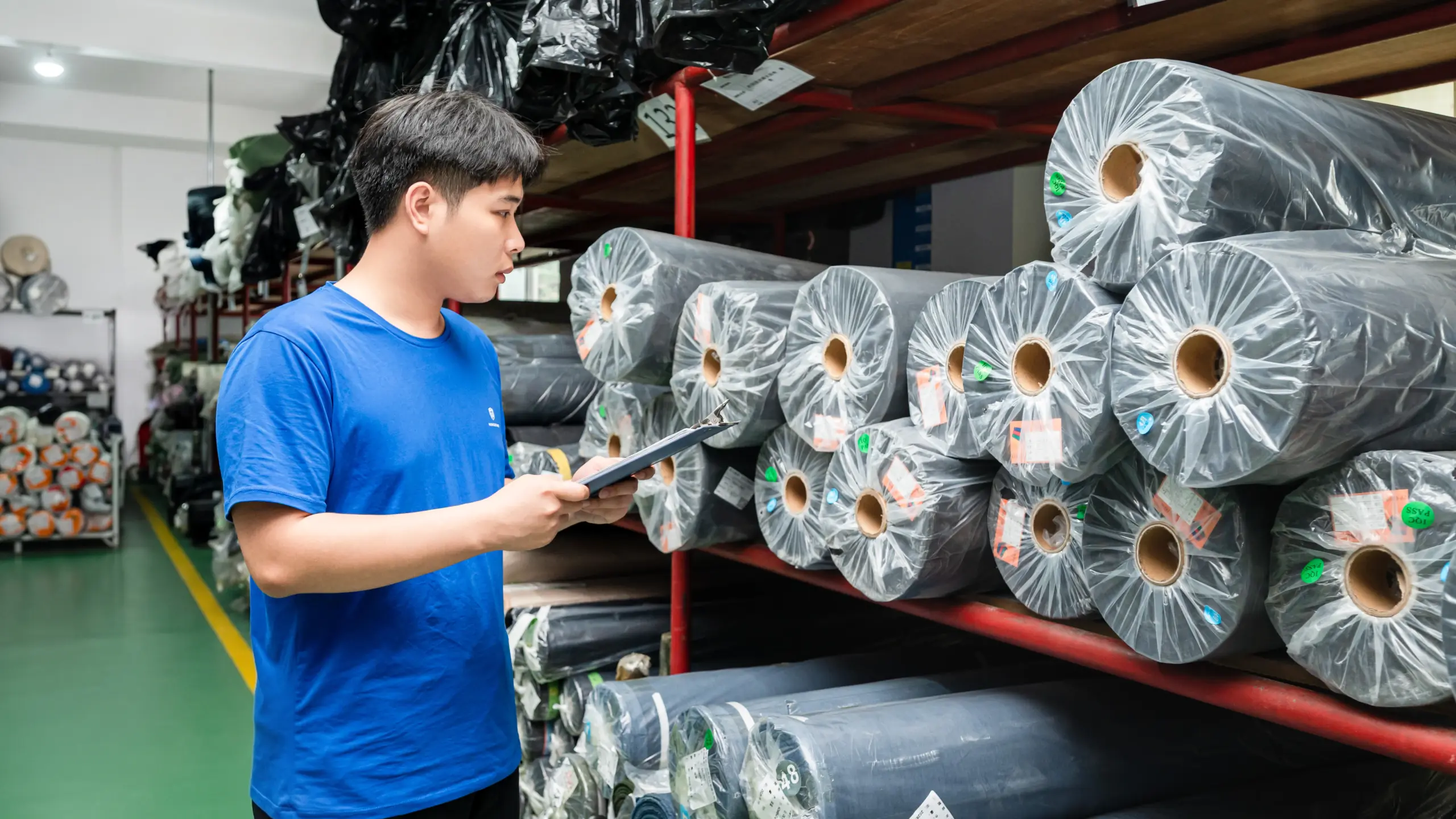
- Certification stack. The electronic subsystem needs CE and FCC declarations for EU and US retail; RoHS applies to substance content. Factories under ISO 9001 management with documented incoming inspection can supply the test reports retail buyers ask for.
Settle the battery architecture before requesting quotes. UN 3 USD unit-price difference between configurations is trivial next to a rejected air shipment or a market-access question from a retailer’s compliance team.
Customization Beyond the Panel
Solar models are usually flagship SKUs, so brand programs extend past the electrical system into everything else the bag does:
- Marchio — embossed or debossed logo plates near the panel zone, woven labels, custom zipper pulls and Pantone-matched webbing.
- Structure — laptop compartments with airbag shock protection, RFID-shielded pockets, hidden anti-theft zippers and expandable main compartments.
- Port design — port color, position, weather flap and cable routing channels inside the lining.
Kingsons holds more than 500 self-developed patents across functional bag design, and the development path for a branded solar line — catalog adaptation versus full bespoke engineering — follows the standard OEM/ODM customization levels.
MOQ, Lead Time and Cost Structure
Solar models carry a parts bill that ordinary backpacks do not — panel, controller, battery, harness — so quote gaps between suppliers are bigger than on plain bags. The commercial baseline at a professional factory:
- MOQ: 500 pieces per style per color for custom programs; 200–300 piece trial orders negotiable with price adjustment.
- Sampling: 7–10 working days for standard development; allow extra time when a new panel zone or cable routing has to be prototyped.
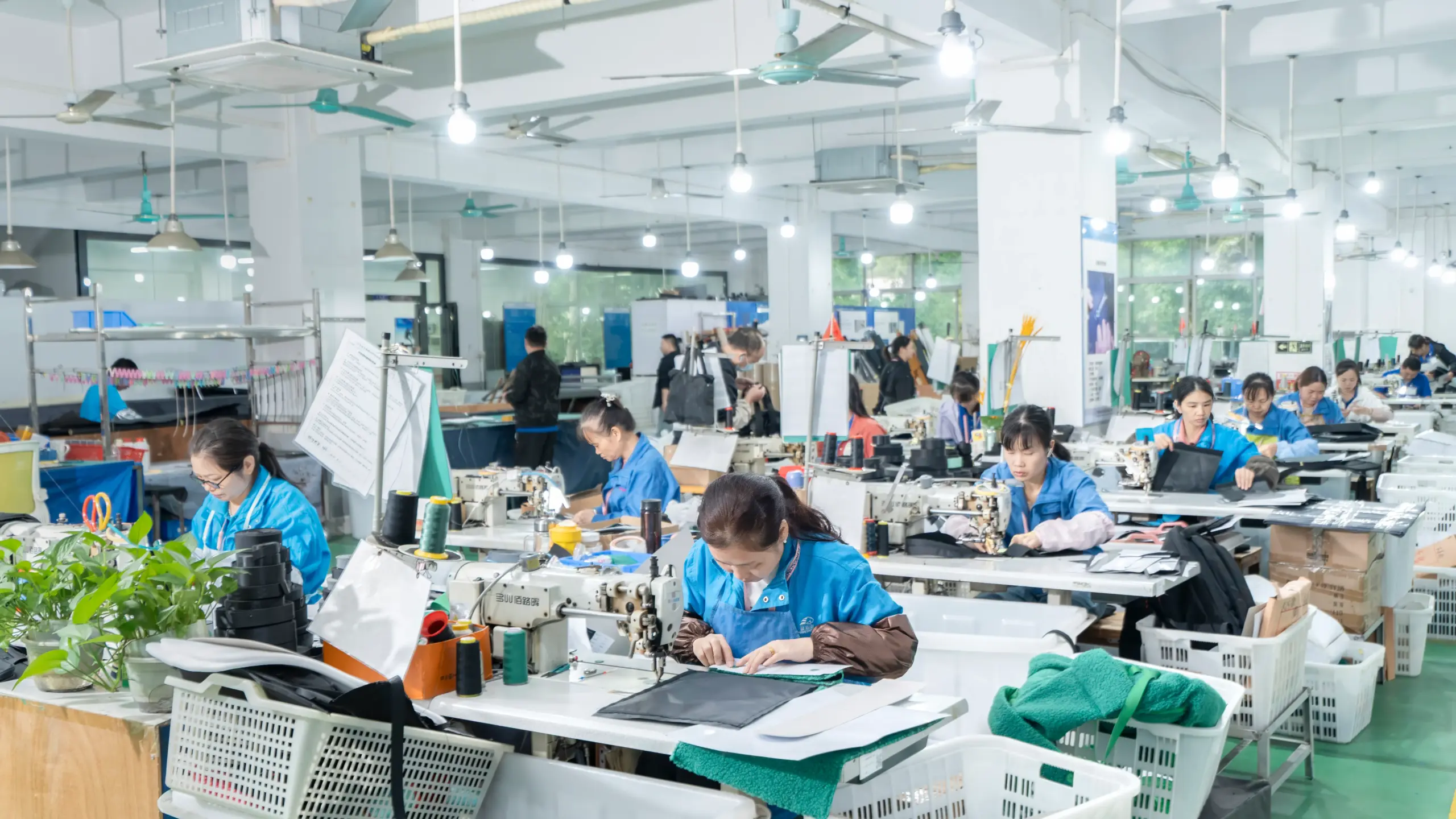
- Produzione: 30–45 days after sample approval, against a 50,000 m² facility running 20 smart production lines at 300,000 pieces monthly.
- Payment: T/T 30% deposit and 70% before shipment, L/C at sight, or Trade Assurance.
Prototype every claim on the sample: measure output in your own conditions, run the flex cycles the bag will see, and verify the port rating. The specification sheet is the supplier’s promise; the sample test is yours.
How to Evaluate a Solar Backpack Supplier
Solar competence is a subset of general smart-bag competence, so vet the factory first and the feature second:
- Does the supplier have documented experience with laminated electronics into fabric — panel source, lamination method, failure data?
- Can it produce compliance documentation (CE/FCC/RoHS reports) under its own name for the destination market?
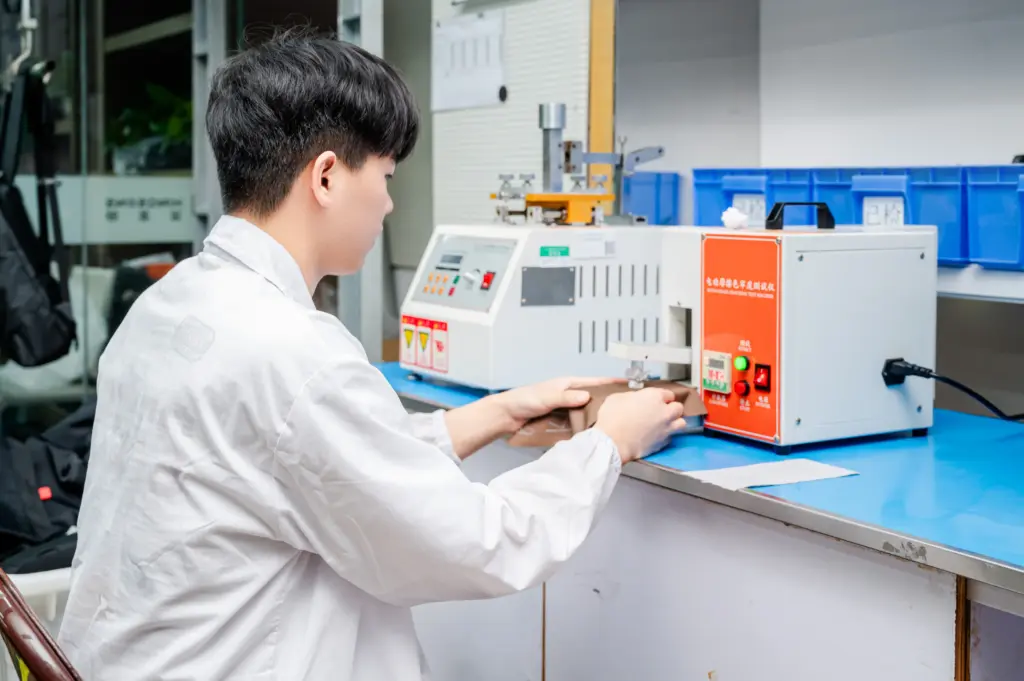
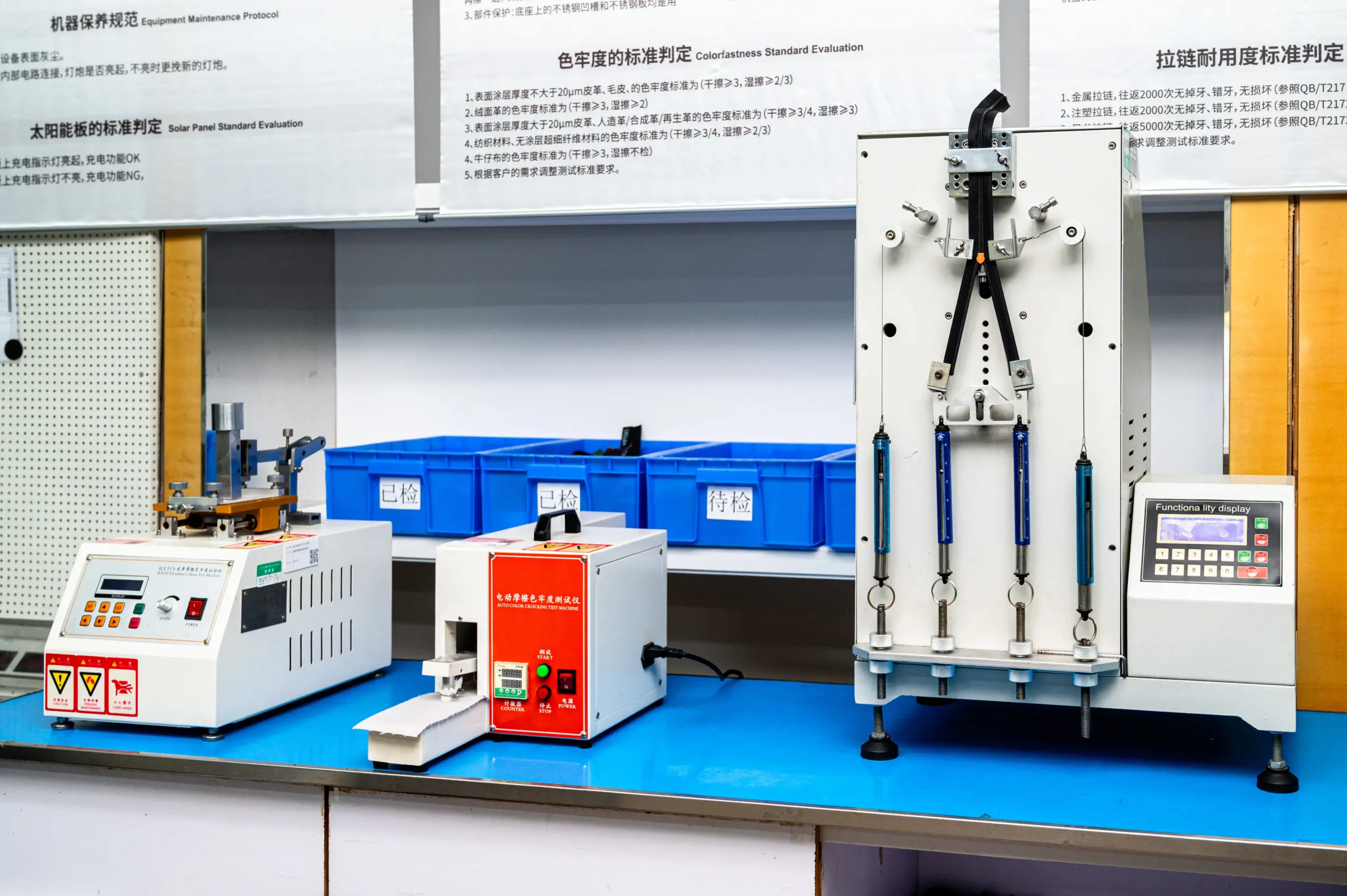
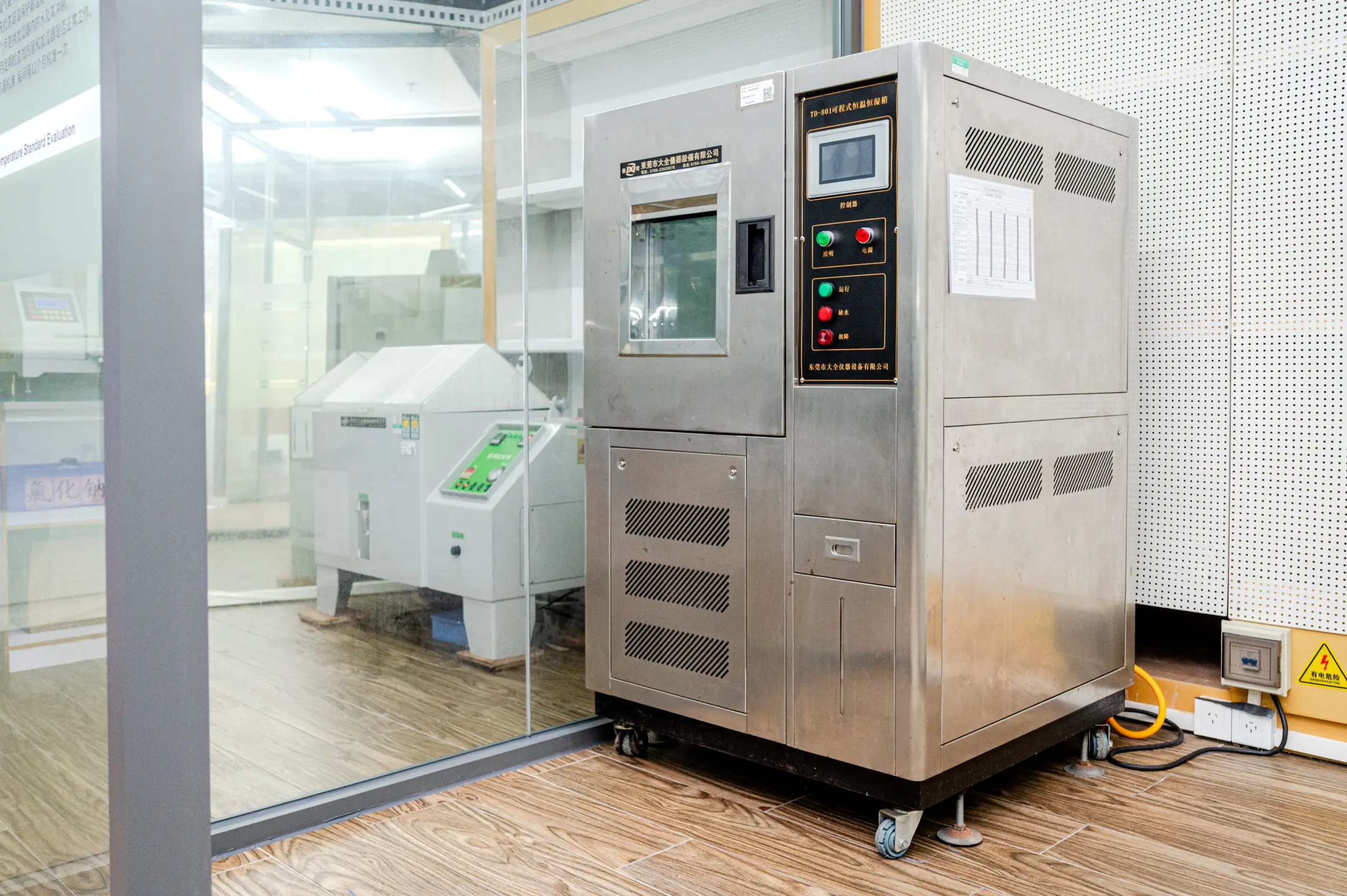
- Is there an in-house test lab for the mechanical and electrical checks above, and will it share batch reports?
- Are quotes structured around your tech pack line items, or around a catalog product with a panel image pasted on?
Nostro bag manufacturer selection guide walks the full vetting sequence — audit scope, certification verification, capacity checks — that applies before any feature conversation.
Domande frequenti
Do solar backpacks really charge devices?
SÌ, within physical limits. A backpack-face panel in the 5–15 W class produces a useful trickle charge over hours of direct sun. Practical designs buffer that energy into a battery, so the panel tops the battery up during the day and the rider charges devices from stored energy. Marketing that promises a full phone charge in an hour of sunlight is over-claiming the physics.
What solar panel efficiency matters for a backpack?
For curved fabric surfaces, flexible thin-film panels in the 17% class — such as the MiaSolé CIGS panels at 17.4% used in Kingsons’ smart tech line — deliver the better balance of conformity, weight and diffuse-light performance. Rigid monocrystalline cells show higher laboratory efficiency but crack under bag flex. Ask suppliers whether an efficiency figure is cell-level or module-level; only the module figure reflects the finished panel.
Are solar backpacks waterproof?
Most are splash-resistant, not submersion-proof. The panel lamination itself tolerates rain; the port openings and cable entry points are the weak spots, which is why good designs add weather-flapped ports and strain-relieved exits. Specify the protection level in writing — and market it as water resistance unless the product has passed a defined IP test you can cite.
Can I ship solar backpacks with built-in batteries by air?
With restrictions. Lithium batteries ship under UN 38.3 testing and packaging rules, usually at a partial state of charge, and airlines cap configuration options. Removable-battery designs sidestep much of this because the bag and cells travel separately. Ocean freight handles integrated batteries more simply but consumes schedule. Decide the battery architecture around your freight plan, not the other way around.
What certifications should a solar backpack carry?
For the electronics: CE for EU markets, FCC for the US, and RoHS substance compliance in both. For the factory and program: ISO 9001 quality management and social audits such as BSCI or SEDEX are increasingly requested by Western retailers. Kingsons holds ISO 9001/14001/45001, BSCI, SEDEX and GRS certifications, and its products pass SGS, CE, FCC and RoHS testing, with report references available for retail compliance files.
How much does a custom solar backpack program cost to start?
The starting commitment is the MOQ — typically 500 pieces per style per color at an OEM factory, with 200–300 piece trial orders negotiable. Sampling runs 7–10 working days beyond any new tooling lead time, and mass production follows in 30–45 days. Electrical components add the largest variable to unit cost, so lock panel, controller and battery specifications before comparing quotes.
Develop a solar backpack line with an engineering partner that specs what it sells.