A factory with a GRS Scope Certificate and a factory that can provide a GRS-verified shipment are not the same. Buyers who confuse the two may end up with hangtags they cannot support with the right documents or audit findings they cannot close.
This guide explains what the Global Recycled Standard (GRS) verifies, what it does not cover, and how buyers can use it to assess bag manufacturers and manage sourcing risks.
重要なポイント
- GRS certification is a chain-of-custody system: every facility from recycler to final assembler must hold a valid Scope Certificate, and every trade must generate a Transaction Certificate linking input to output.
- A Scope Certificate (SC) proves a factory is audited for defined activities; a Transaction Certificate (TC) proves your specific order contains the recycled content declared on the invoice. Always order the TC, not just check the logo.
- Minimum recycled content for GRS certification is 20% of total solid material; the GRS label on the finished product requires at least 50%.
- GRS also covers environmental management, social responsibility and chemical restrictions — it is broader than a pure content-verification scheme like RCS.
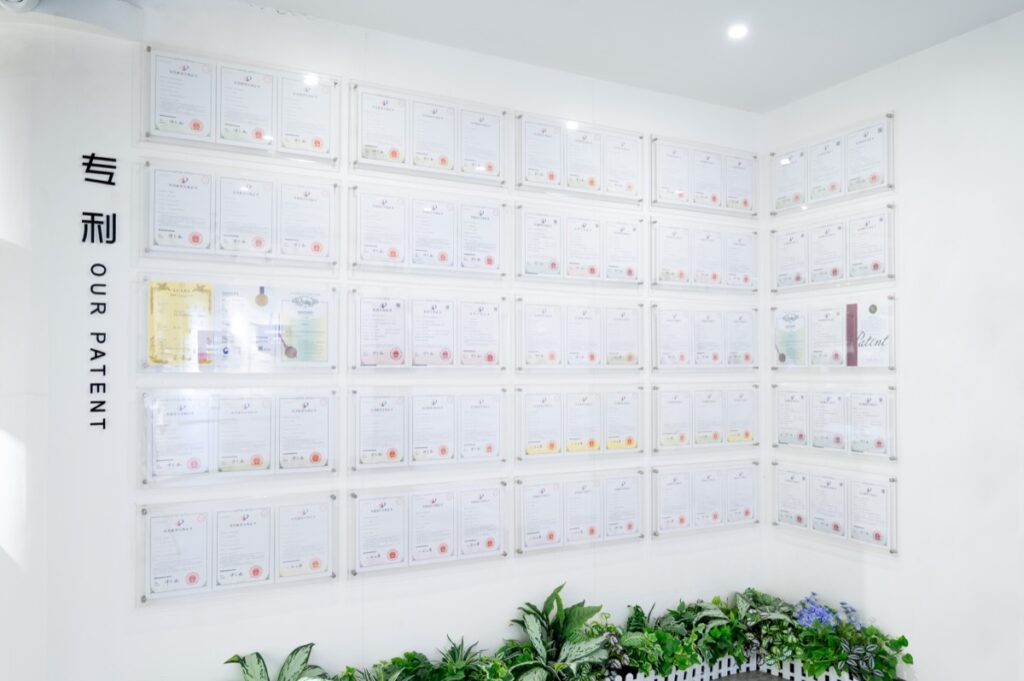
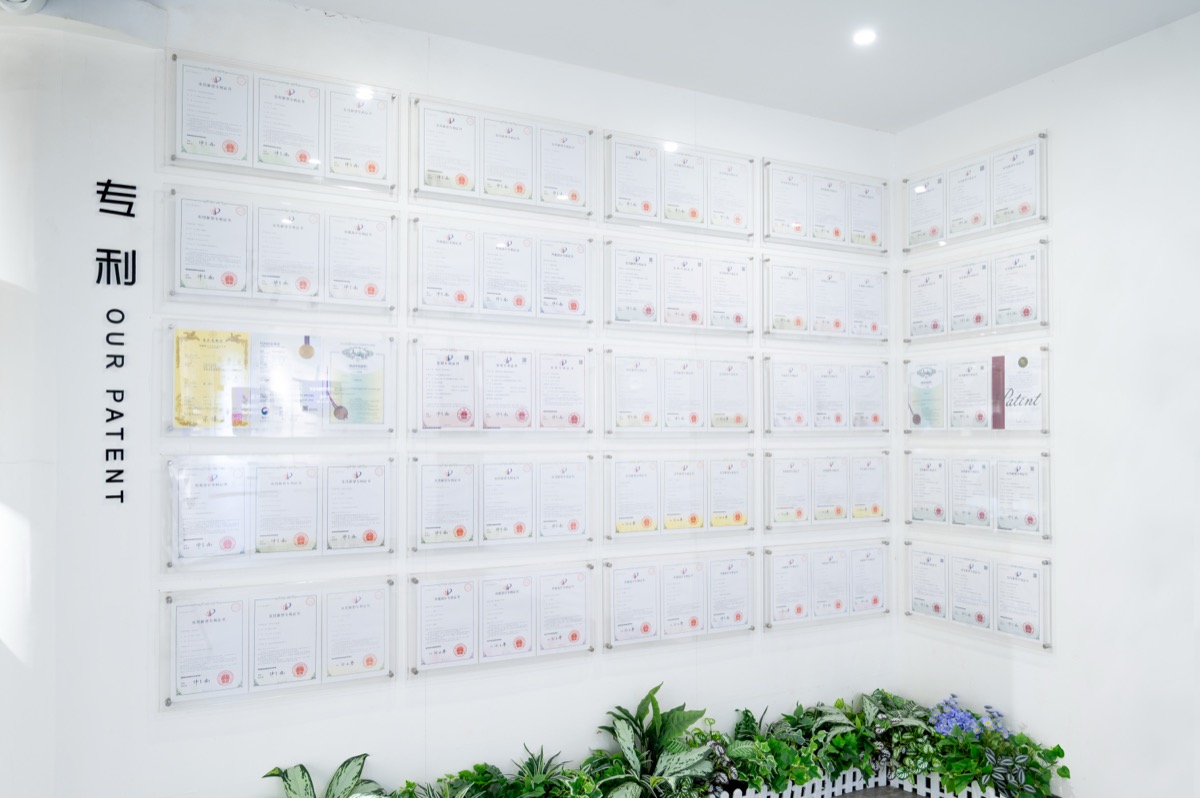
- Kingsons holds GRS certification alongside ISO 14001, BSCI and SEDEX across a 50,000 m² facility producing 300,000 units monthly for compliance-sensitive brands.
What Is the Global Recycled Standard?
The Global Recycled Standard (GRS) is a voluntary international standard for products containing recycled materials. It is managed by Textile Exchange, a US-based non-profit organisation, and audited by accredited third-party certification bodies.
GRS was originally created by Control Union in 2008 to verify recycled content in textile products. Textile Exchange took over the standard in 2011, and version 4.0 was released in 2021.
The standard applies to products containing at least 20% recycled material. In the bag industry, this can include shells made from recycled polyester (rPET), recycled nylon, recycled TPU coatings, そして, in some cases, recycled EVA foam or regenerated webbing.
GRS tracks recycled materials through the supply chain, from waste collection and processing to the finished product. This allows buyers to check whether recycled-content claims are supported by the required records.
Five Core Requirements of GRS Certification
To hold a valid GRS Scope Certificate, a facility must meet the applicable requirements for its activities and materials. These requirements are assessed by an accredited certification body.
| Requirement | What the Auditor Checks |
|---|---|
| Traceability | Input/output volumes reconcile; every GRS shipment carries documentation linking it to an upstream certified source. |
| Environmental Management | Wastewater treatment, energy consumption records, chemical inventory, and waste protocols meet defined thresholds. |
| 社会的責任 | Compliance with ILO conventions: no forced labour, no child labour, safe working conditions, working-hour limits, freedom of association. |
| Chemical Restrictions | Restricted Substances List (RSL) adherence; hazardous chemical handling procedures; ZDPC MRSL alignment. |
| Labelling and Claims | GRS logo usage follows brand guidelines; recycled percentage claims match the bill of materials. |
A factory must meet the applicable requirements, not just pass a recycled-content check. This is one of the main differences between GRS and RCS (Recycled Claim Standard). RCS focuses on recycled content and chain of custody, while GRS also includes environmental, social, and chemical requirements.
Scope Certificate vs. Transaction Certificate
One common sourcing mistake is to check a factory’s Scope Certificate and assume that the finished order will automatically qualify for a GRS claim. These documents serve different purposes.
| Document | Proves | Validity | Issued To |
|---|---|---|---|
| Scope Certificate (SC) | The facility is GRS-audited for defined activities and material categories. | 12 月; requires annual surveillance audit. | The factory or trading entity. |
| Transaction Certificate (TC) | A specific shipment of goods contains declared recycled content and follows a certified chain of custody. | One-time; refers to one trade. | Buyer, seller, or both. |
What this means for buyers: A supplier may hold a valid SC but still be unable to provide a TC for your order. This can happen if an upstream supplier, such as a yarn spinner, fabric mill, or coating facility, is not covered by the required certification arrangements.
Before signing the purchase contract, ask the supplier whether it can obtain a TC for your specific order. Confirm the product scope, the upstream documentation, and the process for issuing the certificate.
GRS Recycled-Content Thresholds
GRS version 4.0 defines two critical thresholds:
- 20% minimum recycled content — required for any product to enter the GRS system and receive a Scope Certificate covering that product category.
- 50% minimum recycled content — required before you may display the GRS label on the finished product or its packaging.
Products containing between 20% そして 50% recycled material may fall within the GRS system but do not meet the 50% threshold for the finished-product label. Any claim such as “contains X% GRS-certified recycled material” must still follow the applicable rules and be supported by the required documentation.
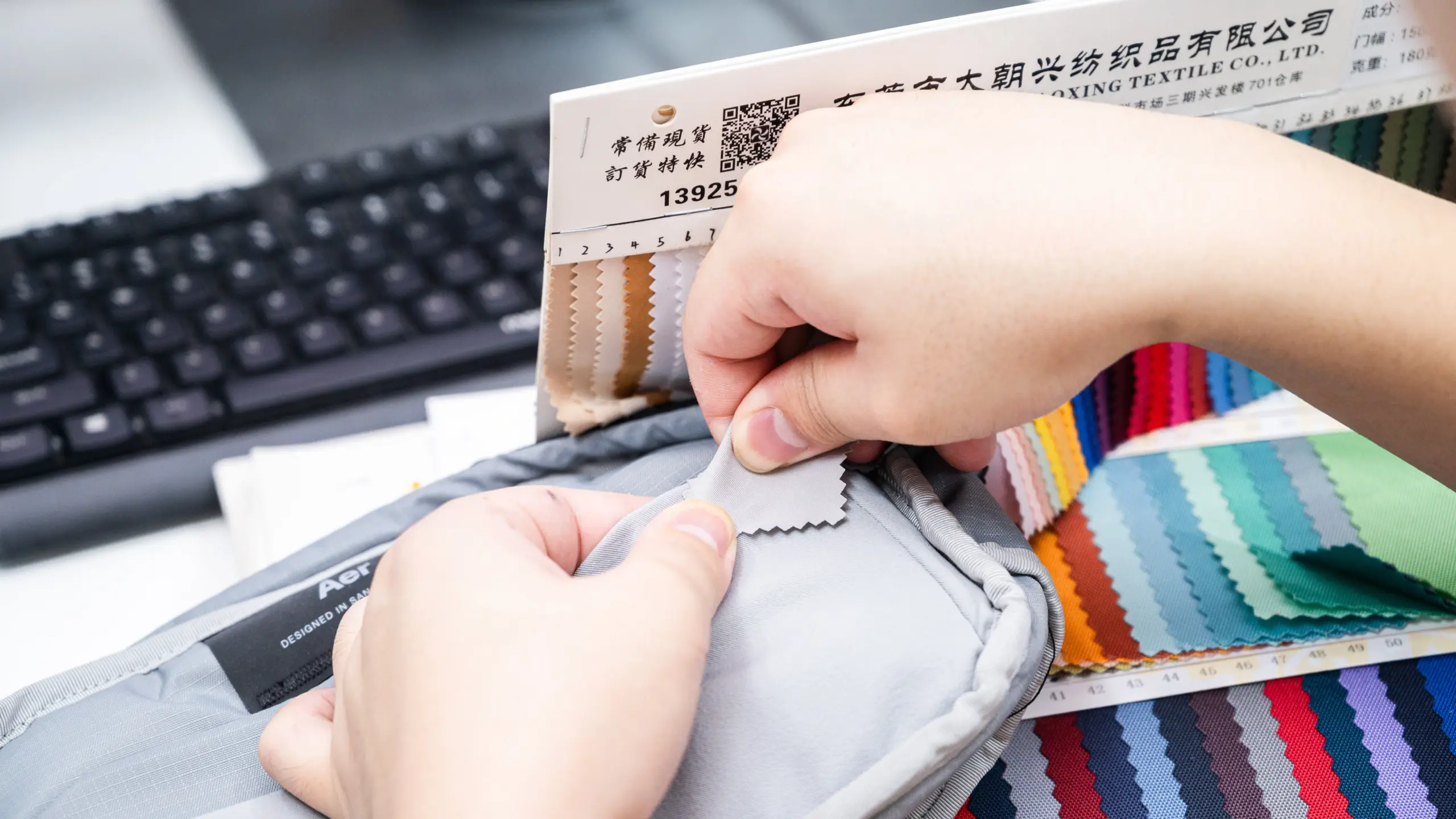
For backpacks, the total solid material of the product can include shell fabric, 裏地, ウェビング, foam padding, 糸, ジッパー, バックル, and labels. A backpack with a 100% rPET shell may still fall below 50% recycled content across the whole product if its lining, ウェビング, and hardware are made from virgin materials.
The bill of materials (BOM) is therefore important when calculating the recycled-content percentage. The percentage of recycled material in one component does not automatically represent the percentage in the finished bag.
How the Chain of Custody Works in Bag Manufacturing
A GRS-certified backpack program can involve several certified businesses. The required records must follow the material through each relevant stage of the supply chain. If a stage falls outside the applicable certification requirements, the final product’s GRS claim may be affected.
The table below shows a typical recycled-polyester backpack supply chain.
| ステージ | Entity | GRS Role |
|---|---|---|
| 1. Waste collection | Post-consumer PET bottle aggregator | Provides Recycled Material Declaration (RMD). |
| 2. Flake/pellet production | Washing and pelletising facility | Holds SC; issues TC to spinner. |
| 3. Yarn spinning | Polyester staple fibre / filament spinner | Holds SC; processes TC from pellets into yarn TC. |
| 4. Fabric weaving/knitting | Greige goods mill | Holds SC; may sub-contract dyeing (sub-contractor must also be certified). |
| 5. Dyeing and finishing | Processing facility | Holds SC or operates under the fabric mill’s SC as a sub-contractor. |
| 6. Bag assembly | Cut-and-sew factory (例えば, キングソンズ) | Holds SC; assembles final product; issues TC to brand buyer. |
ステージ 6 is where bag-specific challenges emerge. Components like zippers (SBS, SAB, YKK), バックル (ITW, SFS), and foam padding may come from non-certified suppliers. Those non-certified components count toward total product weight but not toward recycled content. The bill of materials must account for every gram.
What GRS Does Not Cover
GRS is sometimes confused with other sustainability standards and product certifications. Understanding its scope helps buyers avoid claims that go beyond what the certification supports.
- Organic content — GRS does not certify organic fibres. For organic cotton bags, you need GOTS (Global Organic Textile Standard).
- Biodegradability or compostability — GRS is silent on end-of-life. A recycled bag is not automatically a biodegradable one. See our guide on bio-based sustainable bag materials for that dimension.
- Carbon footprint accounting — GRS records energy use at the processing stage but does not issue a CO₂e-per-unit figure. Brands making carbon-neutrality claims need a separate LCA (Life Cycle Assessment).
- Product performance or safety — A GRS label says nothing about abrasion resistance, zipper cycle life, or water-head rating. Performance testing (SGS, インターテック, ビューローベリタス) is separate. Kingsons runs both QC protocols and GRS compliance in parallel.
- 包装 (non-textile) — FSC cartons and plastic-free wraps are outside GRS scope. See FSC or How2Recycle for those.
Why EU and North American Buyers Now Require GRS
GRS has become an important sourcing consideration for brands and procurement teams that need documented recycled-content claims. Regulatory developments and retailer requirements are also increasing the need for clear supply-chain records.
- EU Strategy for Sustainable and Circular Textiles (2022) — mandates substantiated environmental claims, digital product passports by 2030, and extended producer responsibility. Vague “eco” or “green” labelling without a verifiable chain of custody is increasingly a legal risk under the proposed Green Claims Directive.
- EU Packaging and Packaging Waste Regulation (PPWR, 2024/1781) — while focused on packaging, its recycled-content mandates (30% for PET containers by 2030, 65% by 2040) create downstream pressure on all products shipped in plastic-containing packaging.
- Retail compliance programs — Walmart, Target, Decathlon, and Samsonite all maintain supplier sustainability scorecards that require verified recycled content documentation. A GRS TC is the standard accepted proof.
For a bag manufacturer, GRS discussions should start before sampling. A buyer’s compliance team may ask to review the factory’s SC, the scope statement, its ability to support a TC, and the upstream records before approving the supplier.
How to Verify a Factory’s GRS Certificate
Buyers can take three practical steps to check a factory’s GRS status.
Step 1: Check the Certificate Number
Ask the factory for its SC number and the name of the certification body, such as Control Union, SGS, ビューローベリタス, またはインターテック. Check the certificate details through the relevant certification body or Textile Exchange’s available certificate verification resources.
Step 2: Read the Scope Statement
The scope statement identifies the activities and material categories covered by the certificate. These may include spinning, knitting, dyeing, 仕上げ, or assembly, depending on the facility.
Check whether the activities relevant to your order, such as bag assembly or cutting and sewing, are covered. A certificate for recycled polyester yarn does not automatically establish that the facility is certified for finished backpacks.
Step 3: Confirm TC Capability
Ask the supplier whether it can support a Transaction Certificate for your specific product and order quantity. For example, you could ask whether it can provide the required documentation for an order of 1,000 recycled-polyester backpacks.
If the supplier is unsure, ask which upstream documents are missing and whether the supply chain can support the claim before you place the order.
A Common Warning Sign
Be cautious if a factory claims to use GRS-certified recycled polyester but cannot show how certified and non-certified materials are separated and recorded.
The chain of custody depends on reliable records and reconciliation. The supplier should be able to explain how incoming material, production use, finished output, and waste are recorded.
Red Flags When a “GRS-Certified” Supplier Cannot Actually Deliver
- Certificate expired or suspended — SCs are valid 12 月. Surveillance audits happen annually. Check the expiry date.
- Scope does not cover your product — A factory certified for “recycled polyester yarn” is not automatically certified for “finished backpacks.” Each processing stage must appear on the scope.
- No TC, only SC — Some factories display the SC on their website but have never issued a TC. A TC costs $200–500 per issuance and requires upstream documentation. If they cannot produce a sample TC from a previous order, they likely cannot issue one for yours.
- Upstream gaps — The dye house or coating applicator is not GRS-certified. Even if the assembly factory is certified, the chain is broken at that stage. Recycled content entering the uncertified processor loses its GRS status.
- Subcontracting without disclosure — GRS requires all subcontractors to be declared and either certified or operating under the main certificate holder’s supervision. Hidden subcontracting voids the chain.
How GRS Certification Affects MOQ, Cost and Lead Time
A GRS program may involve additional document checks, material planning, and production controls compared with a standard order. The exact impact depends on the fabric, supplier network, order quantity, and certification process.
| Factor | Standard Program | GRS Program Impact |
|---|---|---|
| MOQ | 500 pcs/style/colour | Similar in principle, but certified mill lots may require larger dye-lot commitments. Colour splits below 500 pcs become harder to justify. |
| サンプリング | 7–10 working days | Add 3–5 days for GRS fabric booking and upstream document verification. |
| 生産 | 30–45 days | Segregated storage, reconciliation records, and TC application add 3–7 days. Total 35–50 days. |
| Unit cost | Baseline | Recycled shell fabric carries a modest premium (typically 5–15% over virgin equivalent) depending on denier and certification tier. |
| Documentation | Standard invoice + packing list | TC issuance fee ($200–500/trade), SC copies, upstream TC chain, and BOM with recycled-percentage declaration. |
キングソンズにて, GRS documentation is planned as part of the order process. The factory’s SC, upstream transaction records, and product-specific TC arrangements are coordinated with production rather than left until the order is ready to ship.
What a GRS-Certified Bag Program Looks Like at Kingsons

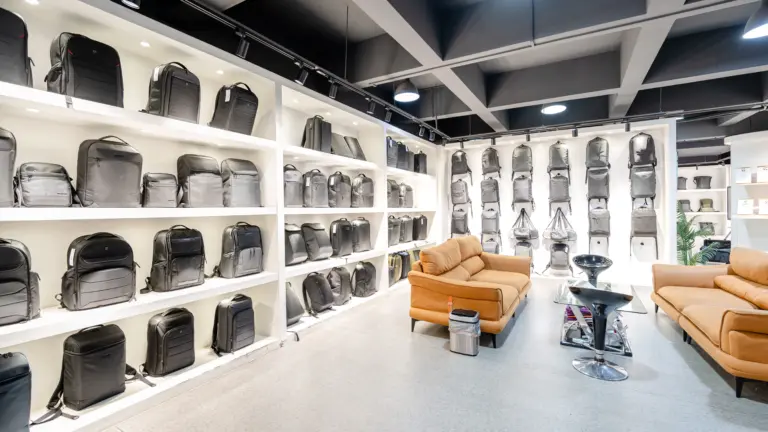
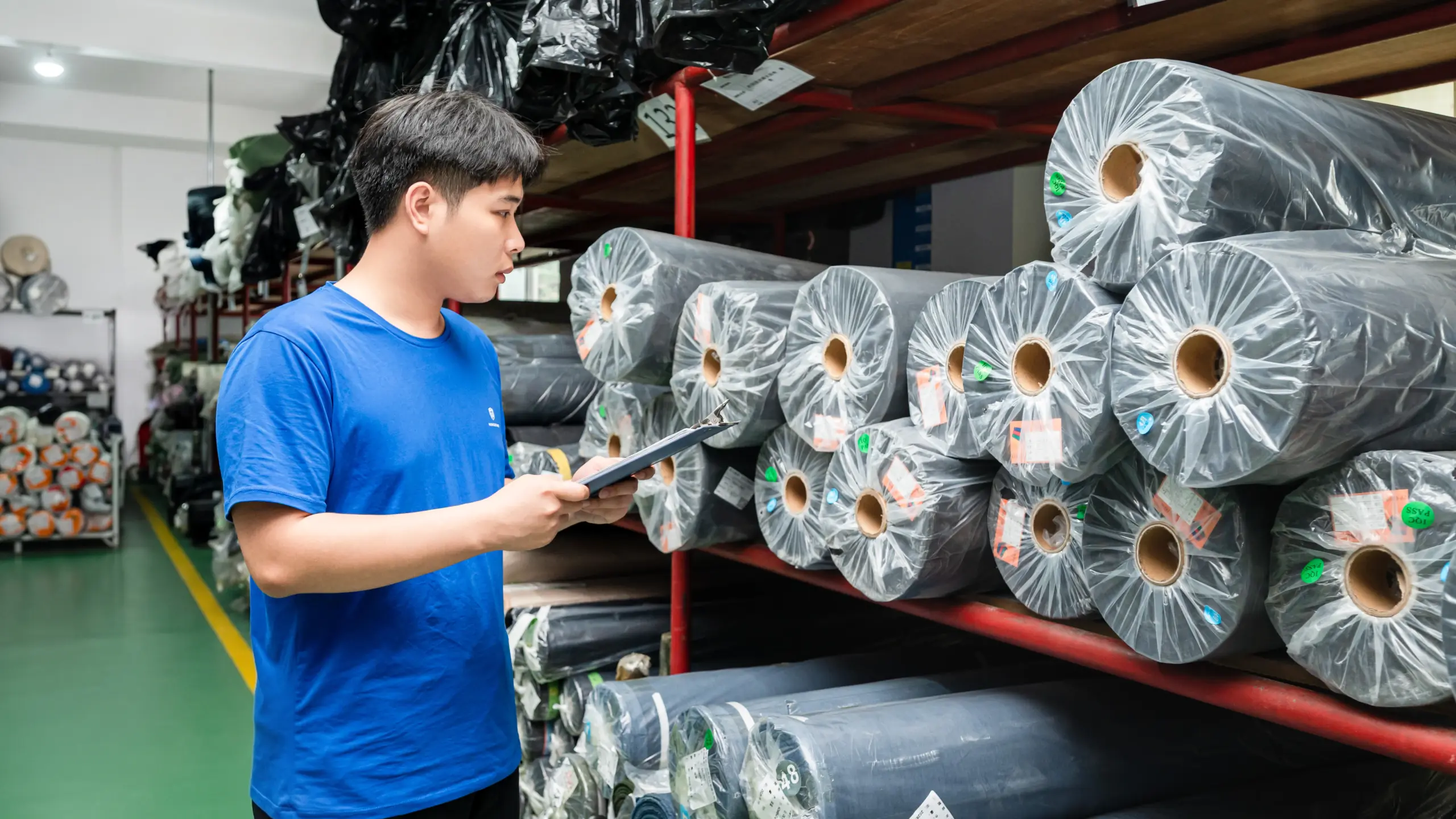
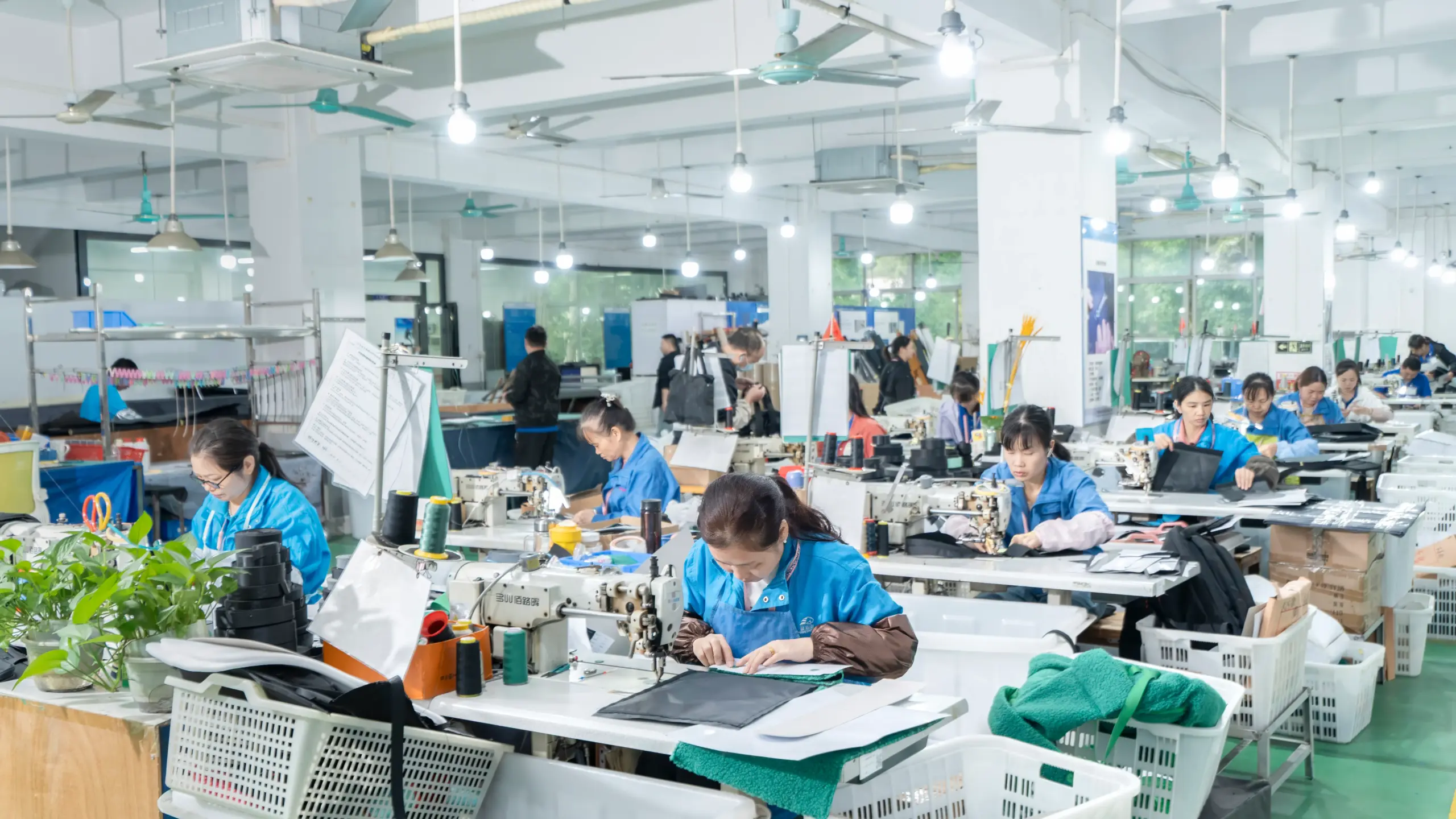
Kingsons holds GRS certification alongside ISO 9001, ISO 14001, ISO 45001, BSCI, 三つ, and AEO. Our Guangzhou facility (50,000 ㎡, 20 生産ライン, 300,000 単位/月) produces rPET and recycled-nylon constructions across business, school, travel and promotional lines. We maintain physical segregation of certified materials in dedicated storage zones, with volume-balance tracking from raw fabric receipt through finished-goods shipment.
For buyers specifying GRS products, the typical engagement looks like:
- Pre-quotation — Share your target recycled percentage, 製品タイプ, and market. We confirm whether the required fabric is within current GRS scope and issue a dual quote (virgin vs. GRS construction).
- サンプリング — We book a certified mill lot, produce the sample from that lot, and attach the upstream TC trail to the sample shipment. You physically approve before we cut production fabric.
- 生産 — Certified materials enter through the GRS receiving dock, are stored in the segregated zone, and are reconciled against the BOM at each workstation. An internal GRS focal point audits the line weekly during production.
- TC issuance — Within 5 working days of shipment, we submit the TC application to our certification body with the invoice, packing list, and upstream TC references. You receive the TC before or with the goods.
私たちの recycled backpack manufacturing guide そして rPET fabric deep-dive cover the material engineering side. For our full compliance and sustainability framework, visit the sustainability program page.
よくある質問
What is the difference between GRS and RCS certification?
Both verify recycled content through chain of custody. GRS adds four extra requirement areas — environmental management, social responsibility, chemical restrictions, and labelling guidelines — making it broader and more expensive to maintain. RCS is content-only. Most EU and North American retail buyers now specify GRS because it overlaps with their social compliance requirements.
How long is a GRS certificate valid?
A GRS Scope Certificate is valid for 12 months from the date of issue. The factory must undergo an annual surveillance audit by the same or an equivalent accredited body. Renewal involves a full re-audit if more than 60 days have passed since expiry. Buyers should check the certificate validity date before placing an order, especially in Q4 when many certificates expire around the calendar year-end.
Can a factory hold GRS certification and still use virgin materials in other product lines?
はい. GRS certification covers specific products and production runs, not the entire factory inventory. A facility can produce both GRS-certified and non-certified lines, provided they maintain physical or temporal segregation, accurate input/output reconciliation, and do not mix certified and uncertified materials in a single order. This is standard at Kingsons, where we run GRS and conventional programs on the same production lines with segregation protocols.
What documents should I receive with a GRS-certified bag order?
A complete GRS package includes: (1) a copy of the factory’s current Scope Certificate showing the relevant activity and product scope; (2) a Transaction Certificate issued by the certification body for your specific shipment; (3) upstream TCs tracing the recycled content back to the pellet/flake source; そして (4) a bill of materials listing every component with its recycled percentage. If any of these are missing, the GRS claim is not substantiable at retail.
Does GRS certification guarantee the bag is environmentally friendly?
いいえ, and this is a common misconception. GRS verifies recycled content and imposes baseline environmental, social, and chemical requirements on the processing chain. It does not certify that the product is biodegradable, compostable, carbon-neutral, or free of all hazardous substances. It is a chain-of-custody standard, not a comprehensive eco-label. For end-of-life claims, you need separate testing or certification (例えば, EN 13432 for compostability).
How do I source a GRS-certified backpack from Kingsons?
Start from our sustainability program with your target recycled percentage, product category, quantity, and destination market. We confirm current GRS scope coverage, issue a dual quote (virgin vs. certified construction), and handle all TC documentation through production. MOQ follows standard terms — 500 pieces per style per colour, with 200–300 piece trial orders negotiable.
Source GRS-certified bags with the chain-of-custody documentation to back every claim you make at retail.