A suitcase full of compressed clothing sells a simple promise: pack more, carry less. For travel brands and retailers, vacuum compression bags turn that promise into a high-margin accessory line — and a quality minefield. Bags that look identical on shelf can leak air within a week or split at a seam after a dozen compression cycles.
The difference sits in film construction, valve design and zipper quality. This guide covers how compression travel bags are engineered, which specs to demand in an RFQ, and how to test them before shipping.
Key Takeaways
- Vacuum compression bags combine a multi-layer film body (typically PA/PE or PA/PET), a one-way air valve and a slide-closed zipper; the film and seal quality decide how long a bag holds its compressed state.
- Four compression mechanisms exist — hand pump, electric pump, roll-up and hand-press — each with different cost points, packing strength and retail positioning.
- Require supplier specs in measurable terms: film thickness in microns, compression ratio, valve type, zipper brand and leak-hold duration, then verify with batch tests.
- Standard OEM customization covers sizes, sets, colors, transparent windows, valve placement and logo methods; molded hardware and packaging can be tooled to brand.
- Expect a 500-piece MOQ per style per color at a professional bag factory, 7–10 working days for sampling, and 30–40 days for production on confirmed orders.
Why Compression Bags Earn Shelf Space
Compression storage sits at the intersection of two durable retail trends: the growth of budget air travel with stricter cabin baggage limits, and the shift toward capsule wardrobes and seasonal clothing rotation. Travelers buy compression bags to fit a week of clothing into a carry-on; households buy them to move off-season bedding and winter wear into smaller spaces.
For a brand, the category has attractive commercial properties. Unit prices are low enough for impulse purchase yet margins stay healthy because the manufacturing process is simple: film cutting, sealing, zipper attachment, valve insertion, testing and packing. Sets of three to eight bags at mixed sizes raise average order value without adding SKU complexity.
The line also extends naturally from adjacent products. Brands selling duffel bags, travel backpacks or suitcase sets can add a compression pouch family as an accessory program — same sales channels, same retail conversations, incremental basket size.
How Vacuum Compression Actually Works
A vacuum compression bag is deceptively simple to use but has three engineering jobs: contain the compressed volume, let air out, and stop air coming back. Each job maps to a component.
- The film body. Most bags are made from a laminated film — commonly PA (nylon) combined with PE, or PA with PET on the outer layer. Nylon contributes puncture resistance and flexibility; polyethylene contributes moisture resistance and heat-sealability. Film quality, not thickness alone, determines whether the bag survives repeated compression cycles.
- The one-way valve. A circular valve in the film lets air escape when pressure is applied or suction is drawn, then closes under vacuum. Valve design (diaphragm spring, seal flatness, screw cap) decides whether the bag holds compression for days or leaks overnight.
- The zipper seal. A slide-closed interlocking zipper runs along three sides of the bag. Because the zipper carries the seal load every time the bag is compressed, its tooth profile, slider quality and end stops are common failure points.

Compression Mechanisms Compared: Pump, Roll-Up and Hand Press
Before writing a spec sheet, decide which compression mechanism your product line uses. It shapes the bill of materials, the price point and the retail claim you can honestly make.
| Mechanism | How Air Leaves | Compression Achieved | Added Cost | Best Positioned For |
|---|---|---|---|---|
| Hand pump | Manual pump on the valve | Strong, even vacuum | Pump + valve assembly | Household storage, premium travel sets |
| Electric pump | Battery or USB pump | Fastest, strongest | Motor, battery, certification | Gift sets, e-commerce bundles |
| Roll-up | Rolling the bag after closing | Moderate (no true vacuum) | None beyond film and valve | Cabin-size travel kits, no-pump claims |
| Hand press | Squeezing through the valve | Moderate | None beyond film and valve | Entry-price sets, promotional programs |
Roll-up and press designs are the fastest-growing in travel retail because they remove the pump from the kit — a real advantage when the bag must pass through a cabin baggage sizer. Their trade-off is a milder compression ratio, so the retail claim should say “space-saving” rather than specifying a vacuum level the bag cannot hold.
Materials That Survive Repeated Compression
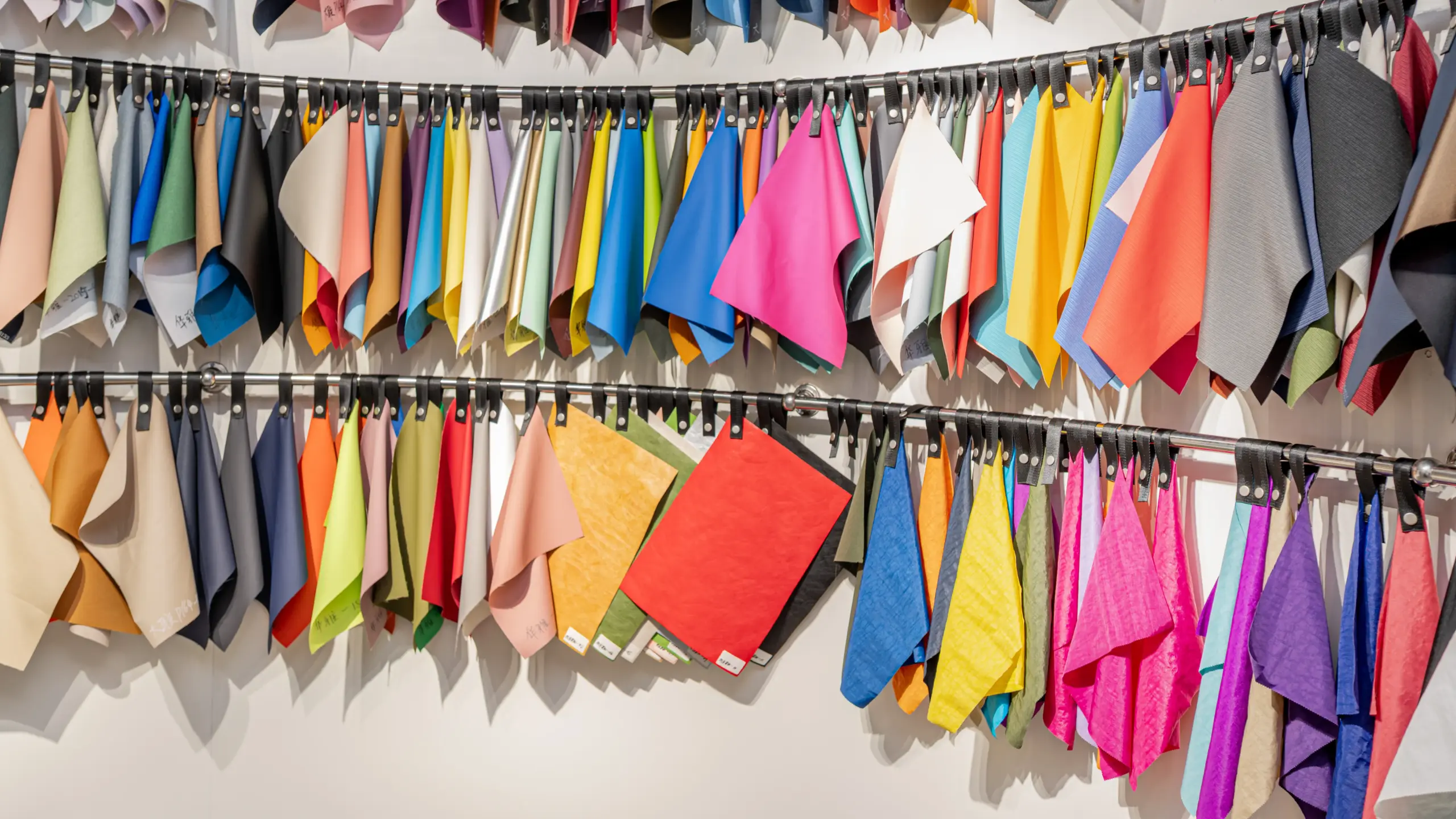
Film selection is the single largest quality lever. A laminated PA/PE structure balances gas-barrier properties with toughness, but the nylon layer’s share, the laminate bond quality and the micron thickness all change how the bag behaves after months in a hot trunk or a compressed closet.
- Film thickness is specified in microns per layer (for example 80μm + 100μm laminates). Thicker is not automatically better — stiff thick film resists rolling and stresses the zipper path more.
- Laminate bond strength separates visibly as bubbles between film layers after a few compression cycles. Ask suppliers which adhesive lamination they use and request a cycle test report.
- Additives and clarity matter on shelf: UV stabilizers slow yellowing, and transparent or windowed constructions let shoppers see contents — a feature buyers increasingly expect.
For branded fabric versions of compression packing — soft-sided travel bags with compression panels rather than disposable film bags — the same discipline applies to woven shells. Factory partners working with established mills (Kingsons sources nylon and polyester from suppliers including Covestro, Teijin and Amann, plus imported Taiwanese nylon) can quote denier and coating options directly in the development sheet. Our backpack material selection guide covers fabric grading in detail.
The Specification Sheet Your RFQ Needs
Suppliers quote whatever you ask for. A one-line request — “vacuum bags, 3 sizes, 5,000 sets” — guarantees you will compare quotes that are not comparable. Put these parameters on the RFQ instead:
| Parameter | What to Specify | Why It Matters |
|---|---|---|
| Film structure | PA/PE or PA/PET, layer count, micron per layer | Sets barrier performance, puncture risk and cycle life |
| Finished dimensions | Length × width per size, in mm or inches | Determines which suitcase and clothing volume it fits |
| Compression ratio claim | Target volume reduction (e.g. 50–80%) with test method | Keeps marketing claims verifiable across suppliers |
| Valve type | Diameter, diaphragm style, screw cap, pump-compatible or press-only | The valve decides hold time and mechanism choice |
| Zipper | Track width, tooth type, slider style, brand (SBS/SAB/YKK class) | Seal integrity under tension is the top complaint source |
| Leak-hold target | Hours at defined load and temperature before weight loss exceeds X% | Converts “holds well” into a pass/fail batch test |
| Set configuration | Bags per set, size mix, window or opaque, print or plain | Packaging, carton count and landed cost all follow from this |
Buyers who skip the leak-hold target usually discover it later through returns. If you are still setting up supplier vetting criteria, our manufacturing defect prevention checklist explains how to convert these parameters into incoming inspection standards.
Seal, Valve and Zipper: Where Cheap Bags Fail
Three failure modes account for most compression bag complaints in retail reviews:
- Seam delamination. Heat-seal lines that look fine flat on the shelf peel open when stretched during packing. Consistent seal temperature, pressure and overlap width prevent this; sealed seams should withstand at least the same pull as the film itself.
- Valve leak-back. A valve that closes slowly or sits on a wrinkle lets air return overnight. The valve must be bonded to a flat film zone, and assembly QC should include a visual check for wrinkles and incomplete bonding.
- Zipper path failure. Interlocking zippers lose their seal when the slider pulls unevenly or the track stretches. End stops, slider geometry and track tension all need control on the sewing line.
These are process problems, not material problems, which means a competent factory can engineer them out with documented work instructions and inline QC — and a weak factory cannot, no matter what the sample looked like.
Quality Tests to Require Before Shipment
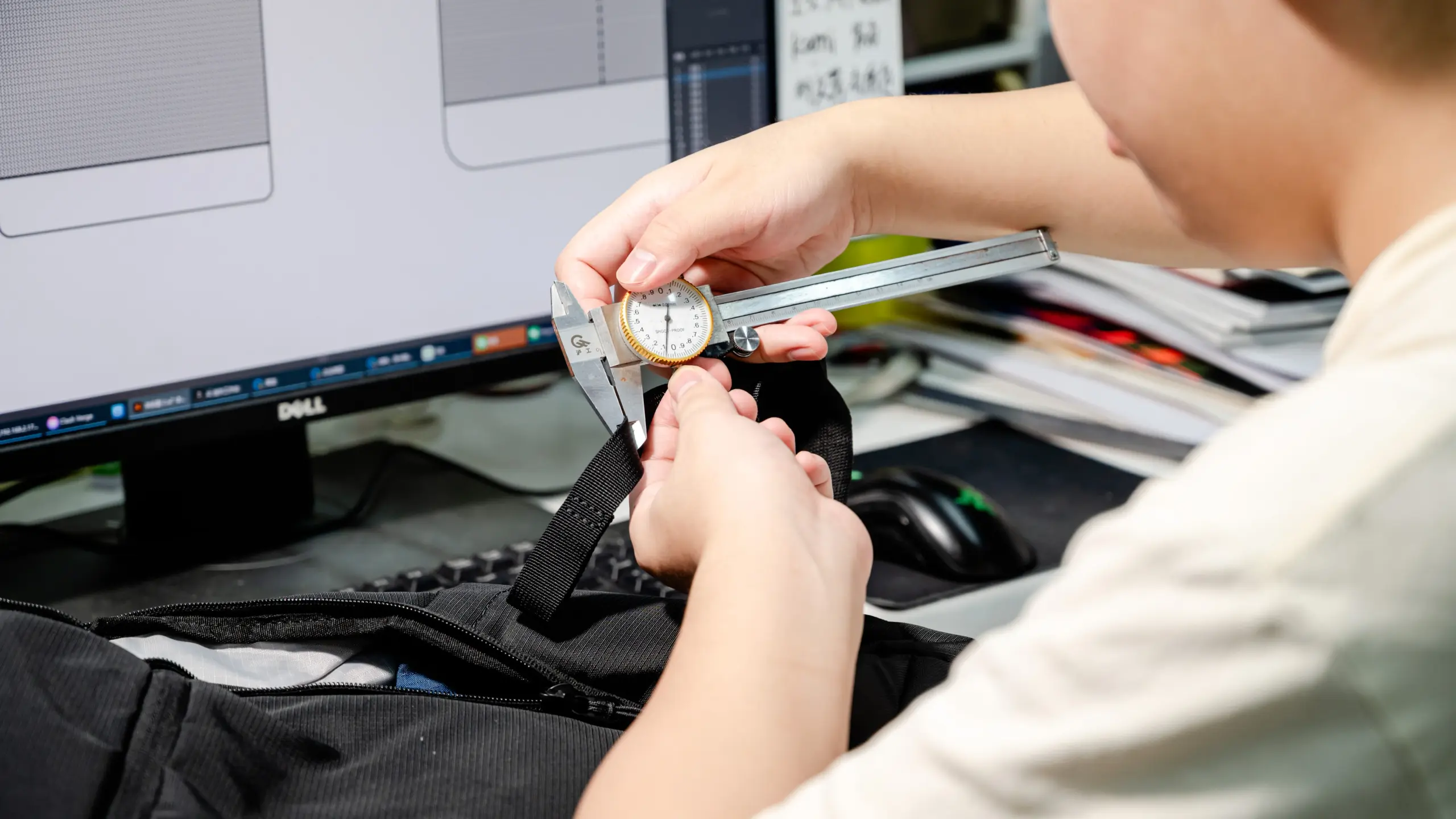
Convert your leak-hold and durability targets into batch tests with agreed methods. The tests below are standard practice at factories equipped for materials testing; Kingsons runs equivalent protocols on its own line with tensile testers, waterproof testers and zipper reciprocating test machines.
| Test | Method (Typical) | Pass Signal |
|---|---|---|
| Compression hold | Compress bag to target volume, load at defined temperature, measure volume loss over 24–72 h | Loss below the agreed threshold across the sample set |
| Cycle durability | Compress–decompress repeatedly (e.g. 50–100 cycles), inspect seals and valve | No delamination, valve still closes fully |
| Seam strength | Tensile pull on heat-sealed seam vs. film body reference | Seam strength at parity with film; failure in film, not at seam |
| Zipper reciprocation | Automated open–close cycles on the slide track | Track interlocks fully, no tooth skip or stretch |
| Puncture resistance | Standard puncture probe on laminated film | No rupture below target force |
Agree sample sizes, methods and thresholds in writing before production starts. AQL sampling on the finished lot is not a substitute for prototype-level testing during development.
Customization: Sizes, Sets, Windows and Branding
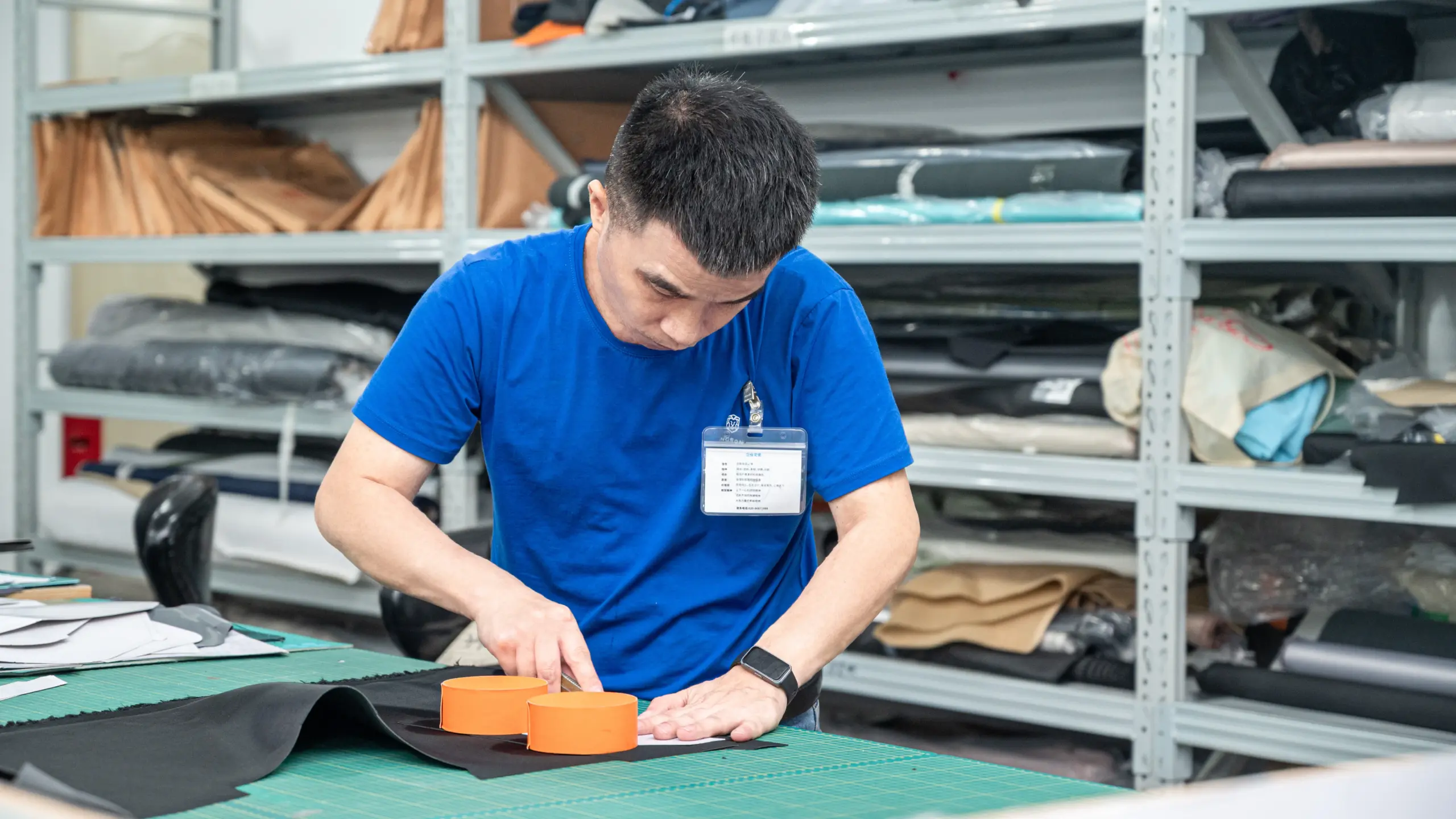
Once the film and seal architecture is fixed, the customization space is broad. At OEM level, brands typically specify:
- Size matrix — cabin cube, mid and bedding sizes, or a custom set built around your existing luggage range.
- Transparency — fully clear, frosted, or clear panel with printed fabric body.
- Color and print — surface printing on film, colored zippers and valves, Pantone-matched branding.
- Logo application — printed labels, woven labels sewn into the seam, or branded valve caps on higher programs.
- Retail packaging — hang tags, header cards, zip-lock display bags or plain bulk cartons for e-commerce.
If your program includes both stock-style bags and a bespoke geometry, the difference maps to the standard OEM versus ODM manufacturing models: adapting an existing tooling set versus developing a new structure from your brief. New valve molds or custom set packaging push you toward ODM and a longer development window.
MOQ, Sampling and Lead Time
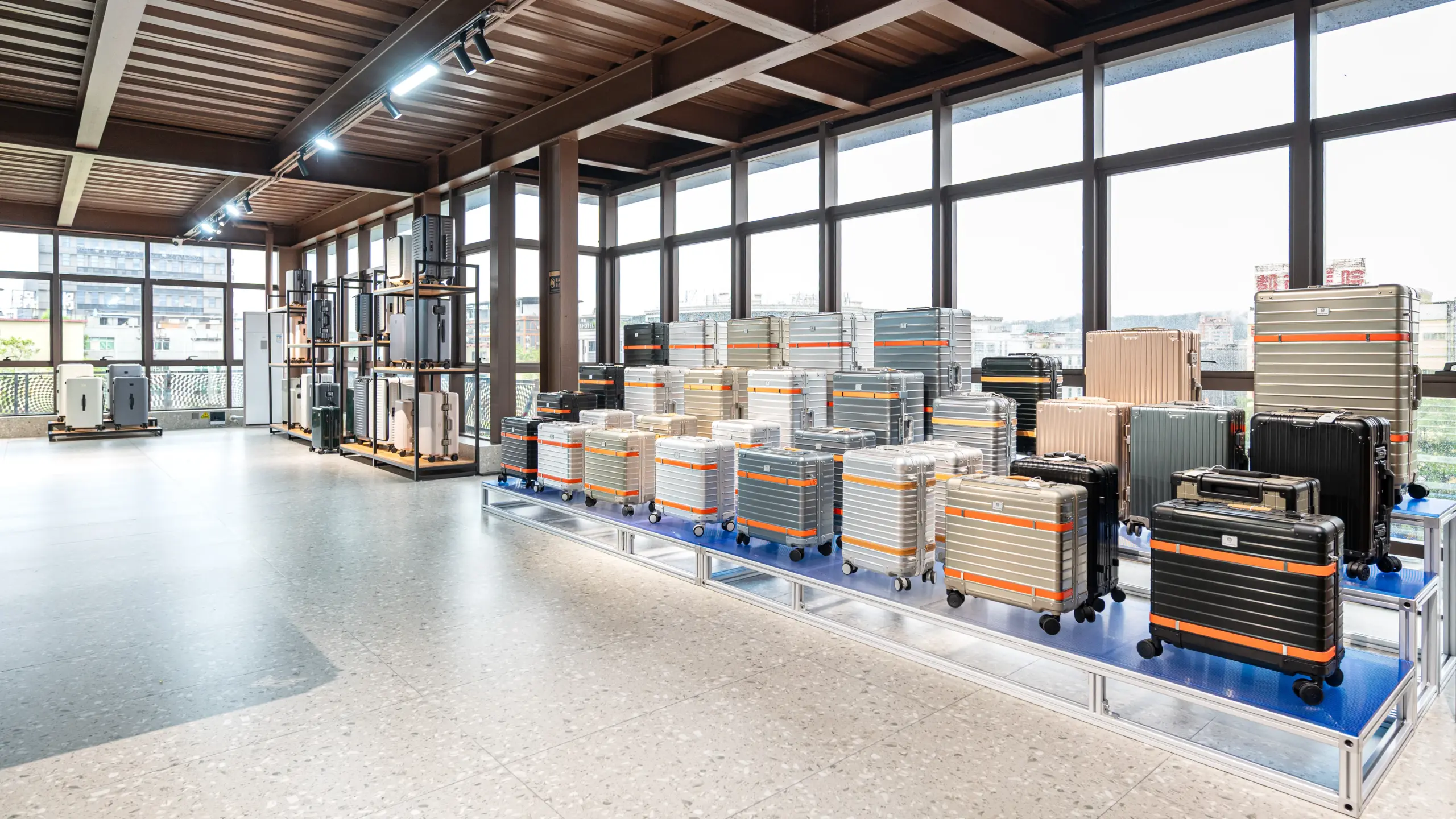
Commercial terms for compression bag programs follow standard OEM bag factory practice. At Kingsons specifically:
- MOQ: 500 pieces per style per color for custom programs; trial orders of 200–300 pieces can be negotiated with a price adjustment.
- Samples: 7–10 working days from confirmed specification; free samples with freight handled per account status.
- Production: 30–40 days for mass production after order confirmation — capacity supported by 20 smart production lines and a 300,000-piece monthly output across a 50,000 m² facility.
- Payment: T/T with 30% deposit and 70% before shipment, L/C at sight, or Alibaba Trade Assurance where applicable.
Compression bag lines are heavily seasonal — travel retail peaks before summer holidays and before the winter travel season in each hemisphere. Work backwards from your retail calendar when setting the order date, because a 40-day production window plus 30 days of ocean transit can quietly consume your replenishment margin.
Case Study: Compression Travel Bag for a German Outdoor Brand
A European outdoor and travel company brought Kingsons a compression travel bag with a specific problem: early prototypes lost their seal under repeated packing, and stress concentrated around the valve and seam corners. The development response covered four changes:
- Switched the assembly to a hot-melt welded construction for more consistent seal lines than stitching alone.
- Reinforced the high-stress points around the valve seat and corner geometry.
- Matched a hand-pump accessory to the valve profile so compression was achievable without excess force.
- Upgraded the durable materials in the body panel to carry the welded structure without creep.
The result went into a broader product family, and the same engineering logic — welded seals, stress management, accessory matching — now informs other compression products in the range. You can read the full program in our custom bag case study.
Five Cost Drivers in Compression Bag Sourcing
Quote gaps between factories usually trace to five levers. Understanding them keeps a low quote from becoming a quality negotiation later.
- Film grade and origin — resin quality and laminate bond are the first things a cost-cutting supplier reduces.
- Valve specification — a quality diaphragm valve costs a multiple of the cheapest option and holds vacuum for a multiple of the time.
- Zipper class — branded-track zippers versus generic; visible on the seal, invisible until it fails.
- Test regime — batch-level leak-hold testing adds hours to a production run and is often quietly omitted.
- Packaging depth — retail packaging, inserts and per-set presentation drive tooling and labor per unit.
Our bag manufacturing cost breakdown walks through the same structure on fabric products, where labor and materials split the difference differently.
Common Sourcing Mistakes and How to Avoid Them
- Ordering by photo. Two bags that look identical on a listing can differ 3× in film and valve quality. Order by written specification with test thresholds.
- Testing only the pre-production sample. The approved prototype proves capability, not consistency. Agree inline and final-lot checks in the purchase order.
- Ignoring climate. A seal that holds in Guangzhou autumn can behave differently in a heated car trunk in Munich or a humid storage unit in Singapore. Specify the test temperature range.
- Skipping set logic. Mixed-size sets outsell single sizes, but only when each bag fits a real packing job. Design the size matrix around your target luggage, not around carton dimensions.
Frequently Asked Questions
What materials are vacuum compression travel bags made from?
Most use a laminated plastic film, commonly PA/PE or PA/PET: the nylon layer adds toughness and gas-barrier properties, the polyethylene layer adds moisture resistance and makes heat sealing possible. Fabric-based compression travel products pair a woven shell (nylon or polyester) with a removable compression liner. Specify film structure and micron thickness per layer rather than “thick” or “premium.”
How long should a compression bag hold its vacuum?
A well-built bag with a functioning one-way valve should hold most of its compression for weeks to months under static storage — a season of off-season clothing storage is a normal target. What matters commercially is defining the number: agree a leak-hold specification (volume or weight loss under a defined load and temperature) so batch tests are pass/fail, not opinion.
Do compression bags need a pump?
Not necessarily. Roll-up and hand-press designs compress through body weight or rolling force and market themselves as pump-free — a genuine advantage for travel kits. Pump-based versions (hand or electric) reach a stronger, more even vacuum and suit household storage lines. Many brands run both: a pump-free travel format and a pump-included home format in the same family.
What MOQ should I expect when sourcing compression bags from a factory?
For custom programs at an established bag manufacturer, a standard starting point is 500 pieces per style per color, with 200–300 piece trial orders negotiable at adjusted pricing. Stock-design programs with logo-only branding can go lower. New set configurations, custom valve molds or printed retail packaging move MOQ and tooling conversations toward the OEM/ODM development track.
How do I test a compression bag sample before placing an order?
Compress the bag to its target volume, record the starting weight, and store it under conditions that match your use case (temperature and load). Weigh it at 24 hours and again at one week — measurable weight return is air leaking back in. Then cycle it through compress–release repeatedly to check seams and valve, and pull the zipper closed under tension. Anything that fails at sample stage will fail at scale.
Can compression bags carry sustainability certifications?
Yes, on both sides of the product. Film suppliers increasingly offer recycled-content laminates, and fabric compression programs can specify GRS-certified recycled materials — Kingsons holds GRS certification for recycled textile inputs. Recyclability claims depend on local infrastructure, so phrase them carefully and keep documentary evidence behind every retail claim you print.
Plan a compression travel line with a factory that tests before it ships.