Gym bags are a practical product for fitness brands, retailers and corporate wellness programs. They offer repeat sales opportunities and plenty of room for branding. However, a successful gym bag program depends on more than choosing a style. Buyers need to consider materials, compartment design, logo options, order quantities and factory quality control. This guide explains the main sourcing decisions, from selecting a suitable bag format to evaluating a manufacturer for long-term supply.
Key Takeaways
- Choose gym bag styles based on the sales channel, such as duffels for fitness retail and drawstring bags for promotional programs.
- Specify materials, shoe compartments, wet pockets and reinforced stress points before sampling.
- Compare wholesale, private label and OEM/ODM options based on branding and design requirements.
- Standard custom MOQ is 500 pieces per style per color, with 200–300-piece trial orders negotiable.
- Check factory testing equipment, component sourcing and production records before placing bulk orders.
Gym Bag Styles for Different Fitness Sales Channels
The right gym bag format depends on how customers will use and buy the product. A gym chain ordering membership gifts has different requirements from a fitness brand developing a premium retail collection. Before requesting a quotation, consider the target customer, carrying needs, expected retail price and available branding space. These factors help narrow down the design and prevent unnecessary features from increasing production costs. You can also explore our custom gym bag collection to compare different product options.
| Gym Bag Style | Best For | Main Features |
|---|---|---|
| Drawstring bag | Giveaways and gym membership kits | Lightweight construction, simple closure |
| Gym duffel | Fitness retail and team sports | Large opening, handles, optional shoe compartment |
| Gym backpack | Urban commuters and e-commerce | Shoulder straps, multiple pockets, organized storage |
| Studio tote | Yoga and pilates studios | Wide opening, spacious base, optional mat straps |
For premium fitness programs, duffels and backpacks are practical starting points. Drawstring bags work better for large promotional orders where unit cost matters. Brands developing travel and training collections can also review our duffel bag range for additional design options.
Gym Bag Materials and Functional Features to Specify
Material selection affects durability, weight, appearance and unit cost. Gym bags also face regular contact with moisture, footwear and rough surfaces, so buyers should consider both the outer fabric and the interior construction.
| Material | Main Characteristics | Suitable Applications |
|---|---|---|
| 900D / 1800D Polyester | Durable, cost-effective and suitable for regular use | Volume gym bags and team kits |
| Waterproof Nylon | Lightweight with good moisture resistance | Gym backpacks and mid-range duffels |
| Cordura® Nylon | High abrasion resistance and a premium feel | Performance fitness collections |
| Recycled PET (rPET) | Recycled material with GRS certification options | Sustainability-focused programs |
| Ventilated Mesh | Allows airflow and helps manage moisture | Shoe compartments and back panels |
For more material details, see our custom bag materials guide.
Beyond the fabric, three construction details deserve attention:
- Shoe compartment: A separate, ventilated section keeps footwear away from clean clothing. Confirm its dimensions with a physical sample.
- Wet pocket: A waterproof-lined compartment helps separate damp towels and swimwear from dry items.
- Reinforced stress points: Bar-tack stitching and reinforced webbing at handles and strap anchors help prevent tearing under repeated loads.
Other useful options include wipe-clean linings, water-resistant base panels and quick-access pockets. Choose features according to the target market rather than adding every available option.
Wholesale, Private Label and OEM/ODM Gym Bag Options
The right sourcing model depends on how much control your brand needs over the product. Wholesale, private label and full custom manufacturing involve different levels of design work, branding and investment.
| Sourcing Model | What It Includes | Suitable Buyers |
|---|---|---|
| Wholesale | Existing branded products purchased for resale | Distributors and retailers |
| Private Label | Existing factory designs customized with your logo and selected details | Fitness brands and Amazon sellers |
| Full Custom OEM/ODM | New designs, materials, compartments and product specifications | Established brands seeking differentiation |
Wholesale is suitable when buyers want to purchase existing products without developing a separate design. Private label offers more control over brand identity while keeping development simpler. Full custom OEM/ODM gives brands greater freedom over dimensions, construction and functional features.
A manufacturing partner should support clear communication from product development to bulk production. At Kingsons, brands can access bag manufacturing, material selection, product customization and quality inspection through an established production system. This helps buyers develop products that match their market requirements.
Before choosing a model, confirm who owns the product design, which components can be changed and whether the quotation includes tooling, sampling and packaging costs.
Gym Bag Logo Options and Custom Branding Methods
Gym bags offer large branding areas, but the best logo method depends on the fabric, artwork and product positioning.
| Branding Method | Main Advantages | Suitable Applications |
|---|---|---|
| Embroidery | Durable, textured appearance | Premium duffels and backpacks |
| Screen Printing | Cost-effective for simple artwork | Polyester bags and promotional orders |
| Heat Transfer | Supports detailed, multi-color graphics | Fitness brand designs |
| Rubber Patch | Raised texture and sporty appearance | Performance and outdoor bags |
| Woven Label | Clean and consistent brand presentation | Private label collections |
| Laser Engraving | Precise and lasting marking on suitable surfaces | Selected premium details |
Provide vector artwork, Pantone color references and preferred logo dimensions before sampling. The factory should confirm placement on the actual pattern pieces, especially when the logo sits near seams, pockets or ventilation panels.
Also consider the cost of each method. Complex embroidery, custom metal labels and special hardware may increase setup costs, particularly for smaller orders.
Gym Bag MOQ, Sampling and Production Timelines
Order quantity and production time affect inventory planning, cash flow and product launch schedules. Buyers should confirm these details before approving a sample.
| Program Type | Standard MOQ | Sampling Time | Production Time |
|---|---|---|---|
| Standard custom program | 500 pcs/style/color | 7–10 working days | 30–45 working days |
| Trial order | 200–300 pcs, negotiable | 7–10 working days | Confirm with quotation |
| Full custom development | Usually 500 pcs or more, subject to specifications | May require additional development time | Depends on complexity |
Kingsons’ published standard terms include a 500-piece MOQ per style and color, with reduced trial orders of 200–300 pieces available at an adjusted price. Actual requirements depend on materials, design complexity and order specifications.
Sampling allows buyers to check dimensions, fabric, colors, logo placement and compartment construction before bulk production. Any changes should be recorded and approved before manufacturing starts.
Production costs also depend on material selection, hardware, labor and customization. Our bag manufacturing cost guide explains how these factors affect unit prices and MOQ negotiations.
Gym Bag Quality Control: Tests Buyers Should Request.
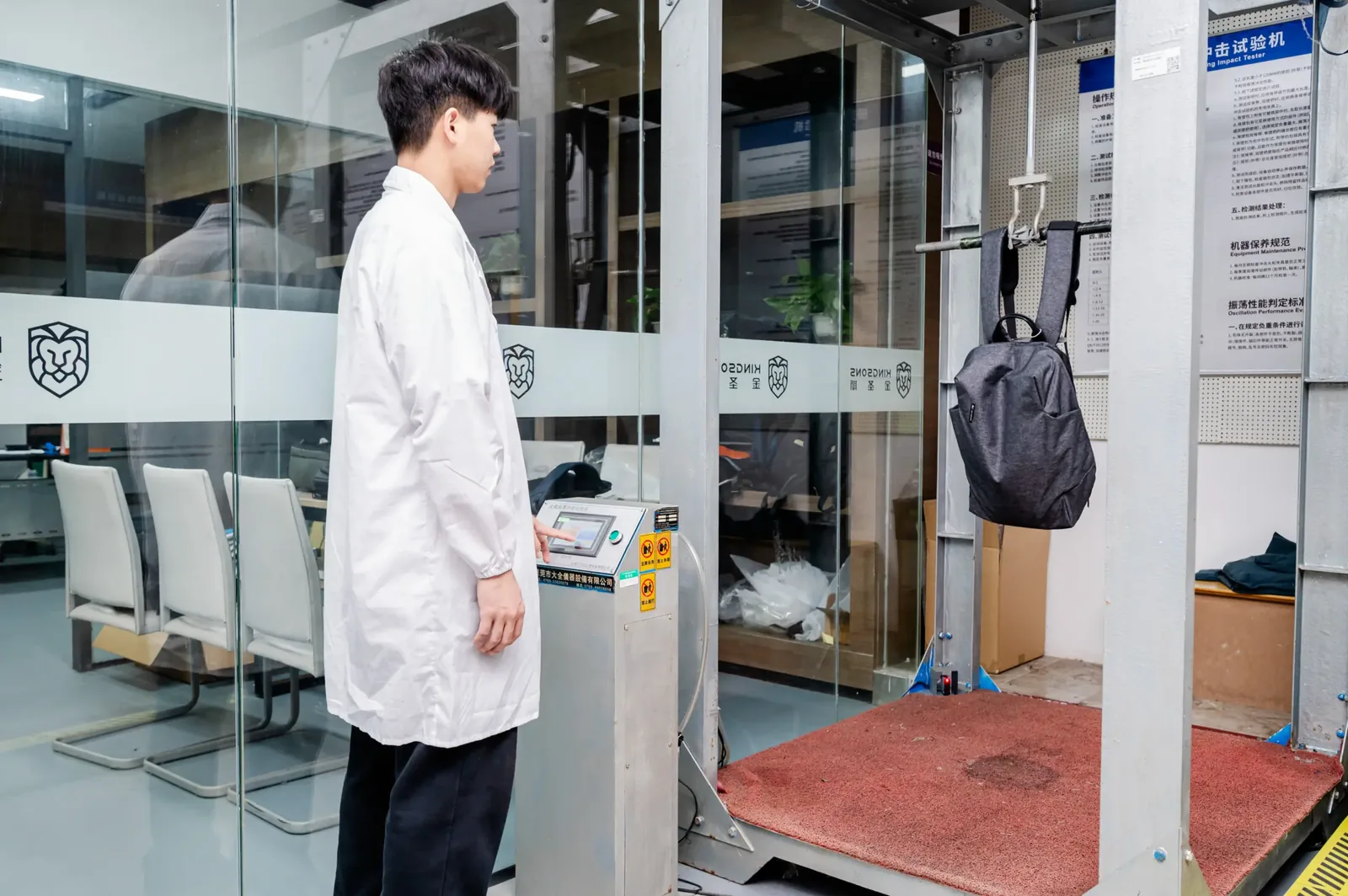
Gym bag quality control should focus on the parts most exposed to daily wear. A good-looking sample does not guarantee consistent bulk production, so buyers should ask about testing procedures and inspection records.
Important checks include:
- Handle and strap strength: Test load-bearing points under repeated loading to identify weak stitching or attachment problems.
- Zipper durability: Check smooth operation, repeated opening and closing, and zipper attachment strength.
- Seam strength: Inspect reinforced areas, base panels and handle connections for tearing.
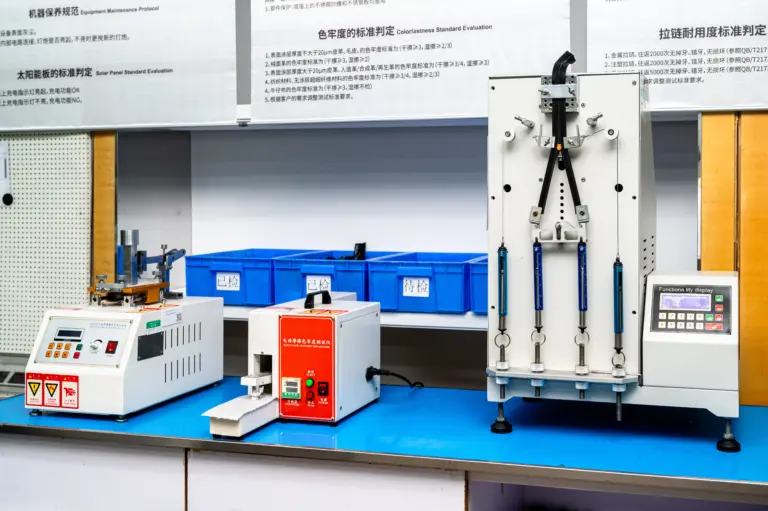
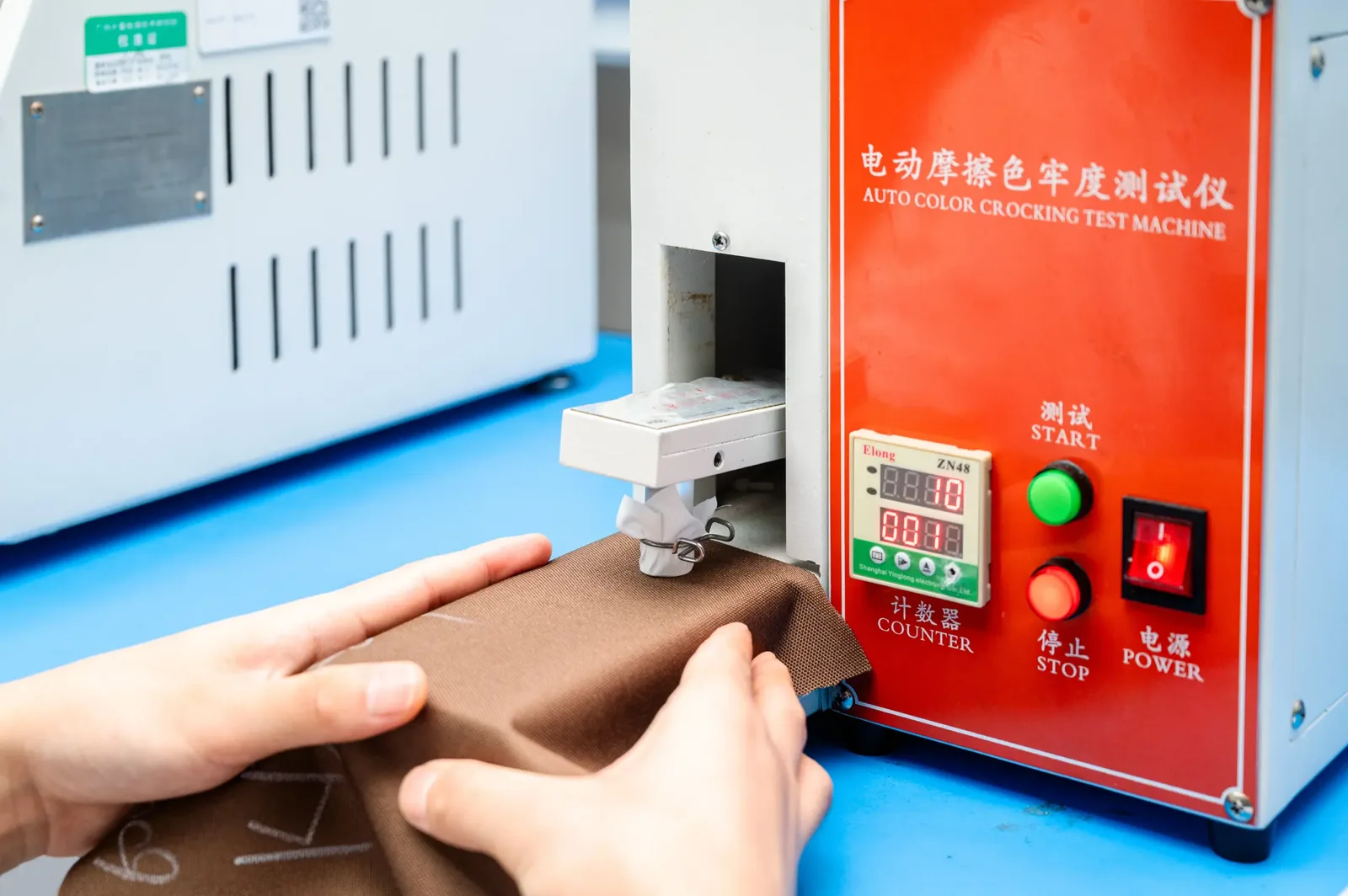
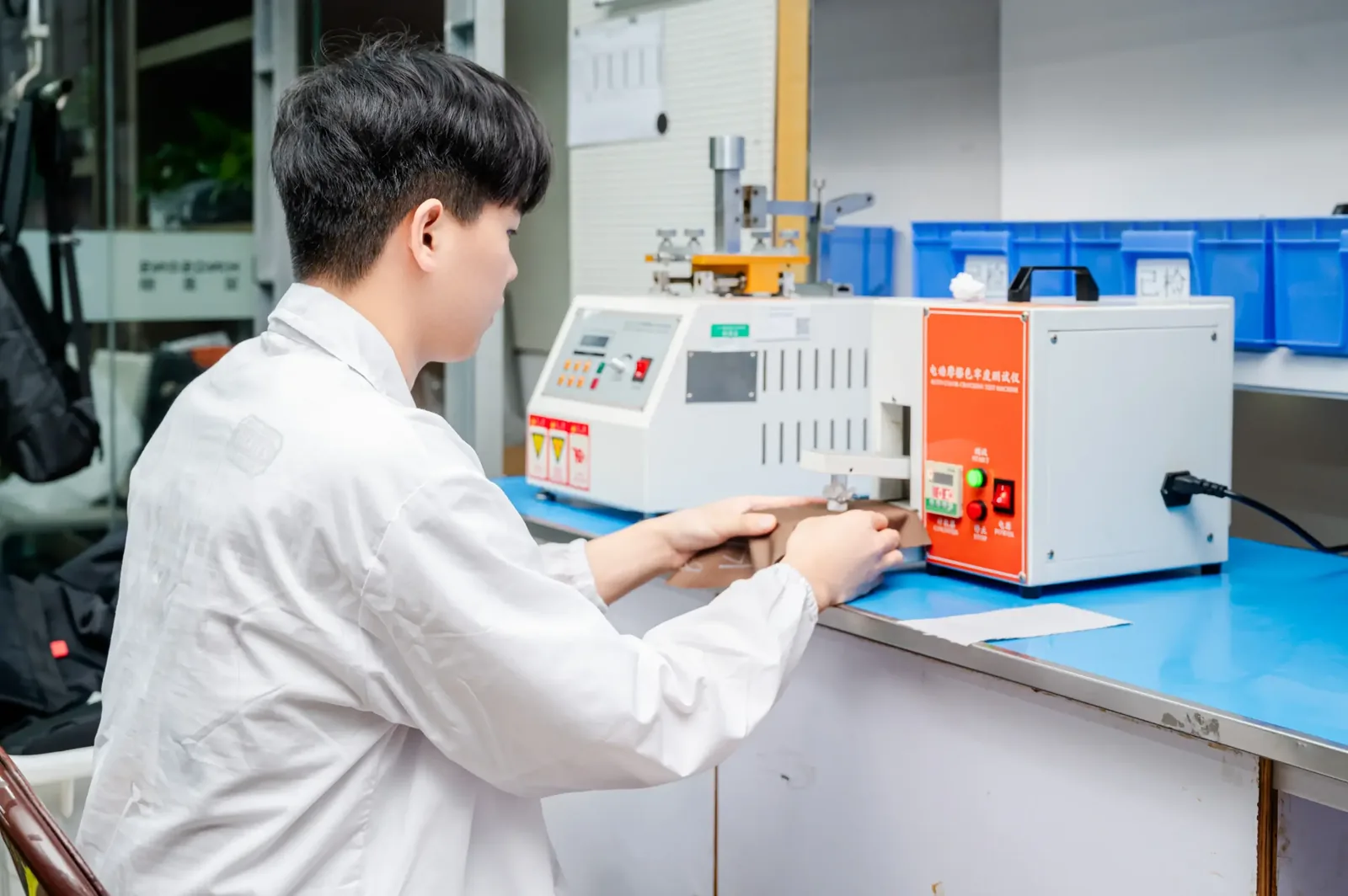
- Fabric performance: Check abrasion resistance, colorfastness and coating performance.
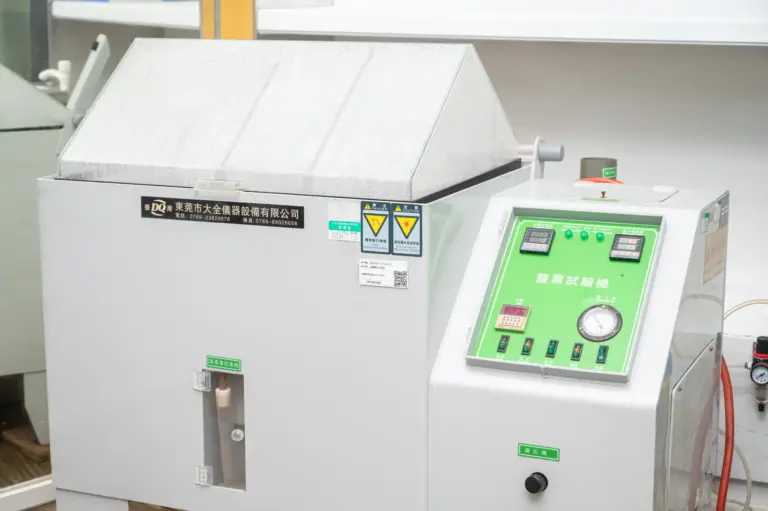
- Hardware corrosion: Test metal fittings for resistance to corrosion, especially for products used in humid environments.
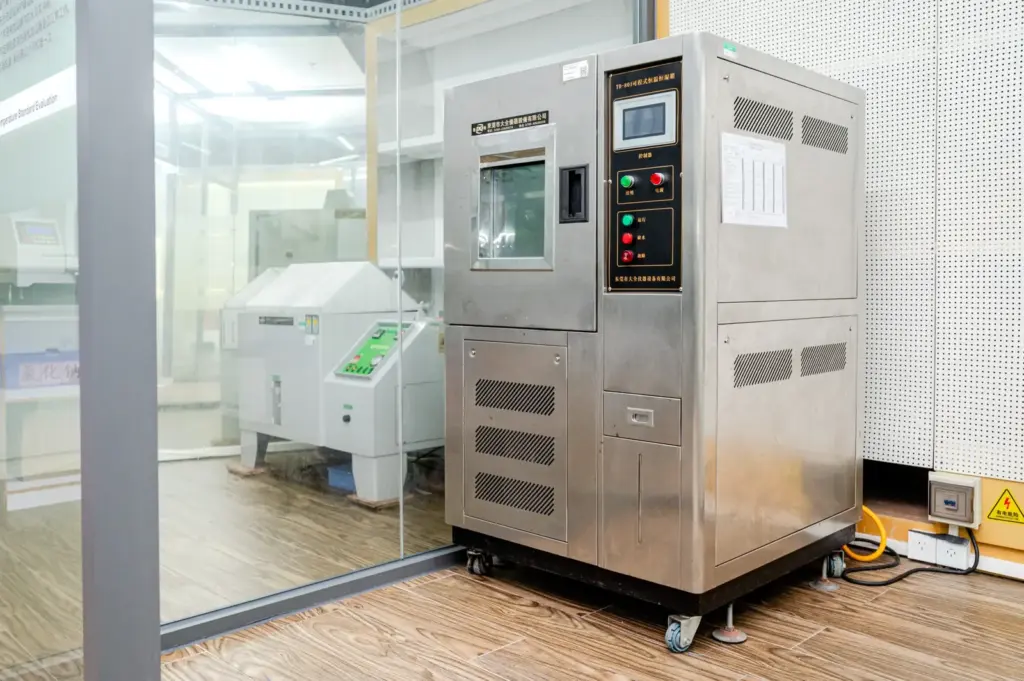
Kingsons’ gym bag testing program includes handle and shoulder strap load tests, seam tensile tests, zipper cycle tests, salt-spray testing and colorfastness checks. For example, its published specifications include 500 cycles at 7 kg for shoulder straps and a minimum seam tensile strength of 800 N.
Ask the factory to provide relevant test records and confirm which tests apply to your product specification.
How to Choose a Reliable Gym Bag Manufacturer
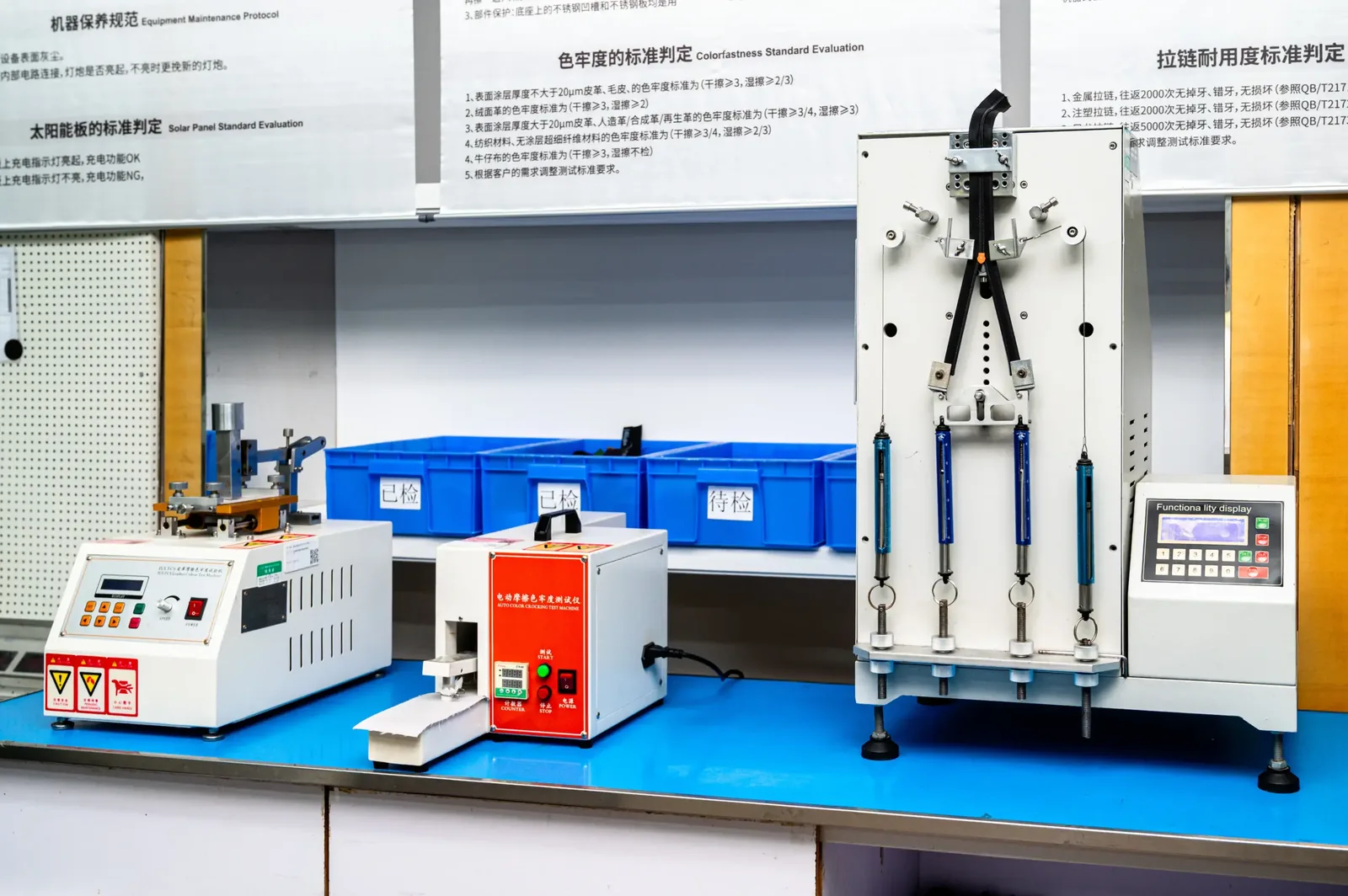
A suitable manufacturer needs more than a product catalog. Buyers should evaluate whether the factory can maintain consistent quality, manage production schedules and support repeat orders.
Consider these five points before making a decision:
- Product experience: Ask for examples of previous gym bag or sports bag projects and inspect physical samples.
- Component sourcing: Confirm the zipper, buckle and webbing suppliers. Recognized options such as YKK and SBS can help buyers define quality requirements.
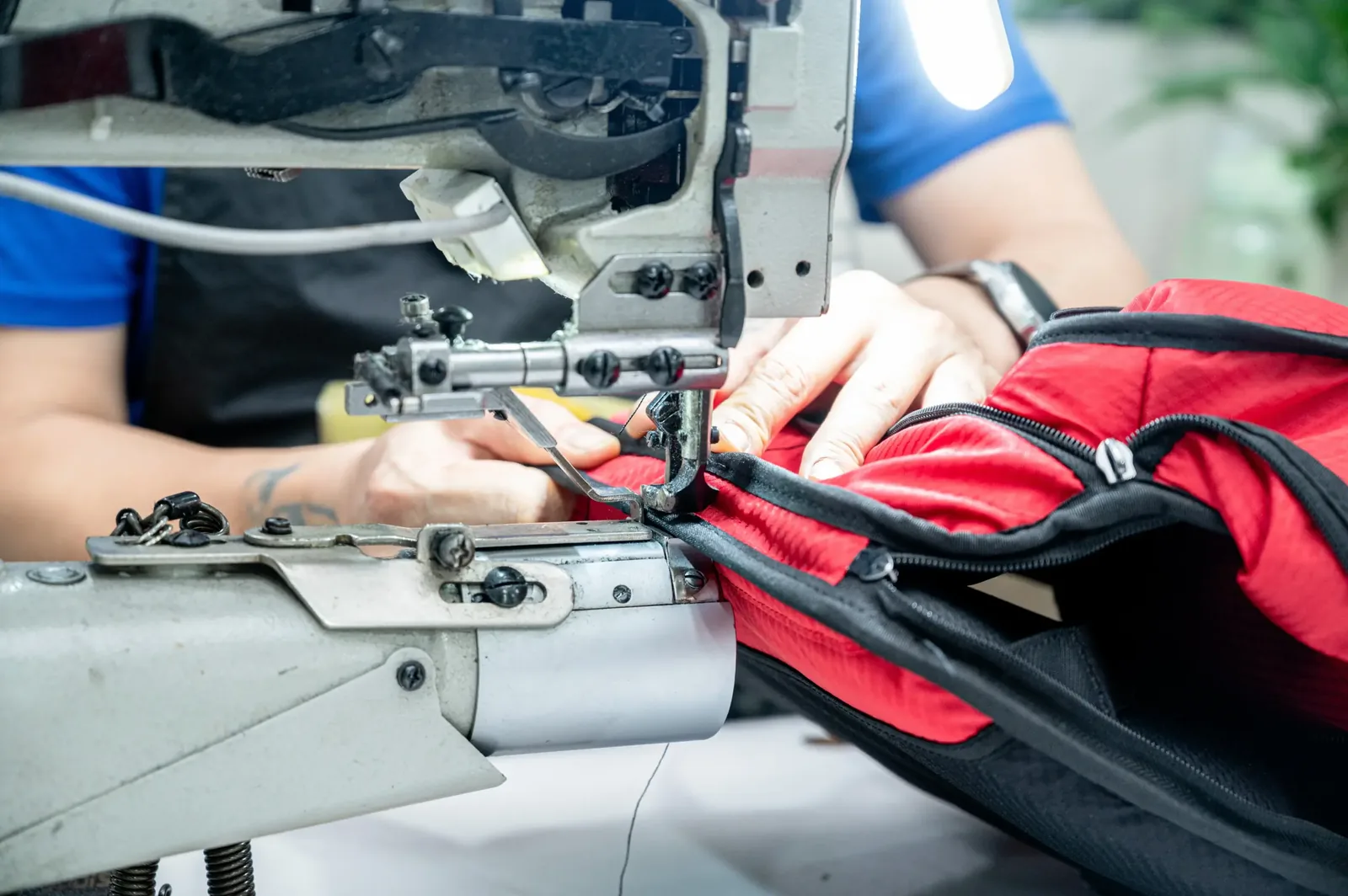
- Production capability: Check whether cutting, sewing, assembly and inspection are managed through a controlled production process.
- Quality documentation: Review relevant ISO, BSCI, SEDEX and GRS documentation, depending on your product and market requirements.
- Communication and design protection: Confirm sample approval procedures, design confidentiality and how the factory handles production problems.
For a more detailed evaluation process, see our bag manufacturer vetting guide.
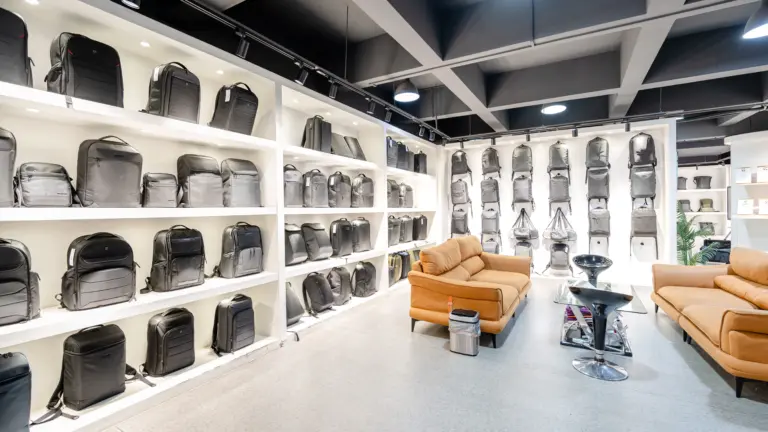
Kingsons has manufactured bags since 1997, with a 50,000 m² production facility, 20 production lines and monthly capacity of around 300,000 pieces. Its manufacturing capabilities include material selection, product development, sewing, assembly and quality inspection. The factory also supports custom gym bag designs, branded details and different material requirements.
For brands planning repeat orders, these capabilities provide a foundation for consistent product specifications and long-term supply.
Frequently Asked Questions
What is the MOQ for custom gym bags?
Standard custom production starts at 500 pieces per style per color, with colors mixable within a style. Trial orders of 200–300 pieces are negotiable at an adjusted price, small-batch flexible runs start from 50 pieces for market tests, and logo-only runs on existing stock models start at 200 pieces.
Which gym bag format sells best for fitness brands?
Gym duffels remain the category anchor for fitness retail, while gym backpacks grow fastest in commuter-heavy urban markets. Drawstring bags dominate giveaways and membership kits on price. Most successful programs anchor on one duffel or backpack silhouette and add a drawstring tier for volume branding.
How long does gym bag production take?
Sampling takes 7–10 working days for private label programs and 10–15 or more for full custom designs. Mass production runs 30–45 days depending on complexity. Add ocean freight time and plan launch dates backward from the in-hand deadline, confirming the schedule in the contract.
Can gym bags be made from recycled materials?
Yes. GRS-certified recycled polyester delivers performance close to virgin polyester and supports an auditable sustainability claim. Request the current GRS certificate during quotation so the claim on your product page traces to certified recycled content.
What quality tests should gym bags pass before shipment?
At minimum: tensile tests on straps and handle anchors, zipper reciprocation cycles on every closure type, fabric abrasion and color-fastness checks, coating adhesion on wet pockets, and hardware salt-spray testing. Confirm which tests the factory performs in-house and ask for the reports with your pre-production sample.
Do I need a tech pack for a private label gym bag?
Private label builds on an existing factory pattern, so a full tech pack is optional — but a written specification covering logo method and placement, Pantone colors, feature list and packaging still prevents most sampling disputes. Full custom programs require a complete tech pack with dimensions, materials and construction details.
Building a gym bag line for a fitness brand, studio chain or e-commerce catalog? Kingsons manufactures sports, gym and outdoor bags at a 50,000 m² facility running 20 production lines and 300,000 pieces monthly, with SBS/SAB/YKK zipper sourcing and in-house physical testing on every program.
MOQ from 500 pcs · Trial orders 200–300 pcs · Sampling 7–10 days · ISO/BSCI/SEDEX/GRS certified