Bag distribution is a working-capital business dressed up as a product business. The winner is rarely the one with the coolest backpack; it is the one whose manufacturer keeps a deep, restockable range arriving on time at a price that survives freight, duties and a channel margin. Choose the manufacturer wrong and you tie cash in dead stock; choose right and the range turns itself.
This guide is for the prospective distributor, wholesaler or importer: what distribution pays for, which manufacturer capabilities make a range turn, and the questions to ask before committing capital.
Wichtige Erkenntnisse
- Distribution differs from private-label OEM: you resell the manufacturer’s existing range to retailers or end buyers, so breadth, restock speed and reliable MOQs matter more than bespoke tooling.
- Your margin is built on landed cost and inventory turns, not the unit price — model freight, duties and the cash tied up during 30–50-day production before you pick a supplier.
- A distributor-friendly manufacturer offers low in-stock MOQs, colour/style assortment, quick replenishment and honest lead times; a custom-only factory with 1,000-piece minimums will starve your cash flow.
- Ask the protection questions early — territory, minimum-advertised-price policy, direct-sales risk — because a manufacturer that sells the same range under its own brand can undercut you on your best SKUs.
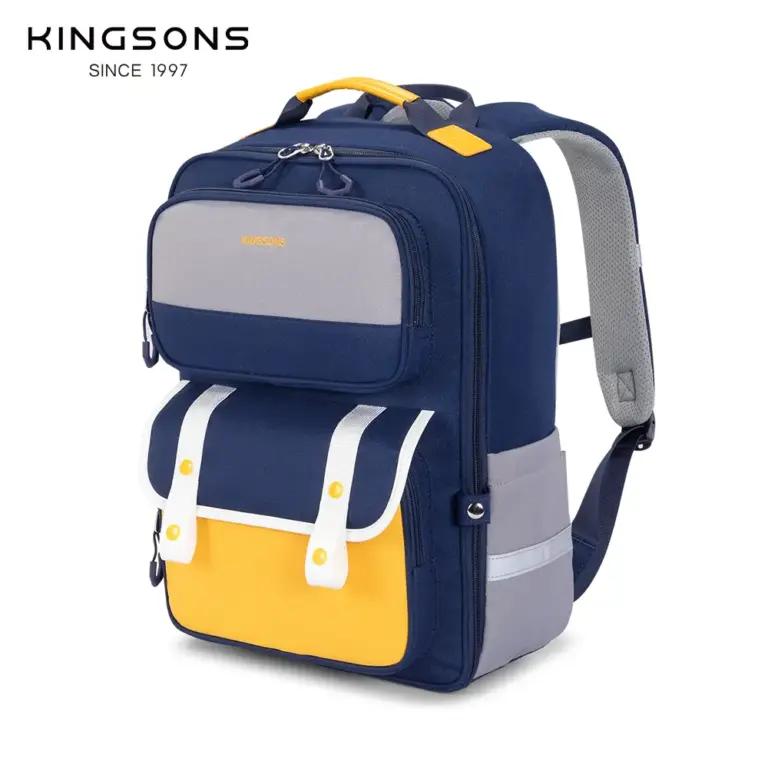
- Kingsons runs a ready-stock distribution motion (branded in-stock MOQ from 200 Einheiten, colour mix allowed) alongside custom, with a global agent network across 100+ markets and a 2–3 new-series-per-year cadence that keeps a range fresh.
What a bag distributor actually does
A distributor buys finished goods in bulk and resells them into a market — to retailers, e-commerce sellers, promotional houses or institutional buyers — making money on the spread between landed wholesale cost and the price the next tier pays. That is different from two adjacent roles it is often confused with:
- Private-label / OEM buyer — commissions its own branded product from a factory; higher margin, but owns the tooling, MOQ and inventory risk of a bespoke design.
- Agent / commission rep — brokers orders for a manufacturer and takes a cut, without taking title to the goods.
- Verteiler — takes title, holds stock, and earns the margin for carrying inventory and servicing a local market.
The distributor’s edge is local: you know the retail buyers, the seasonality, the compliance paperwork and the last-mile. The manufacturer’s job is to feed that engine with a range that turns. Evaluating a manufacturer for distribution means testing how well it performs exactly that feeding role.
The margin stack: where distribution money is made and lost
A distributor’s unit economics start at the ex-works price and end at what the next tier pays. In between sit the costs that quietly erase a “great” unit price:
| Cost layer | What to model before committing |
|---|---|
| Ex-works / FOB unit price | The headline number — and the least important one on its own |
| Inbound freight + duties | Ocean vs air; HS-code duty for your market; insurance |
| Working capital carry | Cash locked from PO to sell-through across a 30–50-day production cycle |
| Lagerung & fulfilment | Warehouse, 3PL pick-pack or FBA fees if you ship into marketplaces |
| Markdowns & dead stock | The real killer: styles that don’t turn get liquidated below cost |
The lesson every distributor learns twice: a slightly higher unit price from a supplier with lower MOQs, faster replenishment and better sell-through beats a rock-bottom price that forces you to over-order styles you can’t move.

Two motions: ready-stock distribution vs private label
Most bag manufacturers offer both, but they are different businesses with different supplier requirements:
- Ready-stock / branded-goods distribution — you buy the manufacturer’s existing catalogue under its brand (or unbranded for your channel). Low MOQ, fast dispatch, no tooling — the natural motion for a distributor building a portfolio. Kingsons prices this at 200 pieces for in-stock branded goods versus the 500-piece industry norm.
- Custom / OEM-ODM — your brand, your colours, your features, at 500 pieces per style/colour (mixable) with room to negotiate 200–300-piece trials and even 50-piece small batches. Higher control and margin, slower first cycle.
A distributor’s smart play is often a mix: carry the manufacturer’s proven in-stock range for immediate turn and cash flow, and layer custom exclusives once a SKU’s velocity justifies the tooling and MOQ. This is the model described in our piece on wholesale bag MOQ and pricing.
MOQ and MOQ elasticity: the make-or-break for a distributor
Minimum order quantity is the constraint that decides whether you can even carry a range. A factory that needs 1,000 pieces per colour forces a distributor to bet heavily on every style; one that ships 200 lets you spread capital across a wider assortment and test before you commit.
| Modell | Typical industry MOQ | Kingsons | Distributor impact |
|---|---|---|---|
| Custom (your design) | ~1,000 pcs / Farbe | 500, colour-mixable | Wider style range per dollar |
| Trial order | Rarely below main MOQ | 200–300 negotiable | Test a market without over-buying |
| Small-batch flexible | — | from 50 Stk | Werbeartikel / corporate runs |
| Branded in-stock | ~500 pcs | 200 Stk | Carry more SKUs, faster turn |
Ask every supplier three MOQ questions: What is the real per-style, per-colour minimum? Can colours be mixed toward one MOQ? Is there a documented trial or small-batch path? A “yes” across the three is worth more than 50 cents off the unit price.
Range depth and restock cadence
A distributor needs two different kinds of depth. Erste, breadth at a moment in time — enough models across business, reisen, Schule, fashion and smart-tech categories to give a retail buyer a reason to take your whole line rather than a single SKU. Zweite, refresh over time — new series arriving on a predictable cadence so the range doesn’t age on the shelf.
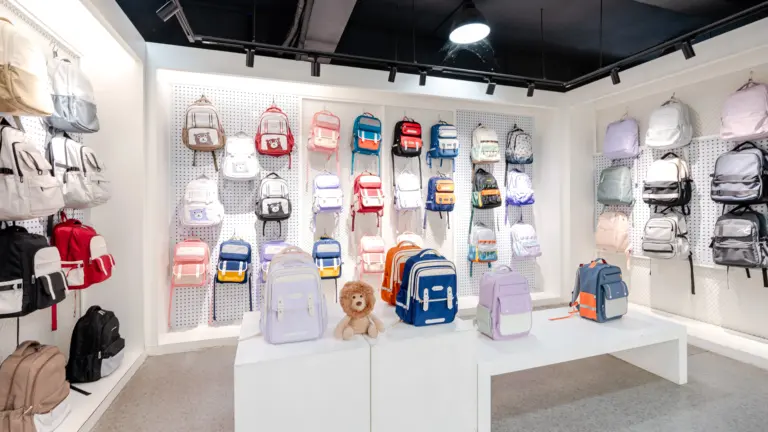
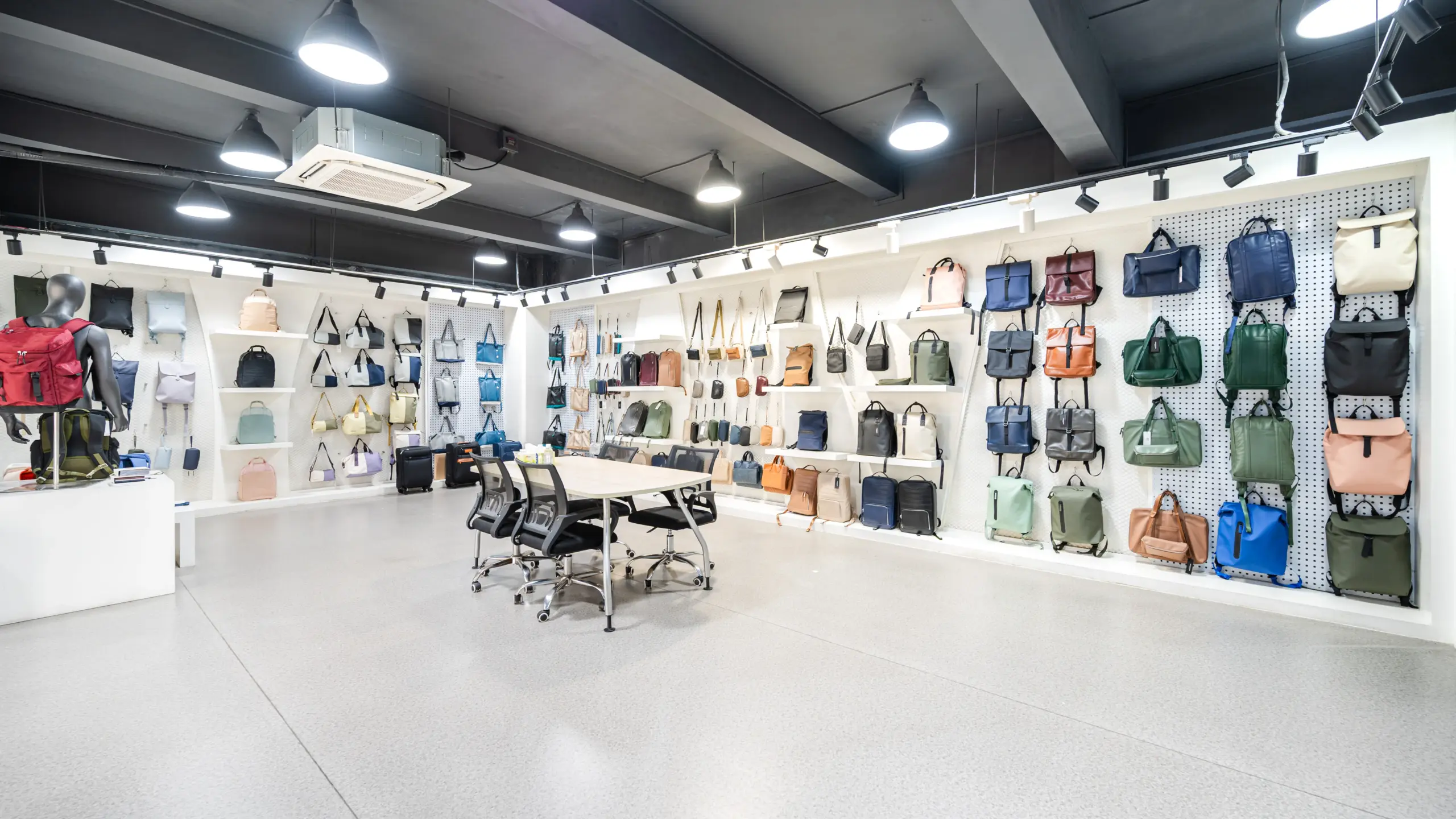
Kingsons publishes two catalogue seasons a year (2025’s spring and autumn lines ran 59 Und 85 models respectively) and launches 2–3 new product series annually focused on business, travel and outdoor — a cadence a distributor can build a merchandising calendar around. For the onboarding motion, the ready-stock in-stock MOQ keeps that breadth affordable to carry.
Reliability: the unglamorous distributor-killer
If a supplier misses a restock window, you do not lose a sale — you lose the shelf position and the retailer’s confidence, which take far longer to win back. Distributors should evaluate manufacturing reliability as a hard criterion:
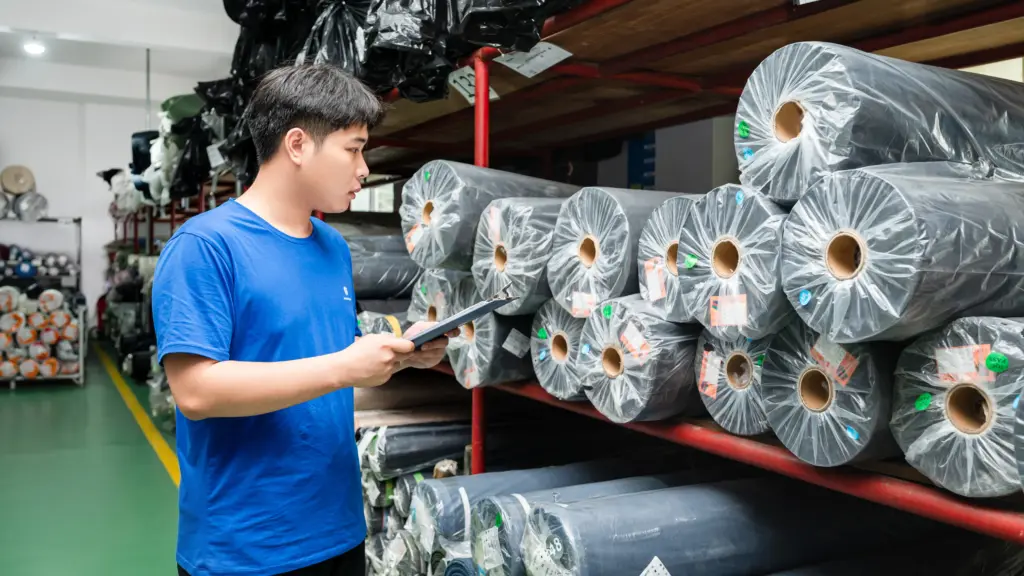
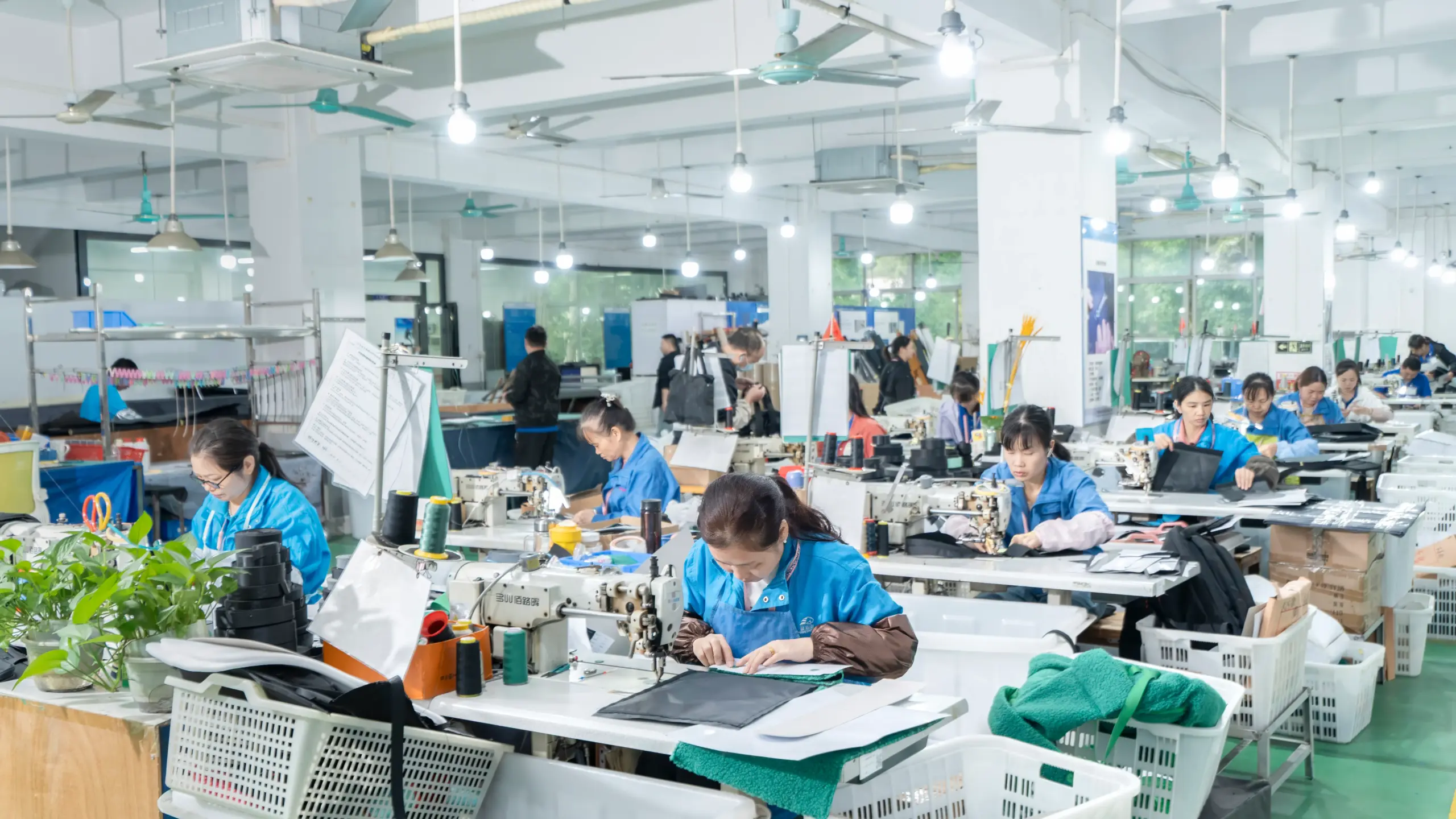
- Capacity headroom — Kingsons runs a 50,000 m² park, 20 production lines and roughly 300,000 Einheiten/Monat; scale that absorbs your order without a queue.
- Lead-time discipline — 7–10 working-day samples, 30–45 working-day production; ask what happens when it slips and how it is communicated.
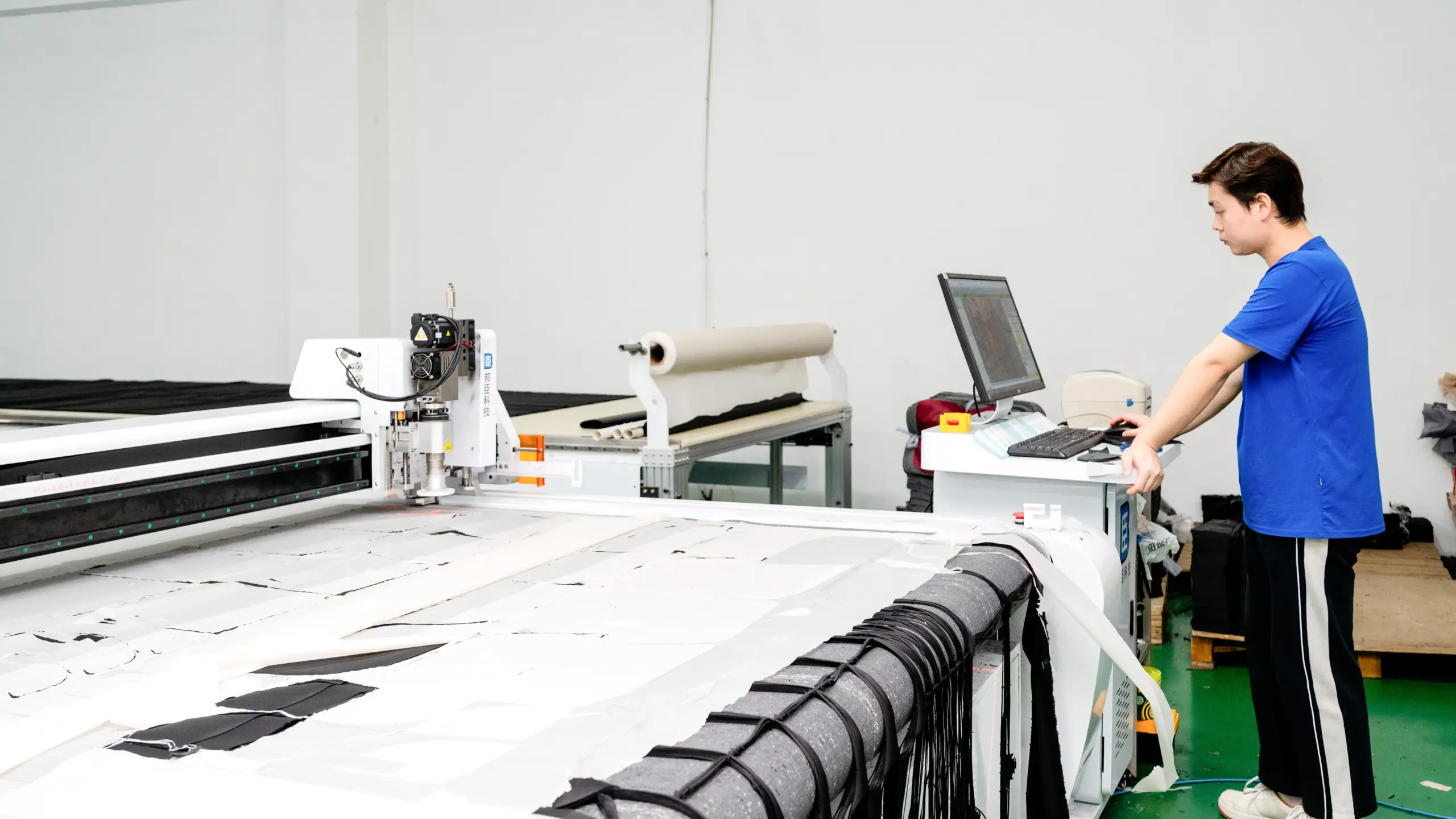
- In-house QC — full-process control with material, hardware and finish testing protects you from a returns wave that a distributor absorbs personally.
- Named component suppliers — YKK/SBS/SAB zippers and established fabric sources mean replacement parts and consistency across restocks.
Reliability compounds: a distributor who can promise a retailer “in stock, same spec, next season” is selling something a discounter running spot buys cannot.
Market protection and the exclusivity conversation
The distributor’s biggest structural risk is the manufacturer — or another distributor in your territory — selling the same range cheaper or direct. Have this conversation before you invest in launch:
- Territory — is there a defined geographic or channel exclusivity, and what protects it?
- Direct-sales risk — does the manufacturer sell the same styles DTC or on marketplaces, and will it price against you?
- MAP policy — is there a minimum-advertised-price discipline across the channel, or a free-for-all?
- Exclusives via custom — the cleanest protection is a co-developed or exclusive model that no other distributor carries.
These are commercial terms, not factory specs — but a manufacturer with a mature global agent program will have thought about them, and the answers tell you a lot about how safe your launch investment is.
Landed cost, logistics and the channel you serve
How you get goods from the factory into the hands of your next-tier buyer shapes your cost and your speed:
- Incoterms — FOB/CIF/CFR/DDP options let you control freight to your warehouse or have it landed for you; DDP simplifies planning if you don’t run your own import desk.
- Marketplace distribution — if you serve Amazon sellers or sell FBA yourself, prep starts at the factory; see FBA-ready packaging for bags.
- Freight mode — ocean for planned replenishment, air only for genuine emergencies; a distributor’s forecast quality determines how often you pay the air premium.
Documentation and compliance you inherit
Distributing into regulated retail channels means you inherit the product’s compliance file. Bevor Sie sich verpflichten, confirm the manufacturer can supply — and keep current — the documentation your buyers will ask for: test reports for the destination market, and social-audit coverage where required. The related guides cover the substance: REACH/CPSIA and Prop 65 for materials compliance, Und BSCI/SEDEX/Walmart audits for the social-compliance evidence big-box and European buyers expect. Kingsons holds BSCI (2021 & 2026 reports), SEDEX coverage and a passed Walmart factory audit — evidence a distributor can pass straight up the channel.
A distributor’s manufacturer scorecard
Score each candidate supplier one to five across the factors that decide whether a range turns. Anything below a three on the first four is a disqualifier for a distributor (not an OEM):
- Mindestbestellmenge & elasticity — low in-stock MOQ, colour mix, trial path.
- Range breadth & cadence — enough styles, refreshed often.
- Reliability — capacity, lead-time discipline, consistent restocks.
- Einhaltung & Dokumentation — audits and test files you can hand up-channel.
- Landed-cost transparency — honest Incoterms, freight and duty math.
- Channel protection — territory, MAP and exclusivity posture.
- Communication — responsiveness; you are in a relationship business.
Why Kingsons fits a distribution model
Kingsons is built around three business pillars — OEM (50%), deep customization/ODM (30%) and brand agency/distribution (20%) — and the distribution pillar is explicitly engineered for resellers who cannot hit custom MOQs. In practical terms a distributor gets: branded in-stock goods from 200 pieces with colour mixing; a broad, twice-yearly-refreshed catalogue across business, reisen, Schule, fashion, smart-tech and eco lines; A 50,000 m², 20-line, 300,000-unit/month plant for restock reliability; the audit and testing credentials Western channels ask for; DDP/CIF shipping options; and after-sales cover (12-month warranty, 24-hour response, 7-working-day resolution). Kingsons already runs a global agent network across 100+ countries and regions — the channel-protection conversation starts from an operating model, not a blank sheet.

Häufig gestellte Fragen
What MOQ should a bag distributor expect?
For ready-stock branded goods, look for 200–500 pieces per style rather than a custom 1,000-piece minimum — Kingsons sets in-stock at 200 with colour mixing. Custom programs typically start at 500 per style/colour, with 200–300-piece trials and 50-piece small-batch options negotiable. Lower, flexible MOQs let you spread capital across a wider range instead of over-buying one SKU.
Is distributing an existing bag range better than private label?
They serve different stages. Distributing a manufacturer’s ready-stock range is faster and capital-light — low MOQ, no tooling, immediate sell-through. Private label is slower and carries more inventory and tooling risk but yields exclusivity and higher margin. Many successful distributors start with the in-stock range to establish cash flow, then add custom exclusives once a style’s velocity justifies it.
How do I protect my territory as a distributor?
Negotiate it before launch: a defined geographic or channel exclusivity, a minimum-advertised-price policy across the channel, clarity on whether the manufacturer sells the same styles direct, and ideally at least one co-developed exclusive model no other distributor carries. A supplier with a mature global agent program will have a workable position on each of these.
What compliance documents will my retail buyers ask for?
Expect material-safety documentation for your market (z.B., CPSIA/Prop 65 in the US, REACH in the EU) and social-compliance audit coverage for big-box and European buyers (BSCI or SMETA, sometimes chain-specific). Choose a manufacturer that already holds current reports — Kingsons carries BSCI (2021 Und 2026), SEDEX coverage, ISO 9001/14001/45001 and a passed Walmart factory audit — so you can pass the file straight up the channel.
How important is lead time for a distributor?
Critical, because distribution runs on replenishment. A reliable 30–45 working-day production cycle you can forecast against is worth more than a faster one-off. Evaluate capacity headroom, lead-time discipline and communication when it slips — a missed restock window costs you the shelf position, not just the order.
Can Kingsons supply distributors, not just OEM buyers?
Yes — brand agency and distribution is one of Kingsons’ three business pillars, serving resellers who need ready stock rather than bespoke tooling. That means branded in-stock goods from 200 pieces with colour mixing, a twice-yearly refreshed catalogue, capacity for reliable restocks, DDP/CIF shipping, the audit credentials channels require, and a 100+ country agent network already in operation.
Build a range that turns: partner with a manufacturer engineered for distribution — low in-stock MOQs, deep refreshed catalogue and reliable restocks.