Buyers hear “rPET” on hangtags, in supplier quotations and in retail buyer meetings. Most have never seen the specification line that the word is supposed to represent.
This article covers what rPET fabric is from a material-science standpoint, where it performs like virgin polyester and where it does not, what the certification documents mean, and which variables actually move its price.
Points clés à retenir
- rPET is polyethylene terephthalate reprocessed from post-consumer bottles or post-industrial polyester waste — the same polymer as virgin polyester, not a substitute material.
- Its performance in a bag shell is set by denier, weave density and coating, exactly as with virgin fabric. Recycled content alone predicts nothing about durability.
- Recycled yarn carries wider lot-to-lot variation in shade and intrinsic viscosity, so colour standards and booked lots matter more than they do on virgin polyester.
- GRS certification governs the claim; the Transaction Certificate governs your specific order. Neither is a performance document.
- Price is driven by feedstock quality, colour route and order size — not by the “recycled” label in general terms.
What rPET Fabric Is
rPET stands for recycled polyethylene terephthalate. PET is the polymer used in beverage bottles and in standard polyester fibre; recycled polyester takes that polymer from a waste stream instead of from petrochemical feedstock. Two forms matter to bag buyers:
- Mechanically recycled rPET — bottles are collected, sorted, cleaned, shredded into flake, then melted and extruded into chips or pellets, which are spun into filament yarn. This is the dominant route for bag fabrics and the one GRS-certified chains describe.
- Post-industrial recycled polyester — clean polymer scrap from film, yarn or fabric production re-melted into fibre. Feedstock is more consistent, but the material story is weaker because the waste never reached a consumer.
Chemical recycling, which breaks PET back to monomers, exists and produces material technically identical to virgin PET, but it is not a volume option in bag fabric supply today. Treat any quotation describing it as a specialty request requiring proof.

From Bottle Flakes to Bag Fabric
The route explains both the properties and the price, so it is worth following once.
- Collection and sorting. Colour separation matters: clear, green and blue PET behave differently downstream, and mixed colour flake limits the dye palette later.
- Washing and decontamination. Labels, adhesives, cap polymers and residual contents are removed. Residual contamination is the single largest driver of quality problems in recycled yarn.
- Shredding into flake, then extrusion into chips. Chips are graded by intrinsic viscosity (IV), a measure of molecular weight that predicts how the polymer will spin and how the finished fabric will perform mechanically.
- Spinning into filament yarn — draw-textured yarn (DTY) or fully oriented yarn (FOY) — with the denier and luster specified for the target fabric.
- Weaving or knitting into Oxford, taslon, taffeta or dobby constructions, then dyeing and coating with PU or ACR to reach the required hand and water resistance.
At every stage, GRS chain-of-custody paperwork tracks certified mass through the process. That is what allows a finished roll to be sold against a certified content declaration.
How It Behaves in a Backpack
The honest summary for a buyer: rPET in a bag shell performs on par with virgin polyester of the same construction, and the specification conversation is identical. Where recycled fibre differs is in consistency, not in ceiling.
| Property | What Decides It | rPET vs Virgin PET | Buyer Action |
|---|---|---|---|
| Abrasion resistance | Denier, weave density, finition | Equivalent at the same construction | Specify 600D Oxford or heavier for shells |
| Tear and tensile strength | Yarn type, weave, polymer IV | Equivalent if chips are properly graded | Ask for the yarn specification, not a sustainability adjective |
| Water resistance | Coating and laminate, not fibre | No difference from recycled content | Specify the water column in mm and test it |
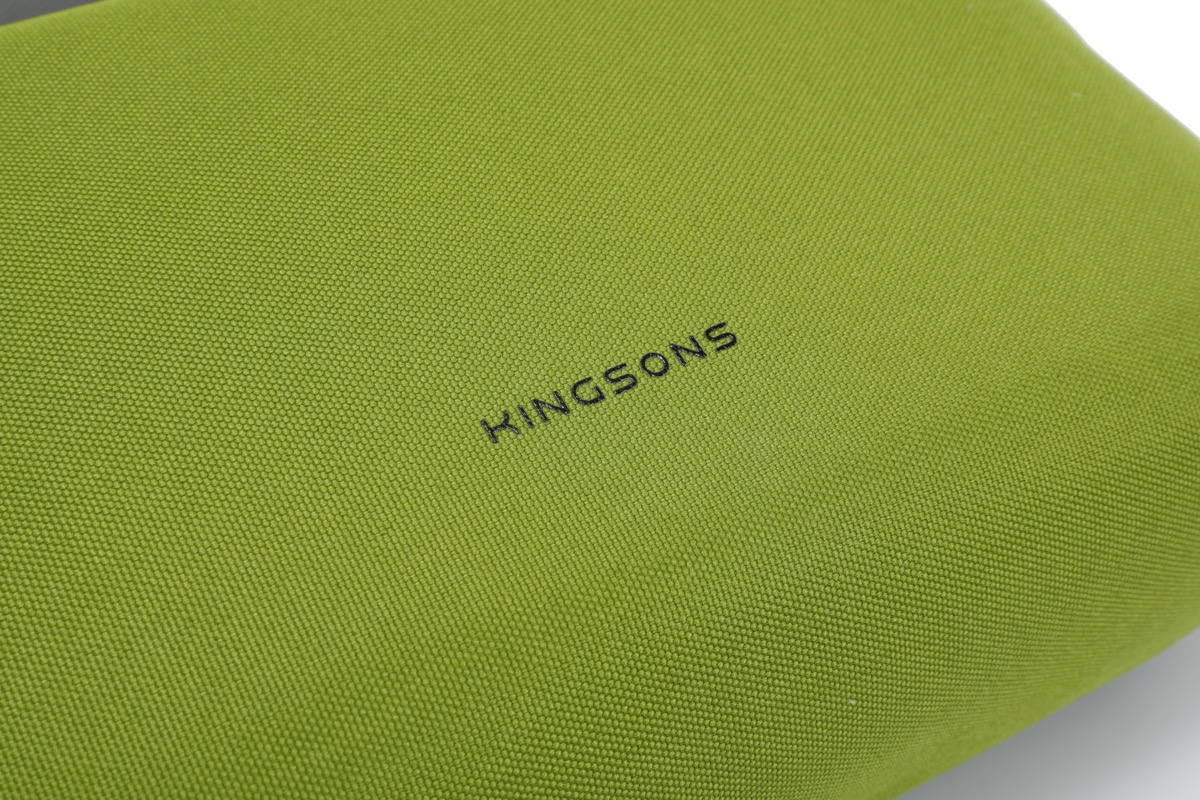
| Solidité des couleurs | Dye route; solution-dyed beats piece-dyed | Solution-dyed recycled yarns are a genuine advantage | Ask for solution-dyed where the colour exists in the library |
| Hand feel | Yarn texture and finishing chemistry | Comparable; some recycled lots read slightly drier | Approve a physical swatch, never a datasheet alone |
| Batch-to-batch variation | Feedstock quality and process control | Wider than virgin; this is the real difference | Signed witness swatch plus booked lot per program |
In practice, the failure mode that shows up in production is not strength but consistency — a second batch that reads a shade off the approved sample, or a hand feel that shifts because the chip source changed. Neither is a reason to avoid the material. Both are reasons to write the colour and hand standard into the purchase order.
Deniers and Constructions Available
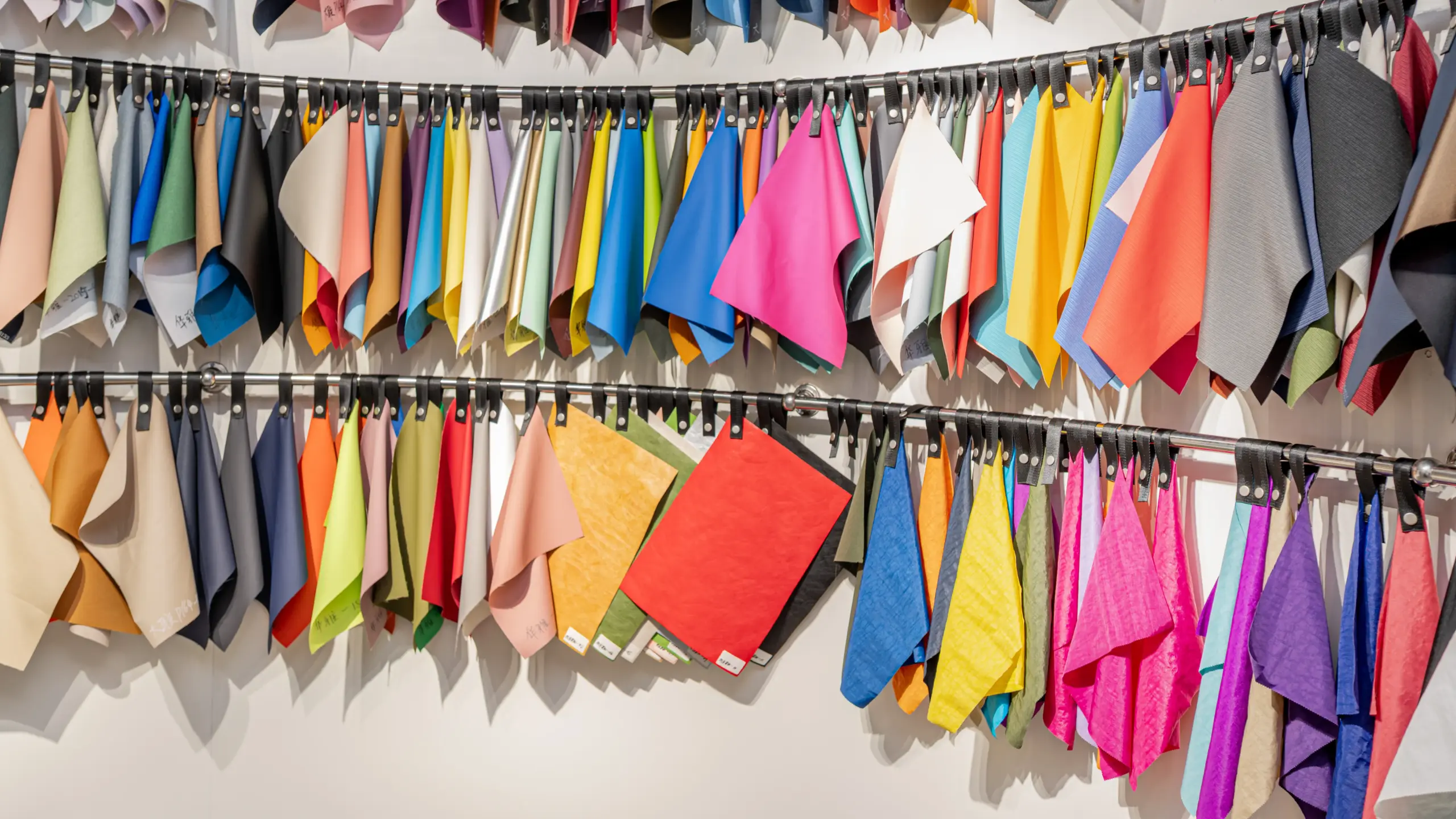
rPET is supplied across the range a bag factory needs. The table below maps common constructions to typical bag use, with the caveat that availability by colour and finish changes with the mill’s booking position.
| Construction | Typical Weight Band | Best Used For | Notes for Buyers |
|---|---|---|---|
| 210T–230T rPET taffeta | Light | Garniture, lightweight promotional totes, pouches | Cheapest route to raising total recycled percentage |
| 300D rPET Oxford | Light–medium | School bags, casual backpacks, foldable totes | Needs a competent coating for a weather claim |
| 420D–600D rPET Oxford or taslon | Medium–heavy | Commuter and business backpacks, sacs de week-end | The workhorse specification for a retail program |
| 900D–1680D rPET Oxford | Lourd | Wheeled luggage, heavy-duty and outdoor carry | Heavier fabric can substitute for a laminate in some designs |
On our programs, shell fabrics come from established polymer and fibre suppliers in the recycled stream — the same disciplined input approach we apply to virgin polyester and nylon described in our custom bag materials guide, and the same denier logic set out in the guide des matériaux pour sac à dos pour ordinateur portable.
Attestation: Which Document Answers Which Question
Three acronyms appear in every rPET conversation. They answer different questions, and mixing them up causes real commercial damage.
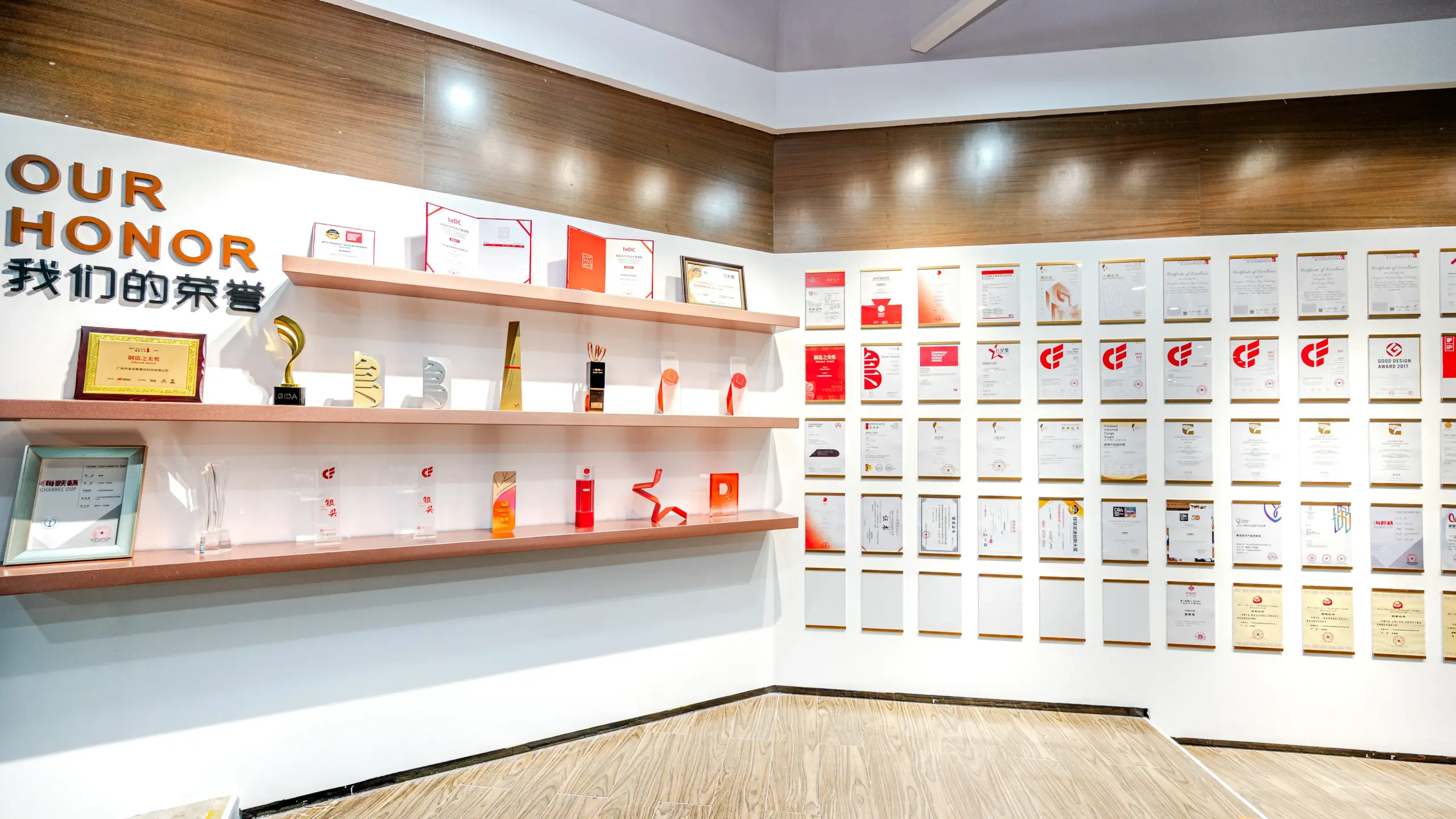
- GRS (Norme mondiale recyclée) — from Textile Exchange. Certifies recycled content plus chain of custody, gestion environnementale, social criteria and chemical restrictions. A factory or mill needs a scope certificate; a specific trade needs a Transaction Certificate.
- RCS (Recycled Claim Standard) — the same chain-of-custody logic without the environmental, social and chemical modules. Cheaper to administer, weaker as a retail answer.
- OEKO-TEX STANDARD 100 — a tested-for-harmful-substances certification on the finished textile. It says nothing about recycled content, and recycled content says nothing about it.
Two thresholds from GRS decide what you may print: 20% recycled content minimum for a material to be certified, et 50% minimum for the finished product to carry the GRS label. Everything beyond that is a wording discipline — claim the layer you certified, at the percentage you can evidence.
Chemical Compliance Is a Separate Job
Recycled feedstock raises legitimate questions about residual substances, which is why GRS includes chemical restriction criteria and requires hazardous-chemical management on site. For bags sold into the EU, the chemical file is a separate obligation from the recycled claim.
For EU-bound programs, the practical items are REACH restricted-substance compliance, the EU’s chemical labelling duties for articles, and — since 2025 — the substantiation requirement for environmental claims under Regulation (UE) 2024/1781. Our production runs under ISO 9001, OIN 14001 and ISO 45001 management systems with GRS certification for recycled material handling, and products are tested to CE, FCC, RoHS, SGS and MSDS requirements as applicable to the configuration.
Cost: What Actually Moves the Price of rPET
“How much more does rPET cost?” is the wrong question. The right question is which of these variables you are paying for.
- Feedstock quality. Washed, sorted, food-grade-adjacent flake costs more than mixed flake and produces more consistent yarn. Cheap recycled yarn is where quality escapes come from.
- Colour route. Solution-dyed yarn (colour added at polymer stage) avoids a wet dyeing step and delivers better fastness, but the available colour library is narrower and small custom shades carry surcharges.
- Order size and lot booking. Certified yarn and greige are made in mill lots. Buying a full program’s fabric in one booking is usually the largest single saving available on an rPET line.
- Construction and coating. Denier, weave density and a laminate add more cost than the recycled premium itself in most cases.
- Certification administration. Scope maintenance and per-order TC issuance are fixed handling costs, so they weigh hardest on small runs.
| Buying Scenario | Position on the Cost Curve | What You Trade Away |
|---|---|---|
| Stock solution-dyed colour, full mill lot, standard construction | Lowest premium over virgin | Colour choice; the palette is the mill’s, not yours |
| Stock piece-dyed colour, full program booked once | Moderate premium | Schedule flexibility — the booking locks your quantity |
| Custom shade, small booking, certified chain | Highest premium | Margin and consistency; small dyed lots drift most |
The pattern worth remembering: on a mid-volume backpack program, the recycled content decision is a small percentage of fabric cost and a small percentage of landed cost. Where budgets blow out is on low-volume custom colours and on splitting orders into small fabric bookings. Full line-by-line economics are in our bag manufacturing cost breakdown.
MOQ and Lead Time at the Fabric Layer
Fabric realities shape program economics more than fibre philosophy. Our standard custom terms are 500 pieces per style per colour, with 200–300 piece trial orders negotiable at adjusted pricing and flexible small-batch runs from 50 pieces on stock configurations. Sampling runs 7–10 working days; production 30–45 working days.
For a certified rPET construction, add two considerations. D'abord, couleur: a stock certified colourway is close to standard terms, while a custom-dyed certified lot pushes the practical minimum upward. Deuxième, timing: certified fabric is booked, not drawn from stock, so the fabric order belongs inside the schedule rather than assumed to be absorbed by it. Programs that reorder seasonally amortise both effects; one-off programs feel them most — a trade-off worked through in the custom laptop backpack OEM/ODM guide.
Specification Language That Survives Production
Copy these lines into an RFQ and the responses become comparable:
- Tissu: rPET [construction], [denier]D, weave density [warp × weft], poids [g/m²], finition [PU / ACR / none], water column [mm] where a weather claim applies.
- Certified content: percentage and layer, with GRS scope certificate numbers for each chain stage and a Transaction Certificate required at shipment.
- Couleur: Pantone reference plus a signed physical witness swatch, with shade tolerance stated as a ΔE limit or approved grey-scale band.
- Conformité: restricted-substance list and target market; test report standard named.
- Logistics: fabric booking quantity for the full program, colour split stated up front.
Where rPET Makes Sense in a Bag Line
rPET is the obvious choice where the shell takes moderate mechanical stress and the program has volume or repeat orders: commuter and business backpacks, school bags, promotional totes, travel and gym bags. It is a low-value change in three situations: ultra-light performance products where specific high-tenacity yarns matter, one-off promotional runs where certification administration swamps the fabric saving, and any product where the sustainability story is being built on the shell alone while the customer’s actual complaint will come from zippers or webbing.
If the goal is a defensible sustainable line rather than a single recycled SKU, sequence it: lining and secondary panels first for cheap percentage, then shell fabric on the volume style, then components in year two. Our sustainability program documents the material options we hold certified today.
Foire aux questions
Is rPET fabric weaker than virgin polyester?
Not at equal construction when the chips are properly graded. rPET is the same polymer, and tensile strength, abrasion resistance and coating adhesion are decided by denier, weave density and finish. The legitimate difference is consistency: recycled lots vary more in shade and intrinsic viscosity than virgin ones, which is managed with a signed witness swatch and a booked fabric lot rather than avoided by going back to virgin fibre.
Are rPET bags waterproof?
Water resistance comes from the coating or laminate and from seam construction, not from recycled content. An rPET 600D Oxford with a PU coating and welded or taped seams can be built to a specified water column; the same fabric uncoated will wet out in a downpour. Specify the water column in millimetres and require a test report, exactly as you would on virgin polyester.
How do I verify a supplier’s rPET claim?
Ask for three things: the current GRS scope certificate in the name of the entity you are contracting, the scope certificates of the upstream mill and spinner for that specific fabric, and a per-layer recycled content declaration. Then require a Transaction Certificate for the shipment. A supplier who can produce the first two but has never issued a TC is telling you the practice does not exist yet, whatever the certificate says.
Is rPET more expensive than regular polyester?
Usually yes, by a modest percentage on the fabric line, with the size depending on denier, colour route and order volume. Solution-dyed stock colours in full mill lots come closest to parity; custom-shade piece-dyed certified fabric in small bookings sits at the top. Since fabric is a minority of landed cost, the impact on unit economics is normally smaller than buyers expect — confirm with side-by-side virgin and recycled quotes on identical construction.
What MOQ applies to an rPET backpack program?
Standard custom terms apply: 500 pieces per style per colour, with 200–300 piece trial orders negotiable at adjusted pricing and flexible small-batch production from 50 pieces on stock configurations. A certified fabric in a stock colour behaves close to those terms; a custom-dyed certified colourway effectively requires a larger commitment because mill lot minimums govern. Sampling stays at 7–10 working days and production at 30–45 working days, with the fabric booking inside the schedule.
Can rPET fabric be dyed in any colour?
Piece dyeing covers most of the palette, but a colour matching fee and a minimum yardage apply to small custom shades, and heavily saturated light colours are difficult from mixed or green-tinted recycled flake. Solution-dyed yarn offers excellent fastness and skips the wet dye step but only in the mill’s existing colour card. If brand colour accuracy is non-negotiable, raise it at yarn booking stage and approve a physical dyed swatch before cutting.
Specify rPET with a fabric datasheet, a certified chain of custody and a signed swatch.