A European retailer, a UK supermarket and a US big-box chain will each ask your bag factory for a “social audit” — and each means something slightly different. Treating them as one checkbox is how buyers end up with a report that satisfies no one.
This guide untangles the three names that come up most in bag sourcing — amfori BSCI, SEDEX/SMETA and Walmart’s own supplier requirements — explains what each actually measures, how to read the ratings and reports, and what a manufacturer can credibly show you.
Points clés à retenir
- A social compliance audit checks how a factory treats its workers — forced and child labour, wages and hours, health and safety, freedom of association — plus, in some schemes, environmental and ethical management.
- BSCI (amphore) produces a comparable A–E rating and is shareable across buyers; SMETA (the audit run on the SEDEX platform) produces a detailed report and findings rather than a single pass/fail grade.
- Walmart runs its own responsible-sourcing program but accepts certain third-party audits with conditions — a passing letter grade alone is not always enough.
- Every audit is a dated snapshot: an expired report or a clean rating that predates a subcontracting change protects no one. Confirm the date, scope and closure of corrective actions.
- For a bag buyer the practical move is to require current BSCI or SMETA coverage at the actual production site, read the report — not just the certificate — and plan re-audit cadence before onboarding.
Why buyers ask for social audits at all
Three forces sit behind the request. D'abord, reputation: a labour scandal in a supplier’s factory lands on the brand on the shelf, not on the anonymous workshop, so retailers push verification upstream. Deuxième, law: the EU’s Corporate Sustainability Due Diligence Directive and national regimes like Germany’s Supply Chain Due Diligence Act (LkSG) make large buyers responsible for human-rights risks in their supply chains, and an audit is the cheapest evidence of looking. Troisième, procurement convenience: a shared, comparable audit lets a buyer screen hundreds of suppliers without flying an auditor to each.
For a bag importer selling into these channels, the audits are no longer optional extras a “nice” factory offers — they are entry tickets, and knowing which ticket your buyer wants is part of qualifying a supplier. It sits alongside the capability checks in our guide to choosing a bag manufacturer.
What a social audit actually examines
Different schemes weight things differently, but the core performance areas overlap heavily. A typical audit walks the floor and the payroll records against a code of conduct covering:
- Lawful employment: no forced, bonded or prison labour; no child labour; verification of ages and freedom to leave.
- Remuneration: at least minimum wage, legal overtime rates, timely payment, no unlawful deductions.
- Working hours: capped overtime, at least one rest day in seven, recorded and honestly kept.
- Santé & sécurité: fire exits unlocked and marked, extinguishers serviced, machine guarding, PPE, dormitory/canteen conditions where relevant.
- Freedom of association and non-discrimination; humane treatment; grievance channels.
- In 4-pillar / extended schemes: environmental management and business ethics.

amfori BSCI: a comparable rating you can share
BSCI — the Business Social Compliance Initiative, run by the trade association amfori — is the scheme most often requested by German, Dutch and Scandinavian buyers. Its defining feature is the output: an independent auditor scores the factory against the amfori BSCI Code of Conduct’s performance areas and assigns a letter grade from A (Outstanding) to E (Unacceptable), avec C or above generally treated as compliant.
Two properties make BSCI useful for a buyer managing many factories. A rating band lets you compare suppliers at a glance, and the audit is designed to be shared: one factory can grant multiple customers access to a single BSCI audit, so you are not pushing a supplier through an identical visit for every brand it serves. The trade-off is that a rating is a snapshot at the audit date — check the date and whether the corrective-action plan was closed.
| BSCI rating | Meaning | Typical buyer stance |
|---|---|---|
| A / B | Good to very good performance | Accepted; minor improvements noted |
| C | Fair / acceptable — the common compliance floor | Accepted by most, sometimes with follow-up |
| D | Insufficient | Corrective plan required; conditional |
| E | Unacceptable | Generally a stop; re-audit before order |
amfori is also migrating BSCI 2.0, which folds in environmental performance and closer alignment with EU due-diligence law — worth asking about if your buyers are European, since the frameworks are converging.
SEDEX and SMETA: a report, not a certificate
The most common point of confusion in bag sourcing is the SEDEX/SMETA pair. TROIS (Supplier Ethical Data Exchange) is the online platform where member companies share supply-chain information. SMETA (Sedex Members Ethical Trade Audit) is the audit methodology run by accredited auditors and posted to that platform. SMETA is one of the most widely used social-audit formats in the world, and a favourite of UK and pan-European retailers.
SMETA comes in two depths:
- 2-Pillar — Labour Standards + Santé & Sécurité.
- 4-Pillar — adds Environment + Business Ethics (the default expectation for many serious buyers since the 2022 update).
Critically, SMETA issues no certificate and no pass/fail grade. The factory gets a detailed PDF report of findings — observations, Non-Compliances (NCs) graded minor/major, and Zero Tolerance (ZT) issues that can end a relationship outright — plus a Supplier Code (a ZC… or ZS… identifier) you can look up. Buyers are handed evidence, not a stamp, precisely so they read it. Ask to see the report, not “the SEDEX certificate,” because the second does not exist.

BSCI vs SMETA: which one does your buyer want
| Dimension | amfori BSCI | TROIS / SMETA |
|---|---|---|
| Sortir | Comparable A–E rating + improvement plan | Detailed report + findings; no grade or certificate |
| Core appeal | Screen many suppliers fast at a compliance floor | Transparent evidence for buyer-led risk review |
| Strongest buyer base | German / Dutch / Nordic EU retail | UK + pan-European retail; broad globally |
| Depth options | Single code-of-conduct framework (2.0 adds environment) | 2-Pillar or 4-Pillar |
| Sharing | One audit grantable to multiple members | Report visible to SEDEX member buyers you authorize |
| Re-audit cadence | Roughly annual to biennial; date-stamped | Follow-up / re-audit per findings and buyer policy |
In practice many factories hold both: BSCI for the rating European buyers scan, SMETA for the evidence file UK and large-chain buyers scrutinize. Neither automatically substitutes for the other — a factory that clears BSCI can still take a SMETA major finding on a detail BSCI weighted lightly.
Walmart: a program of its own
Walmart does not simply inherit BSCI or SMETA. It runs a Responsible Sourcing program that accredits factories producing for Walmart, screens new facilities, and schedules social-compliance audits. It will accept certain recognized third-party audits (BSCI, SMETA and peers) in place of its own visit — but with conditions layered on top. For example, a buyer note circulated in the trade describes Walmart accepting a BSCI report at C or above while still requiring that the report contain no unresolved red flags such as a missing fire-safety completion document.
The practical lesson: “we pass BSCI” is not the same as “we are Walmart-approved.” Walmart qualification is its own gate, and a manufacturer that has actually cleared a Walmart factory audit has cleared a bar many bag suppliers have not.
How to read an audit report (and what it cannot tell you)
A social audit answers one question well: was this site, on this date, consistent with a code of conduct? Read it for three things:
- The date and the address. Does the audit name the facility where your bags are actually made — or the registered office of a trading company?
- The findings, not just the headline. In BSCI, which performance areas dragged the grade? In SMETA, what were the majors and any ZT items, and were they closed?
- The corrective-action status. A D-rating with a signed, funded improvement plan can be a better risk than a stale C with nothing done.
What it cannot tell you: whether the factory quietly subcontracted your order to an un-audited workshop after the visit. That gap is why large buyers combine audits with unannounced follow-ups and why a bill of materials that names the real production site matters.
The subcontracting trap in bag manufacturing
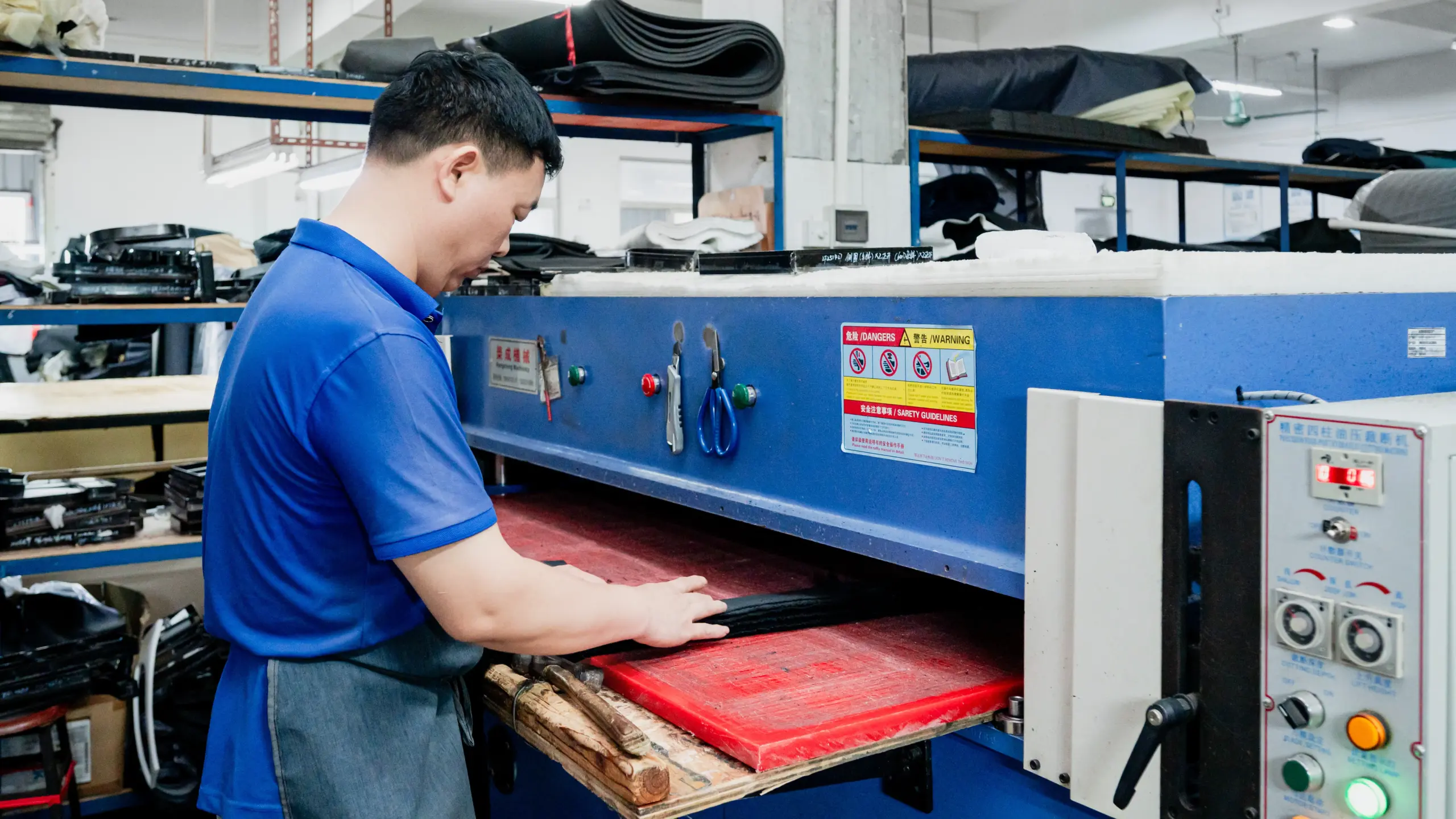
Bags are labour-intensive and seasonal, which makes them prone to overflow subcontracting — a certified factory farmed out to neighbouring workshops, or hand-finishing sent to home-based workers. This is where audited compliance and reality diverge. When vetting a “BSCI/SEDEX” supplier, ask directly:
- Is every process for my product done inside the audited fence line, or is anything (broderie, packing, hardware attachment) subcontracted?
- Does the audit scope cover all sites in my production flow, or only the main sewing hall?
- How are home workers or agency labour covered and paid, if used?
A clean report over a narrow scope is the most common false comfort in soft-goods sourcing.

Re-audit cadence: an old report is a missing report
Both schemes are date-stamped. Treat a social audit like a food-safety certificate — useful, but worthless expired. A sensible cadence for a supplier you rely on:
- Confirm a current BSCI (within its validity, typically one to two years) or a SMETA report re-run on schedule before each big season.
- Re-verify whenever the factory changes ownership, site, or workforce scale materially.
- Keep the report on file so you can answer a buyer’s due-diligence request in an hour, not a month.

How Kingsons stands on social audits
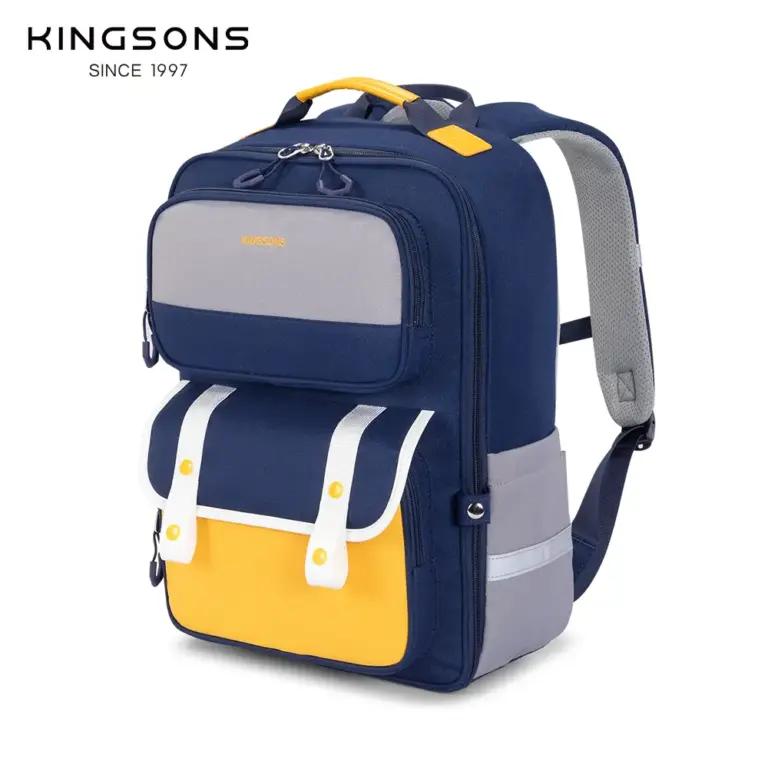
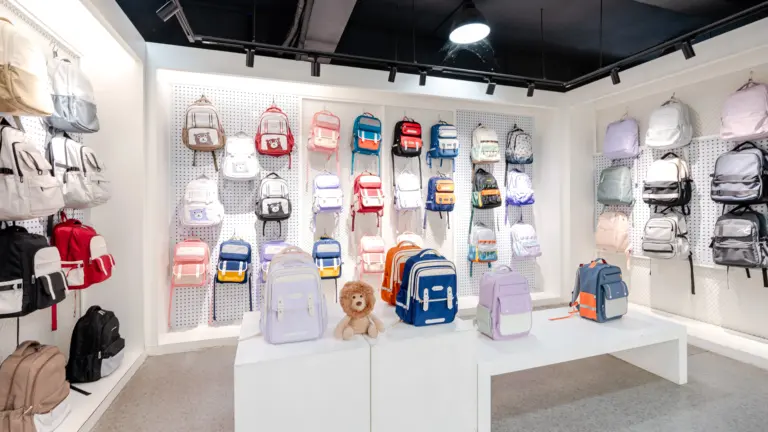
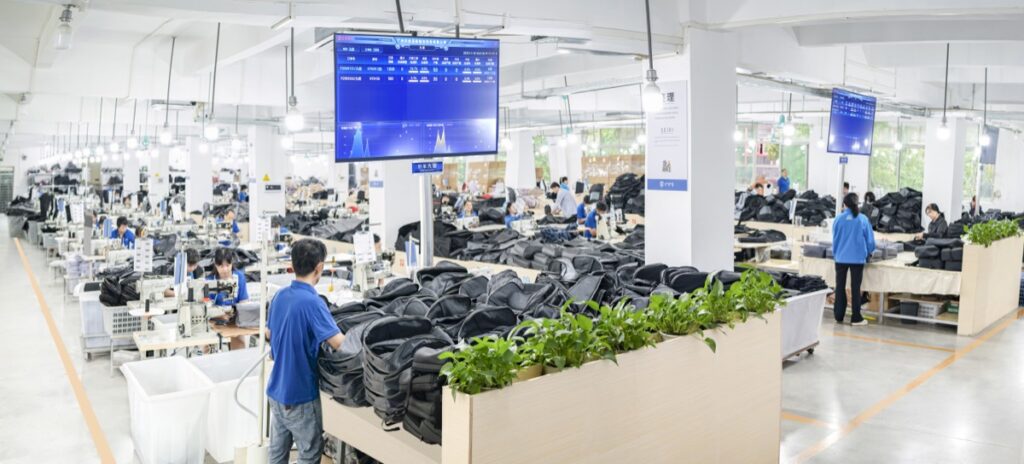
Kingsons is a 500-person functional-bag manufacturer (Canton; founded 1997; un 50,000 m² park, 20 lignes de production, roughly 300,000 units monthly) whose compliance portfolio is directly relevant to these buyer requests. On the company’s confirmed record:
- It holds BSCI social-compliance audit reports (2021 et 2026) et TROIS membership/audit coverage.
- It has passed the Walmart factory audit — the chain gate described above, not merely a shared third-party grade.
- Its management systems are certified to OIN 9001, OIN 14001 and ISO 45001 (qualité, environnement, and occupational health & sécurité), with GRS for recycled materials and AEO customs status — the broader picture in our bag-manufacturer certifications explainer.
- Alongside its Guangzhou operations, Kingsons has run a poverty-alleviation production site in Shaoyang, Hunan and a vocational talent-development partnership — social programs buyers increasingly factor into due-diligence conversations.
That combination — BSCI plus SEDEX plus a passed Walmart audit plus the ISO trio — means a bag buyer can onboard Kingsons for Western retail channels with the audit evidence already in hand, rather than commissioning a from-scratch factory qualification. The details that matter per order are still worth confirming at inquiry: the current audit date and rating/report, the scope versus your production flow, and closed corrective actions.
Vetting a supplier’s social-audit claim: a short checklist
- Ask which scheme (BSCI / SMETA / chain-specific) and get the report, not a certificate screenshot.
- Check the audit date and that the named address is the site producing your goods.
- Read the grade (BSCI) or findings list (SMETA); note majors, zero-tolerances and any open corrective actions.
- Confirm scope covers every process for your order, including finishing and packing.
- Ask how subcontracting, agency and home labour — if used — are covered.
- Agree re-audit cadence and notification of material site or ownership changes.
Foire aux questions
What is the difference between BSCI and SEDEX?
BSCI (amphore) is an audit scheme that ends in a comparable A–E rating and a shared improvement plan. SEDEX is the platform where companies exchange supply-chain data; the audit run on it is SMETA, which produces a detailed findings report and no single grade. European buyers lean on BSCI ratings; UK and many global buyers scrutinize the SMETA report itself.
Does SMETA give a certificate?
No. SMETA issues a report and findings, not a certificate or a pass/fail mark, by design — buyers are meant to read the evidence. If a supplier offers you a “SEDEX certificate,” ask instead for the SMETA audit report and its ZC/ZS supplier code so you can review the actual findings.
Will Walmart accept my BSCI or SMETA audit?
Sometimes, with conditions. Walmart runs its own responsible-sourcing program and will accept certain recognized third-party audits in lieu of its own visit, but layers requirements on top — a minimum grade and no unresolved red flags such as missing fire-safety documentation. A factory that has directly passed a Walmart audit starts from a stronger position than one that merely holds a comparable BSCI grade.
How often must a social audit be repeated?
BSCI reports are date-stamped and typically valid around one to two years; SMETA is re-run on a buyer’s schedule or after findings. Treat any expired report as no report: re-confirm currency before each season, and re-verify whenever the factory changes site, ownership or workforce scale.
Does a good audit rating mean my order won’t be subcontracted?
Not automatically. An audit reflects the site on its report date and only the scope it covered. Overflow subcontracting to unaudited workshops is a known soft-goods risk, so confirm the audit covers every step of your production flow — cutting, couture, finishing, packing — and ask how agency or home labour is handled.
Is Kingsons BSCI / TROIS / Walmart audited?
Kingsons holds BSCI social-compliance audit reports (2021 et 2026) and SEDEX coverage, has passed the Walmart factory audit, and is certified to ISO 9001, OIN 14001 and ISO 45001. Because audits are dated, confirm at inquiry the current report date, grade and scope relative to your order rather than relying on the historical record alone.
Onboard a bag manufacturer that already holds the audit evidence Western retail channels ask for — then verify the current report, grade and scope at inquiry.