“Waterproof” is one of the most overused claims in the backpack industry. A bag that handles light rain and a bag that survives a river crossing are two very different products, built with different materials and construction methods. When buyers specify one level of protection but expect another, the result is often returns, warranty claims, and disputes.
This guide explains how waterproof backpacks are made, covering fabric coatings, seam construction, closures, and IPX ratings. It also shows buyers how to specify the right level of water protection when ordering custom backpacks.
주요 시사점
- Waterproofing relies on three barriers: coated fabric, sealed seams, and waterproof closures. If any one of these is overlooked, water can enter through the weakest point.
- IPX ratings under IEC 60529 define water protection levels under specific test conditions: IPX4 resists splashes from any direction, IPX6 withstands powerful water jets, IPX7 covers immersion at 1 meter for 30 minutes, and IPX8 covers continuous immersion under manufacturer-defined conditions.
- Hydrostatic head (mm) measures a fabric’s resistance to water pressure. Industry practice treats roughly 1,500 mm as suitable for light rain and 10,000 mm or more as a benchmark for heavy rain and expedition use.
- Seam construction plays a major role in real-world performance. Stitched seams need taping to block needle holes, while welded construction eliminates stitching and supports higher levels of water protection.
- Roll-top closures and coated or airtight zippers are common options for waterproof backpacks. A standard zipper fitted to a coated panel is a common failure point when the specification does not match the intended use.
Water-Resistant vs. Waterproof Backpacks: Why the Difference Matters
Every fabric has a limit to how much water pressure it can withstand. The difference lies in how much pressure and exposure time it takes for water to pass through. A water-resistant backpack can repel light rain and splashes, usually through a dense fabric weave and a surface treatment. However, its seams, zipper chains, and stitching holes may still allow water to enter during prolonged exposure.
A waterproof backpack is designed to control water entry at every point. It typically combines coated or laminated fabric with sealed or welded seams and closures designed to limit water ingress.
This distinction matters commercially because the two products serve different needs and have different costs. A commuter laptop bag used in a temperate city needs reliable rain protection, not necessarily protection against full submersion. A backpack designed for paddling or fishing, on the other hand, needs closures and seams suited to immersion.
Specifying more protection than the product needs can add unnecessary cost and stiffness. Specifying too little can lead to returns, warranty claims, and negative reviews that damage the product’s reputation. Choosing the right protection level at the briefing stage is therefore a commercial decision, not just a technical detail.
The Three Barriers of Waterproof Backpack Construction
Manufacturers treat waterproofing as a system of three barriers. The finished backpack performs only as well as its weakest barrier.
| Barrier | Function | Failure Mode When Under-Specified |
|---|---|---|
| Fabric and coating | Keeps water out of the panel surface | Wet-out in sustained rain; moisture seeping through face fabric |
| Seams | Closes needle holes where panels join | Water wicking through stitch lines even when fabric repels |
| Closures | Controls the main opening and pockets | Ingress along zipper chains and around zipper ends |
A backpack made with high-performance coated fabric but standard stitched seams without taping can still leak along the seams during a sustained downpour. Similarly, a bag with taped seams can fail if it uses a standard zipper that allows water to pass through.
When reviewing supplier quotations, buyers should check that all three barriers are included in the specification, with a defined construction method or performance requirement for each.
Fabric Coatings Compared: DWR, PU, TPU and PVC
Waterproof performance comes from a coating or membrane applied to or bonded with the base fabric, which is usually woven polyester or nylon. Four common options are used in backpack manufacturing.
| Coating / Treatment | How It Works | 강점 | Trade-Offs |
|---|---|---|---|
| DWR surface treatment | Fluorine-free or classic durable water repellent finish that beads water on the surface | Preserves fabric feel and weight | Wears off with abrasion and washing; splash protection only |
| PU coating | Polyurethane layer applied to the back of the fabric | Proven, economical, flexible | Can degrade with hydrolysis over years; moderate hydrostatic head |
| TPU coating / laminate | Thermoplastic polyurethane film bonded to the base cloth | Flexible, cold-resistant, tough, weldable | Higher cost than PU and PVC |
| PVC coating | Vinyl layer on the base fabric | 값이 싼, stable, stiff | Heavier, less supple, weaker cold performance; declining in premium lines |
TPU has become a common choice for performance-focused products because it combines high resistance to water pressure with the ability to be heat-welded. This is particularly useful when choosing a seam construction method.
PU remains a cost-effective option for commuter-grade backpacks, while PVC is mainly used in entry-level products where weight and fabric feel are less important.
Fabric construction also affects performance. A tighter weave and higher denier can improve tear strength and reduce the size of needle holes that seam sealing must address.
For more information about how coatings work with nylon, 폴리에스테르, recycled rPET, and lining materials, see our bag materials guide.
Hydrostatic Head Ratings: What Do the Millimeters Mean?
Hydrostatic head measures the height of a water column, in millimeters, that a fabric can withstand before leaking under laboratory conditions. It is commonly used to compare the water-pressure resistance of coated fabrics.
The following benchmarks are commonly used in the industry.
| Hydrostatic Head | Working Interpretation | Typical Products |
|---|---|---|
| Below ~1,500 mm | Splash and drizzle protection | Promo bags, light daily carry |
| ~1,500–5,000 mm | Rain-resistant for typical weather exposure | Commuter and school backpacks |
| ~5,000–10,000 mm | Sustained heavy rain, extended outdoor exposure | Hiking and travel backpacks |
| 10,000 mm+ | Expedition and watersport grade fabric | Dry-bag style constructions, technical outdoor lines |
Two points are important when interpreting these figures.
첫 번째, hydrostatic head measures the fabric, not the complete backpack. It does not account for seams or closures. A fabric rated at 10,000 mm can still allow water through untaped stitch lines.
두번째, the rating applies to a fabric sample under controlled test conditions. Abrasion, repeated folding, and UV exposure can reduce performance during actual use.
Treat hydrostatic head as one factor in fabric selection, not as the overall waterproof rating of a finished backpack.
Waterproof Backpack Seams: Stitching, Taping, and Welding
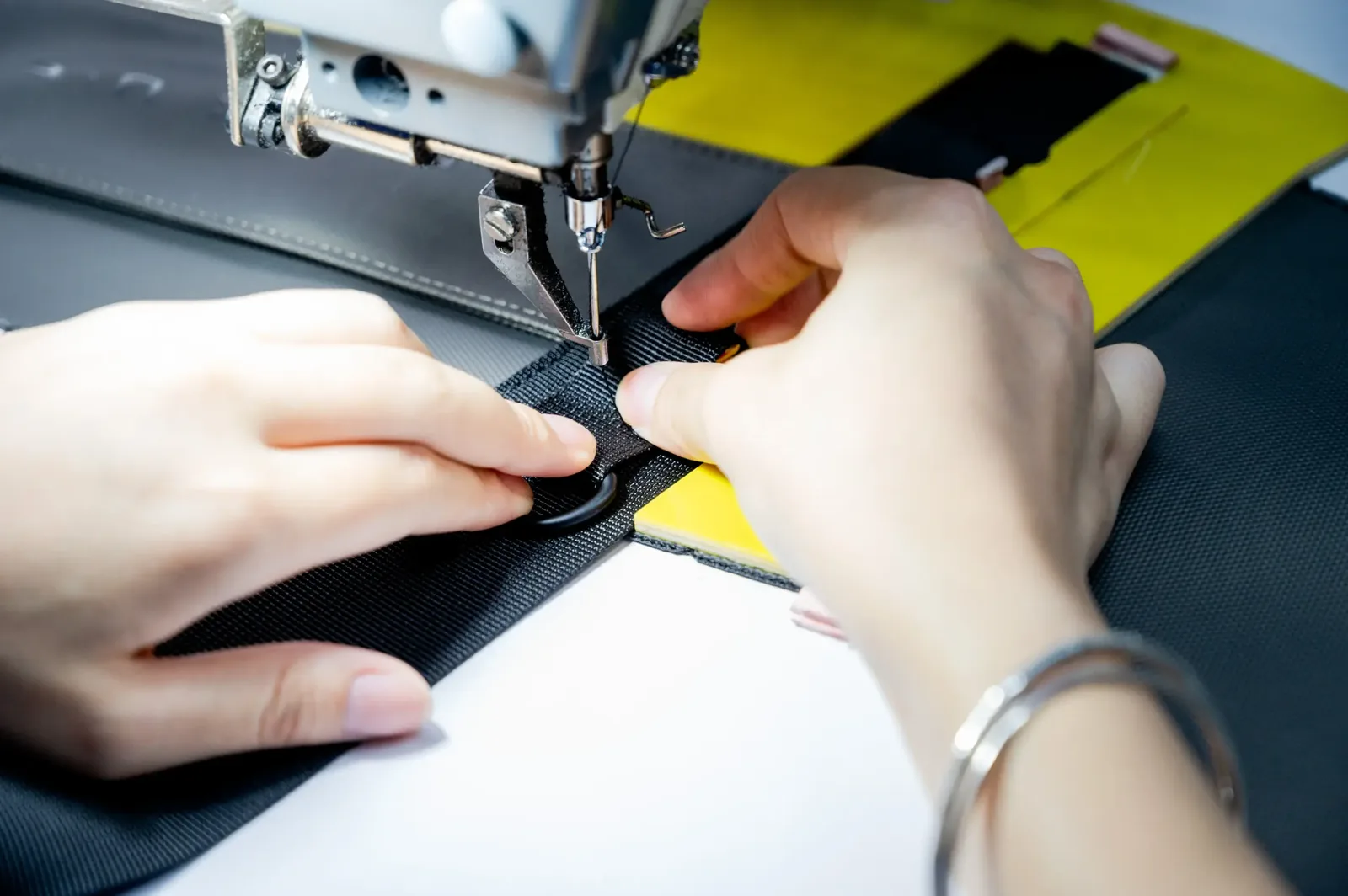
Every needle hole in a stitched seam creates a potential path for water. Seam construction is therefore one of the main factors that determines whether a waterproof claim holds up in real use.
Stitched seams without taping
This is standard construction for water-resistant bags. It can be suitable when the product only needs splash protection, but it becomes a weakness when higher levels of water protection are required.
Taped seams
Waterproof tape is heat-bonded over the stitch line on the inside of the bag, covering the needle holes. This is a common method for rain-resistant hiking and travel backpacks. It adds a moderate cost per meter of seam.
Welded construction
With TPU-coated fabrics, panels can be heat-welded or radio-frequency (RF) welded without stitching. The coated layers fuse together to form a continuous barrier. This method is used in airtight bags, submersion-class products, and areas that require strong, water-resistant construction.
Welding can also help protect structural stress points. In one Kingsons program for a German outdoor travel brand, a vacuum-compression travel bag addressed durability problems through a heat-welded structure, reinforced stitching at key stress points, and an upgraded high-wear fabric. The same engineering approach is relevant when designing waterproof backpacks with load-bearing seams.
When evaluating samples, turn the bag inside out and inspect the seam treatment in every compartment, not just the main body.
Closures: Zippers and Roll-Tops
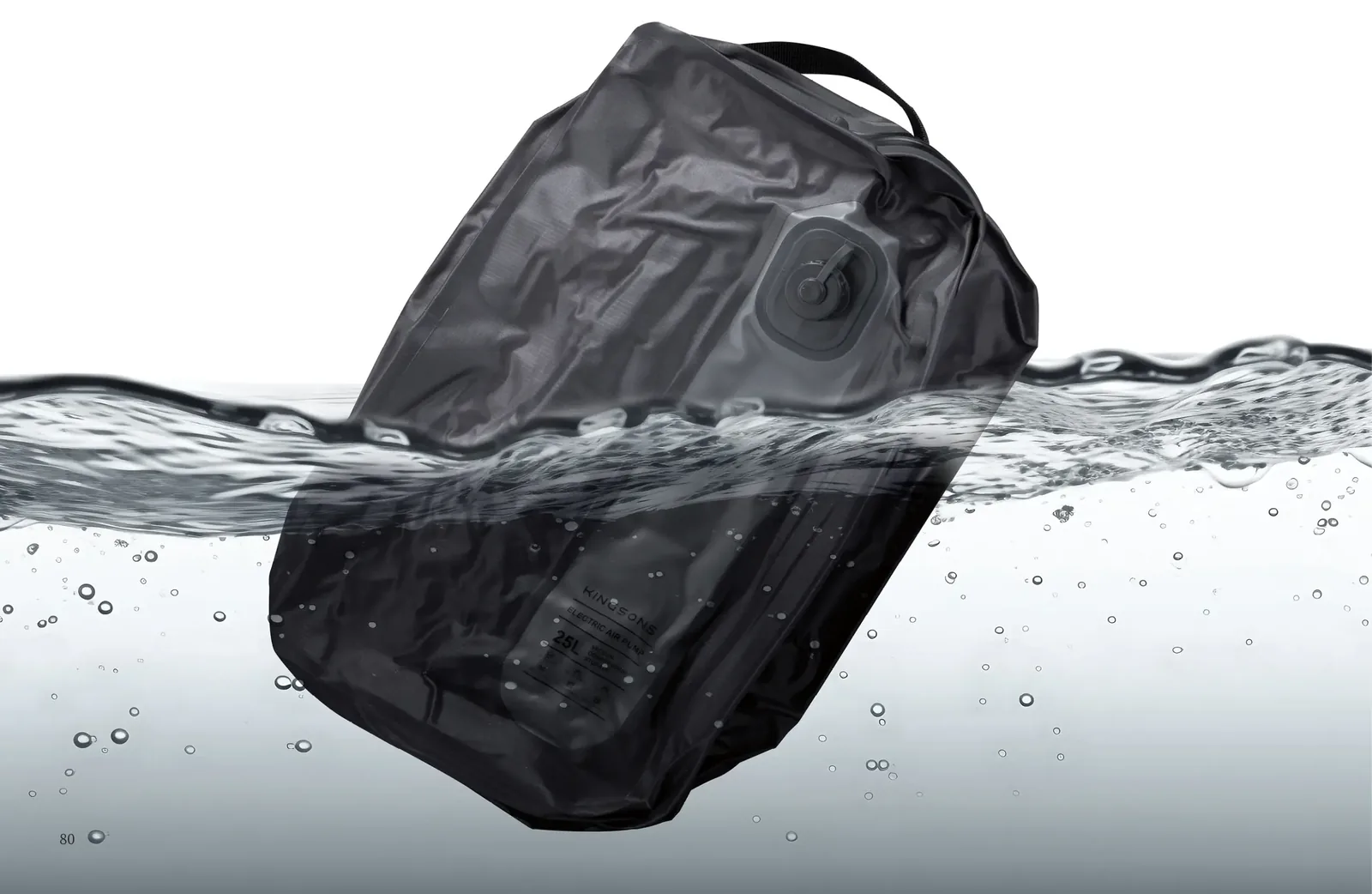
The main opening is one of the most common entry points for water. Three closure options are widely used in waterproof backpack construction.
Coated reverse zippers
The zipper coil sits on the inside, behind a PU-coated flap. This design helps water bead and run off instead of passing through the zipper chain. Coated reverse zippers are commonly used in rain-resistant products. Major zipper suppliers, YKK를 비롯한, SBS, 그리고 SAB, offer water-resistant zipper options.
Airtight or watertight zippers
These zippers use rubberized or film-coated chains designed to provide a tighter seal against water. They are used in products requiring protection against spray and short periods of immersion. They cost several times as much as standard zippers and tend to feel stiffer, making them more common in watersport, military, and expedition products.
Roll-top closures
A roll-top opening is folded several times and secured with a buckle, creating a dry-bag-style seal without a zipper. Roll-tops can offer a good balance between protection and cost for submersion-class daypacks. They can also accommodate different load sizes.
Hybrid designs are often a practical choice. For example, a backpack can use a roll-top main compartment and a coated reverse zipper on a quick-access pocket. This provides convenience where it is needed while maintaining protection in the main compartment.
When preparing a technical pack, specify the zipper brand and chain type. Simply writing “waterproof zipper” does not provide enough detail for an accurate quotation.
IPX Ratings Decoded
IPX ratings are based on IEC 60529, the international ingress protection standard. The “X” indicates that dust protection has not been rated, while the digit identifies the water protection level under the specified test conditions.
| Rating | Test Condition | Practical Meaning for a Backpack |
|---|---|---|
| IPX1–IPX3 | Vertical drip, dripping when tilted, spraying at angles | Light rain and splash tolerance |
| IPX4 | Splash from any direction | Confident drizzle and splash performance — the sensible target for commuter bags |
| IPX5 / IPX6 | Low-pressure jets / powerful jets | Storm and hose-down performance for hiking and outdoor lines |
| IPX7 | Immersion at 1 meter for 30 minutes | Survives accidental submersion — dry-bag class construction |
| IPX8 | Continuous immersion deeper than 1 meter per manufacturer specification | Watersport and specialist equipment protection |
Two practical points matter when specifying IPX ratings.
첫 번째, the rating applies to the assembly that was tested. A fabric’s IPX rating does not automatically apply to a sewn backpack unless the seams and closures were included in the tested configuration.
두번째, static immersion tests do not guarantee performance under dynamic pressure, such as during swimming or exposure to fast-moving water. For watersport products, buyers should agree on the test conditions with the factory instead of relying on the rating alone.
How to Choose the Right Waterproofing Level for Each Backpack Line
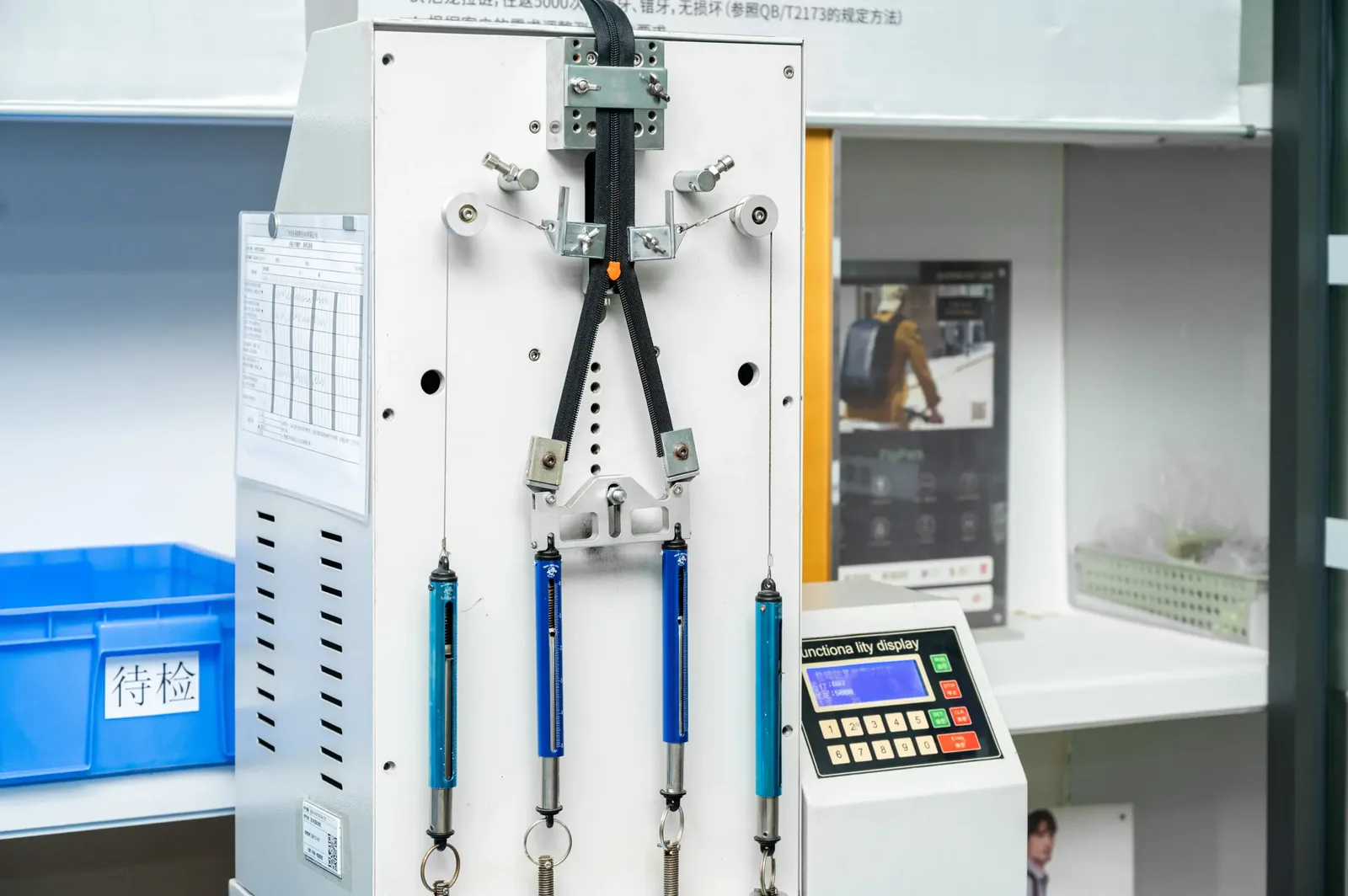
Different backpack applications require different levels of protection. The following table connects common product lines with suitable protection targets and construction methods.
| Product Line | Sensible Protection Target | Construction Package |
|---|---|---|
| Urban commuter backpack | Splash and rain resistance | PU-coated fabric, DWR finish, coated reverse zippers, critical seams taped |
| Hiking and trekking pack | Sustained rain | TPU or high-head PU fabric, fully taped seams, coated zippers, optional rain cover |
| Travel and expedition pack | Storm performance, load protection | High hydrostatic head laminate, welded stress points, storm flaps over zippers |
| Watersport / dry bag line | Immersion class (IPX7–IPX8) | TPU laminate, fully welded construction, roll-top or airtight zipper |
The construction package is what the factory uses to prepare a quotation. A brief for a “waterproof hiking backpack” should identify the four elements in the relevant row and name the required components or methods. Without these details, suppliers have to interpret the requirements themselves, which can result in a lower level of protection than the buyer expects.
Lining and Internal Protection
Water management works in both directions. A well-designed backpack should also contain moisture that starts inside the bag.
Wet pockets for towels and swimwear can use coated or laminated fabric with taped or welded edges. This helps keep moisture inside the pocket instead of allowing it to spread into the main compartment.
A wipe-clean coated lining in the main compartment helps resist odors and staining. In rain-resistant designs, a floating liner—an internal pouch suspended inside the outer shell—can provide additional protection for electronics.
These features are easier to incorporate during the pattern-development stage and more expensive to add later. They should therefore be considered in the initial specification.
How Factories Verify Waterproofing
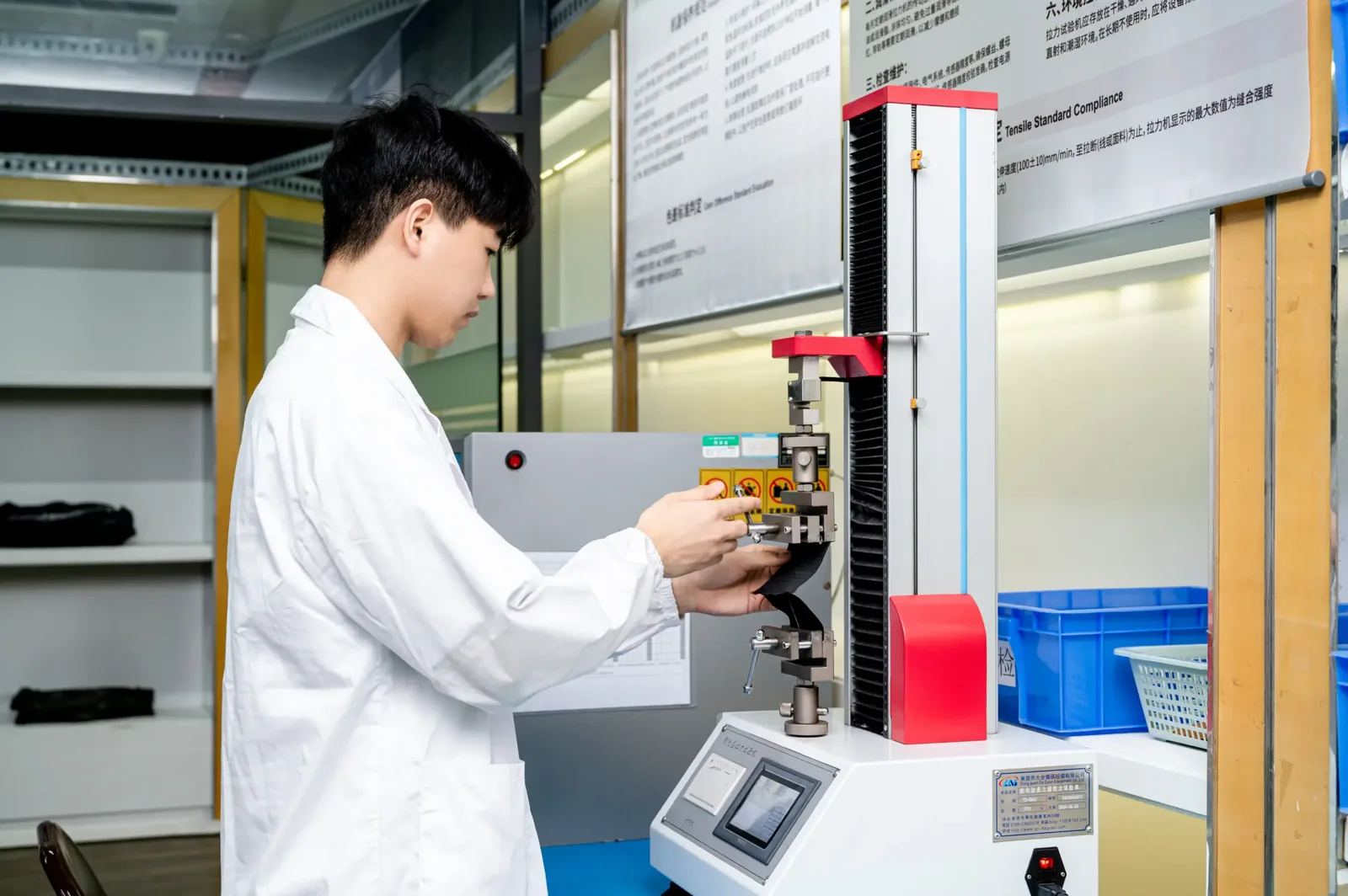
Testing helps distinguish a marketing claim from a measurable specification. A professional factory checks water resistance as part of its quality-control process.
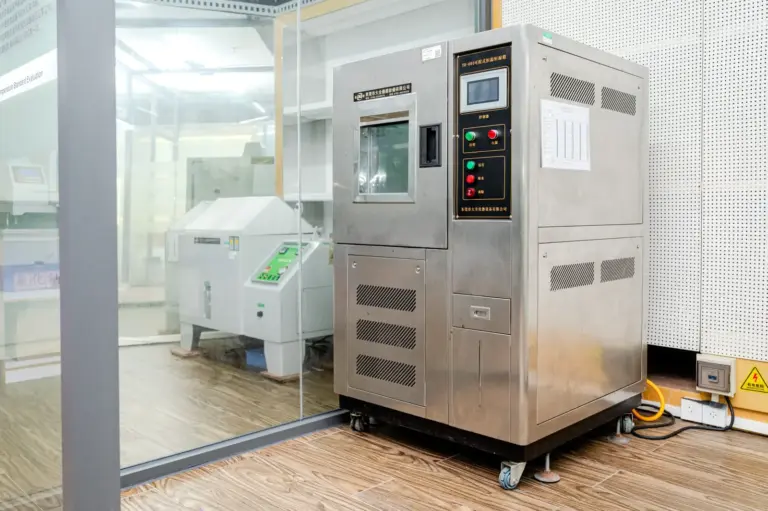
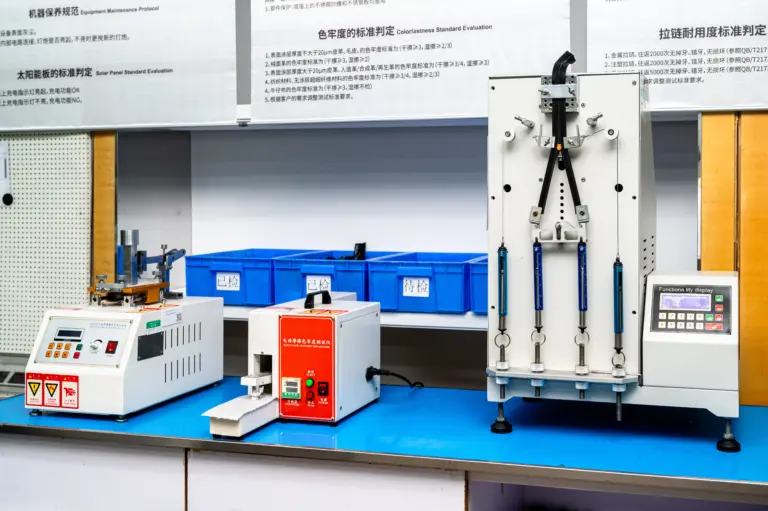
This can include dedicated waterproof testing instruments for materials and finished bags, spray and shower-simulation tests for closures and seams, and mechanical tests that help maintain performance throughout the product’s life. These mechanical checks include zipper reciprocation on coated chains, tensile tests on welded and taped stress points, and abrasion tests on coated panels.
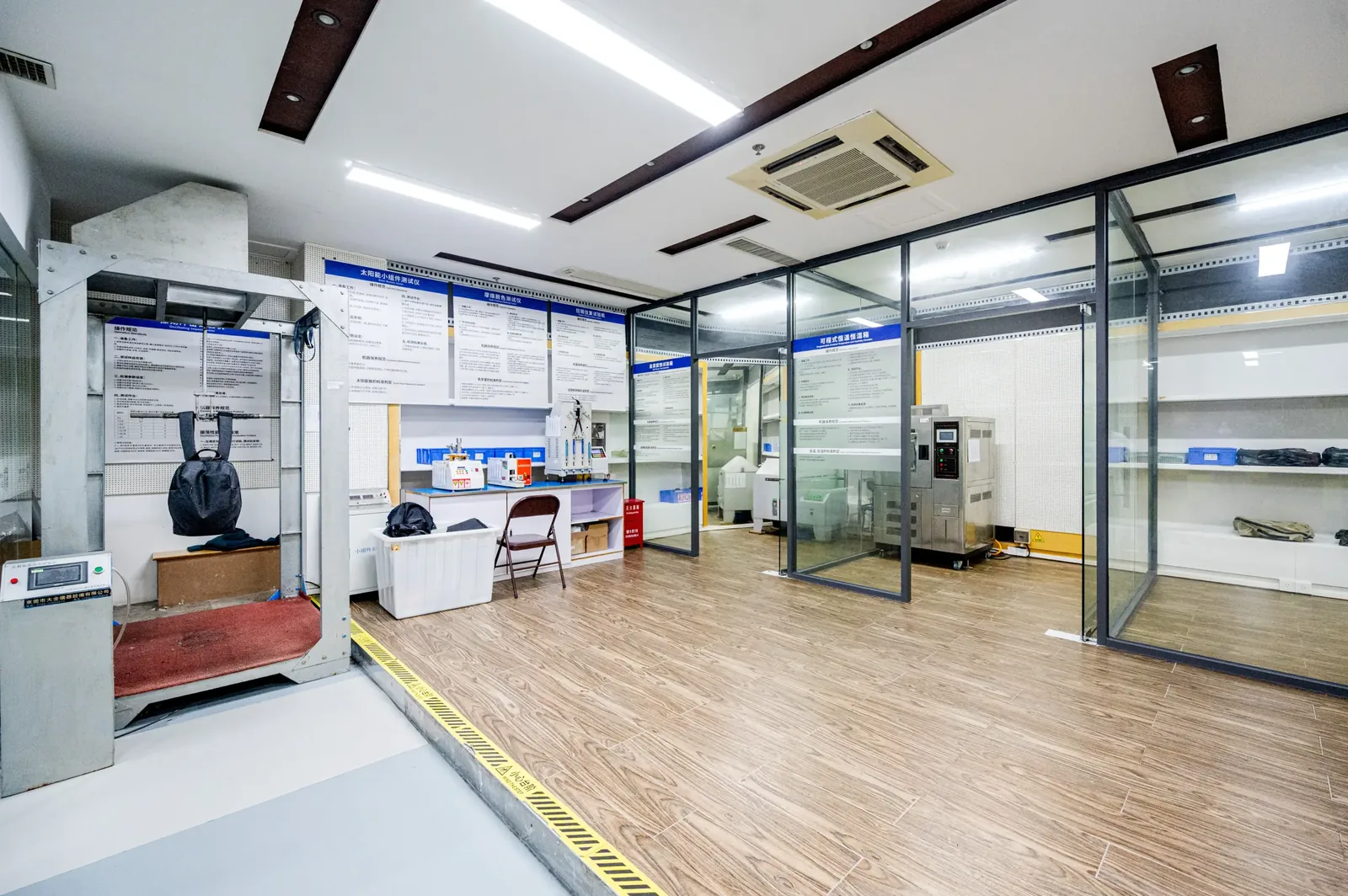
Kingsons’ quality-control workflow includes waterproof testing instruments in its QC workshop, alongside tensile testing, zipper-reciprocation, and dimensional measurement equipment. These tools are used during incoming material inspection, in-process checks, and final inspection.
When evaluating a supplier, ask three questions:
- Which water-resistance tests are performed in-house, and which are subcontracted?
- Is the golden sample tested as a complete backpack, or are only fabric swatches tested?
- What are the acceptance criteria, and are the results documented?
Factories that can provide clear answers, including named tests, defined conditions, and documented results, are better positioned to support their IPX and hydrostatic head claims under actual operating conditions.
우리의 품질 관리 테스트 가이드 covers the broader range of tests buyers can consider when evaluating a backpack manufacturer.
How to Specify Waterproofing in Your Backpack Tech Pack
A waterproof backpack brief should clearly define six decisions so that the requirements remain consistent throughout quotation, sampling, and production.
1. Target protection class
Define the intended use through an IPX target or a clear description of expected rain exposure. Do not rely on the word “waterproof” alone.
2. Fabric and coating
Specify the base fabric, denier, coating type (PU or TPU), and minimum hydrostatic head.
3. Seam construction
Identify which seams require taping, which require welding, and how structural stress points should be reinforced.
4. Closure specification
Specify the zipper brand and chain type for each compartment, or define the roll-top dimensions and number of folds.
5. Verification plan
State which tests the factory must perform on the golden sample and production lots, and require documented results.
6. Acceptable trade-offs
Define the limits for weight, stiffness, and cost that are acceptable for the required protection level. This gives the engineering team a clear range within which to optimize the design.
The same approach applies to technical specifications for waterproofing and load-carrying performance. 우리의 bag tech pack guide provides a template for preparing a complete technical package.
Waterproofing problems caused by unclear specifications can often be traced to one of these six decisions being left undefined.
Common Specification Mistakes
Treating a fabric rating as a finished-product rating
A claim such as “10,000 mm waterproof” on a backpack with untaped seams describes the fabric’s performance, not the waterproof performance of the complete product.
Overlooking pocket closures
The main compartment may have a detailed waterproof specification, while a front pocket with a standard zipper becomes the weakest point in the finished bag.
Ignoring DWR maintenance requirements
Surface treatments wear down over time. Presenting DWR as permanent protection can lead to customer disappointment in the second season of use.
Skipping finished-product testing
Fabric swatch tests verify material performance. Only tests on the assembled backpack, such as shower and immersion checks, can help verify the complete waterproofing system.
Overlooking hardware durability
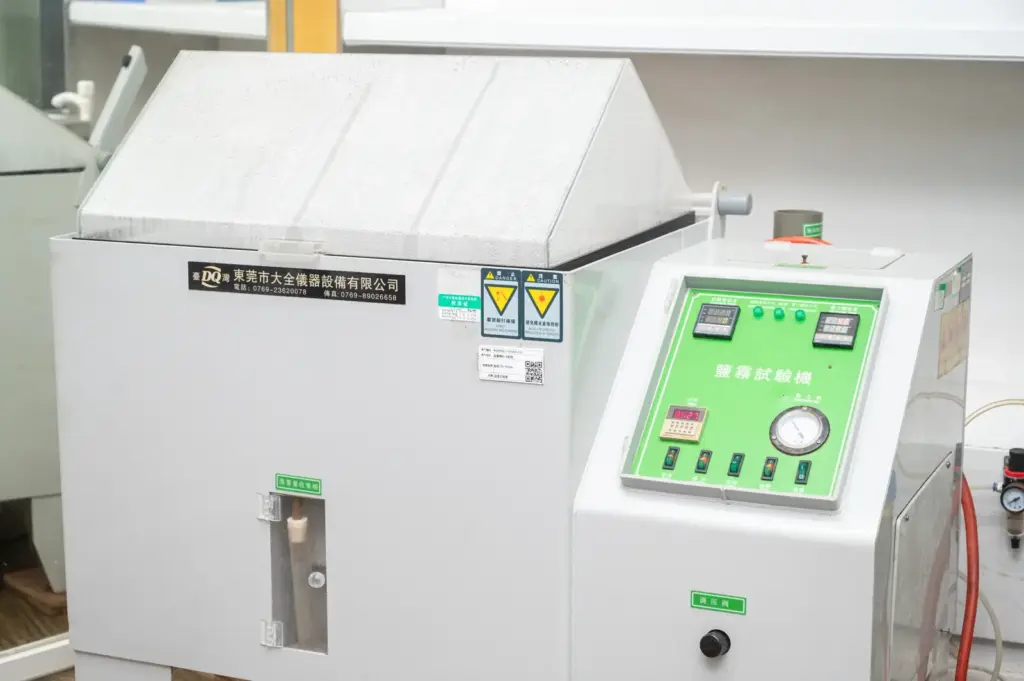
Coated zippers can corrode around pulls and end stops if the hardware has not been tested for salt-spray resistance. A zipper that seizes can undermine the waterproof protection it was selected to provide.
Many of these problems are linked to construction defects that appear later in production or use, including seam tape lifting, coating delamination, and stitching failures at stress points.
우리의 backpack manufacturing defects guide provides a related prevention checklist, while our backpack materials reference covers the fundamentals of coated and laminated fabrics.
자주 묻는 질문
What IPX rating should a waterproof backpack have?
It depends on the use case. IPX4 suits commuter bags exposed to rain and splashes; IPX5–IPX6 covers hiking lines facing storms and hose-downs; IPX7 means the assembly survived immersion at 1 meter for 30 minutes, which is dry-bag territory. Match the rating to real usage rather than chasing the highest number, since each class adds cost, weight and stiffness.
Is a water-resistant backpack enough for daily rain?
For light and intermittent rain, yes — a coated fabric with a DWR finish and coated reverse zippers keeps contents dry in typical commuting weather. For sustained downpours, upgrade to taped seams and higher hydrostatic head fabric. If electronics ride inside, add an internal protective sleeve regardless of the shell rating.
What does hydrostatic head actually measure?
Hydrostatic head measures the water column pressure a fabric resists before leaking, in millimeters, under laboratory conditions. As an industry convention, around 1,500 mm handles light rain, 5,000 mm+ sustained rain, 그리고 10,000 mm+ expedition-grade exposure. It rates the fabric only — seams and closures must be specified and tested separately.
Are welded seams better than taped seams?
They serve different classes. Taped seams cover needle holes with bonded tape and are the standard for rain-grade bags. Welded seams eliminate stitching entirely by fusing TPU-coated panels, achieving airtight and submersion-class performance. Welding requires compatible TPU materials and costs more, so it is specified where immersion protection justifies it.
Can a waterproof backpack use a normal zipper?
Not if the waterproof claim covers the whole bag. Standard chains admit water along the zipper line. Rain-grade bags use coated reverse zippers from suppliers such as YKK, SBS or SAB; immersion-class bags use airtight zipper chains or roll-top closures that need no zipper at all.
How do I verify a factory’s waterproof claims?
Ask which water tests run in-house versus subcontracted, whether the golden sample is tested as a finished assembly, and what the documented pass criteria are. A factory with waterproof testing instruments in its own QC loop, alongside zipper-reciprocation and tensile equipment, can back its claims with reports on every production lot.
Specifying a waterproof or water-resistant backpack line? Kingsons engineers weather protection into the construction — coated and laminated fabrics, taped and welded seams, coated zippers from SBS/SAB/YKK — and verifies it with dedicated waterproof testing instruments in a QC workshop inside a 50,000 m², 300,000-piece-monthly facility.
Custom MOQ from 500 pcs · Sampling 7–10 days · Welded construction available · In-house waterproof testing